Have you wondered why you sweat much more than others, even in perfectly normal situations? Axillary hyperhidrosis affects 3-5% of the population and has specific causes that go far beyond heat or exercise. Understanding these causes is the first step toward finding the right solution.
What is axillary hyperhidrosis really?
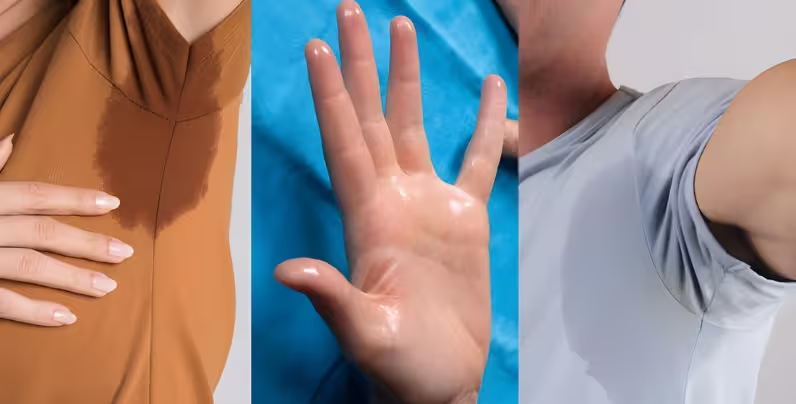
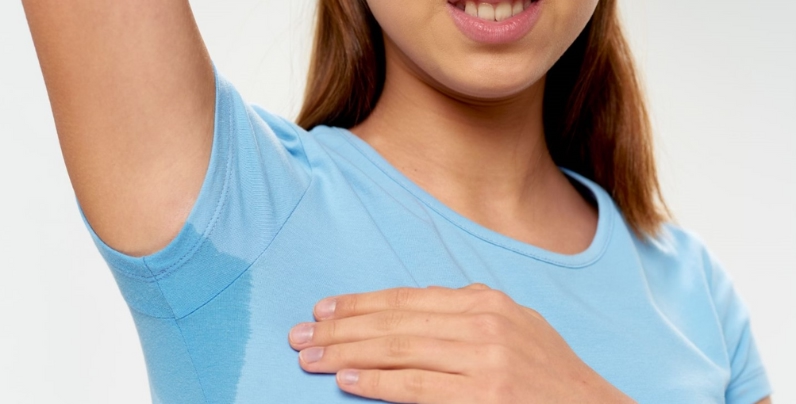
Axillary hyperhidrosis is a medical condition characterized by excessive sweating in the armpits, well beyond what is necessary for body thermoregulation. It manifests as profuse sweating that can soak clothing several times a day, occurs independently of ambient temperature, appears even at rest or during light activities, and generates significant emotional impact in the form of social anxiety and low self-esteem.
To put the difference in perspective: the average person produces between 500 and 700 ml of sweat daily. Those with hyperhidrosis can produce up to 4 liters daily — a volume that drastically interferes with everyday life.

Primary hyperhidrosis: the most common cause
Primary hyperhidrosis is the most frequent form and has no identifiable underlying medical cause. It generally begins in adolescence or youth, presents a hereditary component in 30-50% of cases, affects both armpits symmetrically, and may show episodes of spontaneous improvement without treatment.
The physiological mechanism is an excess of activity in the sympathetic nervous system — the system that controls the sweat glands. It is as if the body’s “thermostat” were permanently miscalibrated, activating the sweat response to stimuli that in other people would not trigger it at all.
Genetic factors: is hyperhidrosis hereditary?
Genetics plays a determinant role in axillary hyperhidrosis. Family studies show that 40% of patients have at least one affected first-degree relative. An autosomal dominant inheritance pattern has been identified, and researchers have discovered variants in genes that regulate sympathetic nervous system activity.
However, having a genetic predisposition does not mean you will inevitably develop hyperhidrosis. Environmental and hormonal factors act as triggers that can either activate or keep the condition dormant.
Hormonal changes: an underestimated factor
Hormonal fluctuations can trigger or significantly worsen axillary hyperhidrosis. During puberty, the increase in androgens directly stimulates the sweat glands. In menopause, estrogenic changes alter thermoregulation mechanisms, producing the well-known “hot flashes” that frequently accompany excessive axillary sweating. During pregnancy, fluctuations in progesterone and estrogen modify the sweat response. And in hypothyroidism, alterations in thyroid hormones influence overall sweat metabolism.
A particular case is menstrual hyperhidrosis: some women experience a marked increase in axillary sweating during certain phases of their menstrual cycle, directly linked to the hormonal oscillations inherent to the period.
Stress and anxiety: the vicious cycle
Psychological stress maintains a bidirectional relationship with hyperhidrosis that generates a cycle difficult to break. Stress activates the sympathetic nervous system and produces excessive sweating. That sweating generates anxiety through constant worry about odors or visible stains on clothing. And that anxiety, in turn, intensifies the sweating response, closing a circuit that feeds on itself.
The data supports the severity of this relationship: patients with hyperhidrosis have 2-3 times higher risk of developing anxiety disorders than the general population.
Medical conditions: secondary hyperhidrosis
Secondary hyperhidrosis appears as a symptom of another underlying medical condition. Unlike primary hyperhidrosis, its treatment depends on addressing the disease causing it.
| Category | Associated Conditions |
|---|---|
| Endocrinological | Hyperthyroidism, diabetes mellitus, Cushing’s syndrome, pheochromocytoma |
| Infectious | Tuberculosis, chronic infections, fever of any origin |
| Neurological | Spinal cord injuries, Parkinson’s disease, cerebrovascular accident |
| Others | Obesity, lymphoma, medication side effects (antidepressants, among others) |
Important warning sign: If hyperhidrosis appears suddenly in adulthood without prior history, it requires a complete medical evaluation to rule out these secondary causes.
Environmental factors and lifestyle
Although they are not direct causes of hyperhidrosis, certain habits and environmental conditions can significantly worsen episodes.
Regarding diet, spicy or heavily seasoned foods, caffeine, alcohol, and foods rich in tyramine are known triggers of sweating episodes. Environmental conditions such as high temperatures, high humidity, and wearing non-breathable synthetic clothing exacerbate the situation. At a behavioral level, smoking (which increases adrenaline), lack of sleep, and a sedentary lifestyle contribute to greater sympathetic nervous system activation.
How is axillary hyperhidrosis diagnosed?
The diagnosis combines a detailed clinical evaluation with specific tests. The initial evaluation includes a complete clinical history (when it started, what triggers it, how it impacts quality of life), a physical examination that assesses the severity and distribution of the problem, and classification on the hyperhidrosis severity scale.
The most commonly used diagnostic tests include the iodine-starch test, which reveals the exact areas of excessive sweating through the application of an iodine solution and starch powder; the quantitative sweat test, which precisely measures the amount of sweat produced; and hormonal evaluation (TSH, T4, cortisol, catecholamines) to rule out endocrinological secondary causes.
Psychological and social impact
Beyond the physical, axillary hyperhidrosis profoundly affects the quality of life of those who suffer from it. On an emotional level, it generates social anxiety (fear of public situations), feelings of shame and inferiority, isolation through avoidance of social and athletic activities, and deterioration of personal and professional relationships.
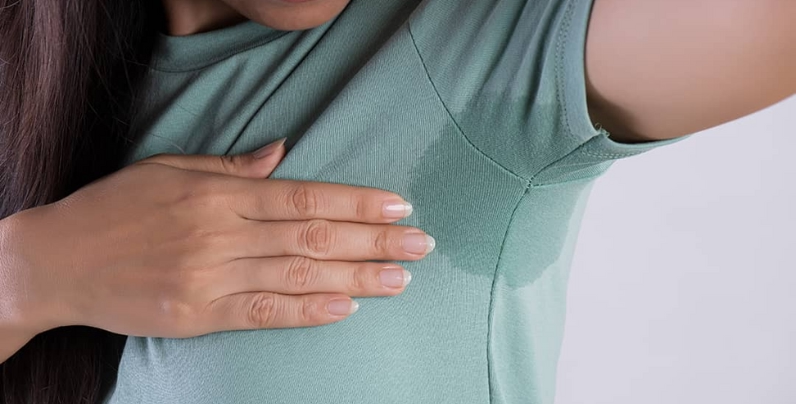
The statistics are revealing: 75% of patients report a significant impact on their daily life, 50% actively avoid social situations because of hyperhidrosis, and 25% have changed jobs or rejected promotions because of this condition. These figures demonstrate that hyperhidrosis is not a simple inconvenience — it is a condition that deserves serious medical attention.
Available treatments for axillary hyperhidrosis
Knowing the cause of your hyperhidrosis allows you to choose the most appropriate treatment. Treatments are organized in a therapeutic ladder that progresses from least invasive to most definitive.
| Level | Treatment | Mechanism | Indication |
|---|---|---|---|
| First line | Aluminum chloride antiperspirants | Temporary duct blockage | Mild cases |
| Second line | Iontophoresis | Electric current reduces glandular activity | Moderate cases |
| Second line | Botulinum toxin (injections) | Blocks sweat nerves | Moderate cases |
| Third line | Morpheus8 | Radiofrequency permanently destroys glands | Moderate-severe cases |
| Last resort | Thoracic sympathectomy (surgery) | Section of sympathetic nerve | Refractory cases |
Morpheus8 offers the best balance between effectiveness and permanence for moderate to severe cases: the fractional radiofrequency selectively destroys the sweat glands without damaging the surrounding tissue, producing a permanent reduction in sweating.
Prevention and daily management
Although hyperhidrosis cannot always be prevented, it can be effectively managed in everyday life. In terms of hygiene and clothing, frequent showers with antibacterial soaps, changing undergarments throughout the day, hyperhidrosis-specific deodorants, and natural fabrics like cotton make a notable difference.
At a lifestyle level, identifying and avoiding personal triggers, practicing stress control techniques such as meditation or yoga, maintaining adequate hydration, and moderating caffeine and alcohol consumption all help reduce the frequency and intensity of episodes.
Psychological support through cognitive-behavioral therapy is particularly useful for breaking the vicious cycle between anxiety and sweating, helping patients develop effective coping strategies.
When to consult a specialist
Not all excessive sweating requires medical treatment. But there are clear signs that it is time to consult: when sweating interferes with daily activities, when it has a measurable negative impact on quality of life, when over-the-counter antiperspirants have failed, or when excessive sweating appears suddenly in adulthood.
Hyperhidrosis is a medical condition — not a personal flaw or a matter of hygiene. Effective and safe treatments exist that can radically change the quality of life of those who suffer from it.