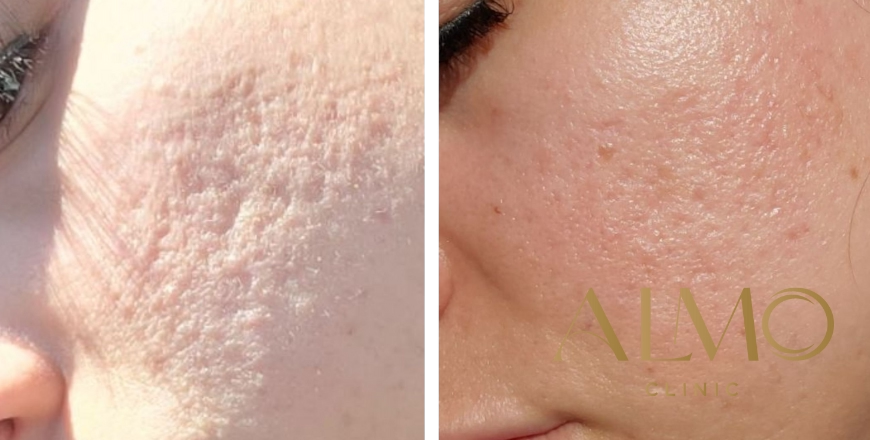
In summary
For acne scars, fractional CO2 laser and Morpheus8 treat different layers. CO2 is ablative: it vaporises microcolumns of skin and achieves more texture change per session, with about 5 to 7 days of peeling. Morpheus8 does not remove the skin surface: it delivers radiofrequency into the dermis through microneedles (up to about 4 mm on the face), with 2 to 3 days of redness and a lower risk of dark marks on darker skin. Mixed scarring can be treated by combining both; neither erases scars completely.
Reviewed by Dr. Martha Peñarredonda · Plastic surgeon · SCCP
$450 USD
- Full-face Morpheus8 for scars from $300 USD
- Darker skin Lower risk of dark marks with Morpheus8
Fractional CO2 laser and Morpheus8 are two of the most widely used technologies for acne scars, and they work in different ways. Neither is better in every case: the choice depends on the type of scar, your skin phototype and the recovery time you can take.
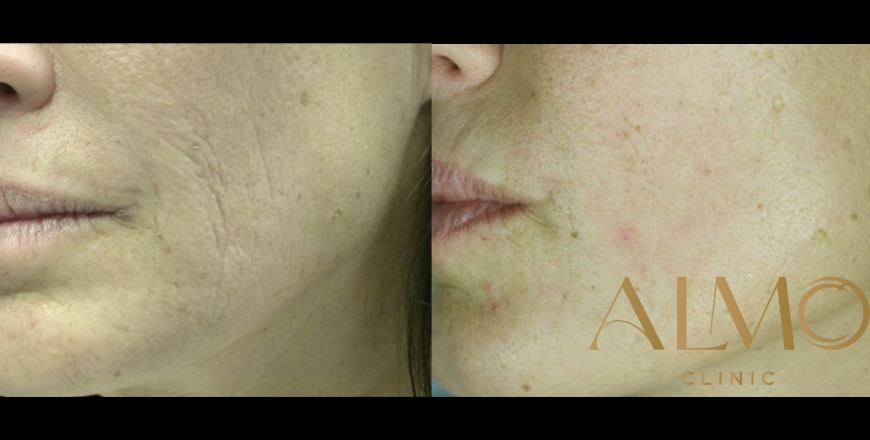
It helps to start with a realistic expectation: with either one, scars become less noticeable and skin texture more even, but they do not disappear completely, and the degree of improvement varies between patients.
Technical differences: how each technology works
Fractional CO2 laser: ablation in microcolumns
The CO2 laser emits 10,600 nm light that is absorbed by the water in the skin. In fractional mode it vaporises microscopic columns of tissue and leaves healthy skin between them, which speeds up healing. As those columns repair, the skin forms new collagen and renews its surface.
What it offers: more texture change per session, in exchange for more recovery days and stricter sun care.
Morpheus8: fractional radiofrequency with microneedles
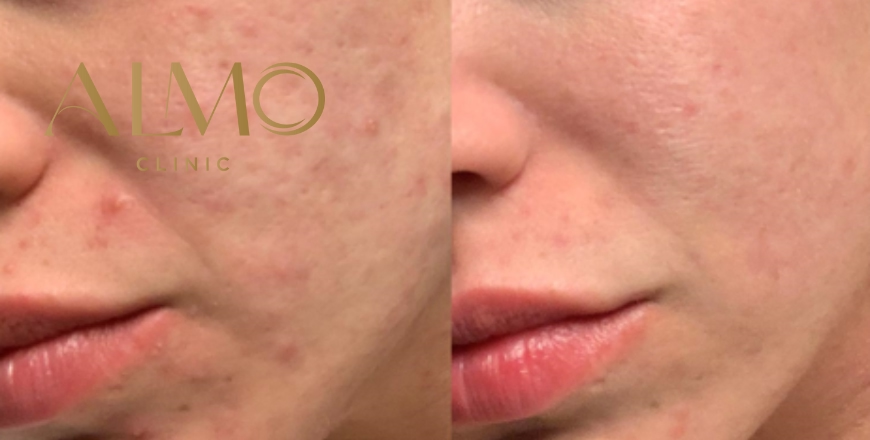
Morpheus8 inserts microneedles into the skin and releases radiofrequency in the dermis, at a depth the physician adjusts by area (up to about 4 mm on the face). It does not remove surface tissue: it heats the dermis to stimulate new collagen.
What it offers: work at depth with little surface damage, a shorter recovery and a lower risk of dark marks on darker skin.
What each one can do by scar type
Atrophic acne scars are classified into three types, and almost every patient has a mix of them.
| Scar type | What it looks like | What is usually indicated |
|---|---|---|
| Rolling | Wavy, with soft edges, caused by fibrous bands that pull the skin down | Morpheus8, because it works on the dermis; sometimes together with subcision |
| Boxcar | Wide depression with defined edges | Either one; CO2 laser softens the edges better in shallow scars |
| Ice pick | Narrow and deep, like a puncture | The type that responds least to both technologies; expected improvement is smaller |
We do not publish improvement percentages by scar type: studies use different scales, devices and settings, and the result depends on each person’s skin.
Sessions, discomfort and recovery
| Aspect | Fractional CO2 laser | Morpheus8 |
|---|---|---|
| Anesthesia | Topical | Topical |
| During the session | Heat and pinpricks | Pressure and heat |
| Usual sessions | 1 to 3 | 2 to 4, every 4 to 6 weeks |
| Recovery | About 5 to 7 days of redness and peeling | 2 to 3 days of redness |
| Sun care | Strict for several weeks | Needed, with fewer restrictions |
| Risk of dark marks on darker skin | Higher; requires conservative settings | Lower |
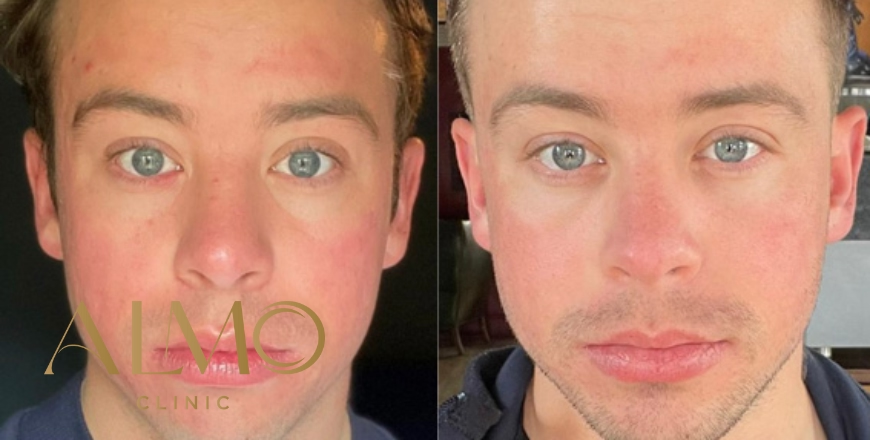
With both technologies improvement is gradual: new collagen forms during the months after each session, so the result is not judged at two or three weeks.
Prices at ALMO Clinic
| Treatment | Price per session |
|---|---|
| Full-face Morpheus8 for scars | From $1,200,000 COP (~$300 USD) |
| Morpheus8 + CO2 laser | From $2,200,000 COP (~$550 USD) |
| Fractional CO2 laser, full face | From $1,800,000 COP (~$450 USD) |
| Fractional CO2 laser, very small area | From $550,000 COP (~$137 USD) |
Prices per session. CO2 laser is quoted by treated area. The number of sessions and the total cost are defined at the evaluation. Areas and packages are detailed on our Morpheus8 pricing and fractional CO2 laser pricing pages.
Which one fits your case
| Criterion | Points to CO2 laser | Points to Morpheus8 |
|---|---|---|
| Scar type | Shallow boxcar scars, uneven texture | Rolling and deeper atrophic scars |
| Phototype | Lighter skin | Darker skin |
| Recovery | You can take about a week | You need to get back to your routine soon |
| Number of sessions | You prefer fewer sessions | You accept more, milder sessions |
| Other goals | Sun spots, fine lines | Mild associated laxity |
These are guidelines, not rules: the indication is confirmed by examining the skin.
Combined treatment: Morpheus8 and CO2 laser
When several scar types are present, which is the usual situation, the two technologies can be combined: Morpheus8 works on the dermis and fractional CO2 laser resurfaces the skin. When done in separate sessions, they are spaced 4 to 6 weeks apart.
At ALMO Clinic a combined Morpheus8 + CO2 laser session starts from $2,200,000 COP (~$550 USD). The number of sessions is defined at the evaluation.
Common mistakes when choosing a treatment
- Choosing by price alone. The cost per session does not tell you how many sessions you will need or which scar type each technology treats best.
- Expecting the final result in a few weeks. Collagen remodeling takes months.
- Ignoring your phototype. On darker skin, an ablative laser with aggressive settings raises the risk of post-inflammatory hyperpigmentation.
- Treating scars while acne is still active. New breakouts can leave new marks; acne is controlled first.
- Skipping the evaluation. Scar type is confirmed by examining the skin, not from a photo.
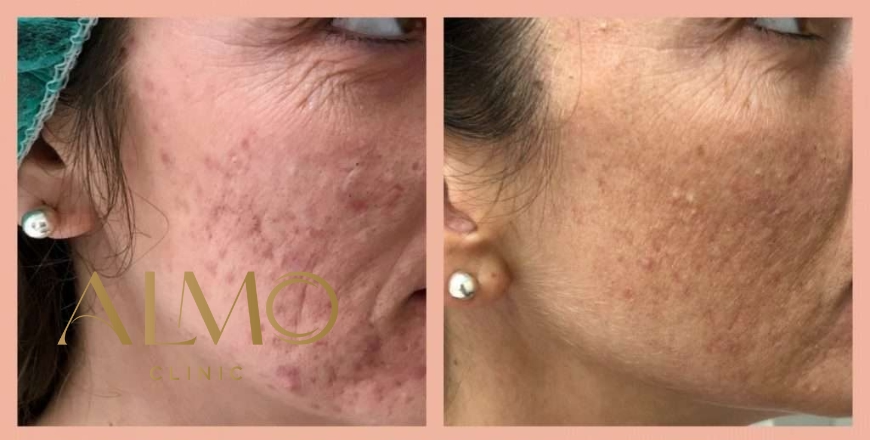
Evaluation at ALMO Clinic
There is no single answer. The evaluation covers:
- The type and depth of your scars
- Your phototype and any history of dark marks or keloids
- The recovery days you can take
- Your expectations, to match them with what each technology can achieve
That defines whether CO2 laser, Morpheus8 or the combination is the better fit, how many sessions and the budget. Treatment details are on our acne scar treatment in Bogotá page.
Schedule your evaluation at ALMO Clinic
If you are exploring other Morpheus8 comparisons, see our guide on Morpheus8 vs Thermage for skin laxity, or Morpheus8 vs HIFU for non-surgical tightening.
References
- Acne scars: what’s the best treatment? (Mayo Clinic)
- Acne scar treatment (review, National Library of Medicine)