In summary
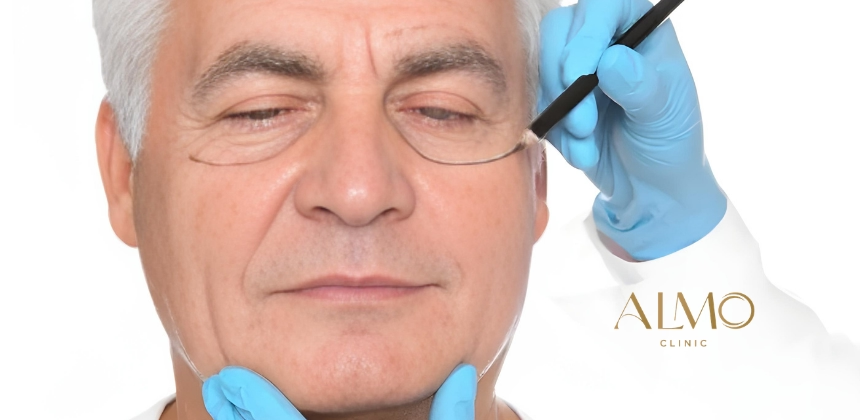
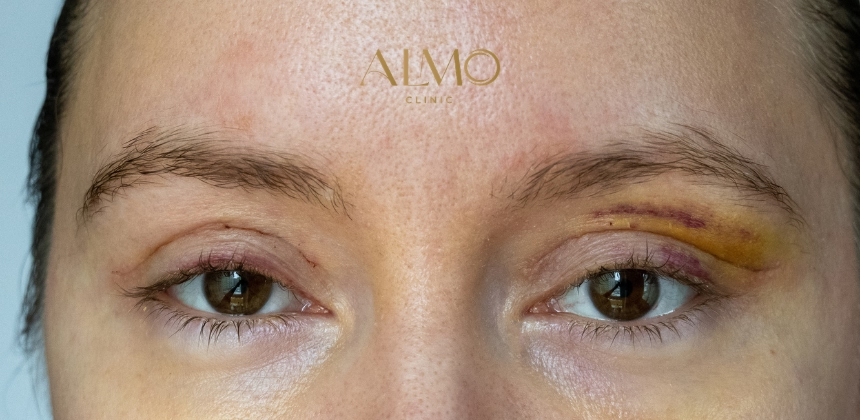
Five signs suggest blepharoplasty may be indicated: the upper lid rests on the lashes and narrows lateral vision; you constantly raise your eyebrows to see clearly, causing frontal headache; under-eye bags persist on waking regardless of rest; makeup collects in the eyelid crease; and your gaze reads as tired even after sleeping. The first three are functional problems, not just cosmetic ones.
Reviewed by Dr. Oscar Barón · Plastic surgeon · SCCP
Reduced visual field
- Two eyelids from $1,750 USD
- Social recovery 7–10 days
Eyelids don’t warn you before they change. One day you look in the mirror and something’s different: a heaviness that wasn’t there before, bags that sleep can’t fix, a permanently tired look that has nothing to do with how you actually feel.
These signs aren’t just cosmetic. In some cases they affect vision, self-confidence, and quality of life. Blepharoplasty or eyelid surgery exists precisely to correct them when they’ve reached a point that non-surgical treatments can no longer address.
Here are the five most common signs that it may be time to consider a surgical evaluation.
1. Your visual field has narrowed without you fully realizing it
A drooping upper eyelid doesn’t always cause obvious vision loss. Many people compensate without noticing — tilting their head back, unconsciously lifting their brows, or squinting to keep their eyes open.
If you have frequent headaches across your forehead, brow tension by the end of the day, or if you cover your eyelid with your finger and suddenly the world looks wider, it’s likely that excess skin is limiting your visual field.
In these cases, blepharoplasty isn’t just cosmetic — it’s a functional correction. The first step is documenting it: a visual field test and an ophthalmology assessment measure how much of your field of vision you’re actually losing before surgery is considered.
2. People say you look tired even when you’ve gotten plenty of sleep
This is the most common sign patients bring to their consultation. It doesn’t matter how many hours you slept or how good you feel — the way you look projects exhaustion.
The culprit is excess skin on the upper eyelid that visually reduces the eye opening, or fat bags under the eyes that cast a permanent shadow in that area. Neither one responds to rest, because they’re not caused by fatigue — they’re structural changes in eyelid tissue.
Undereye concealer can mask it in photos. But in person, in natural light, the tired look stays.
3. The bags under your eyes don’t go away with any treatment
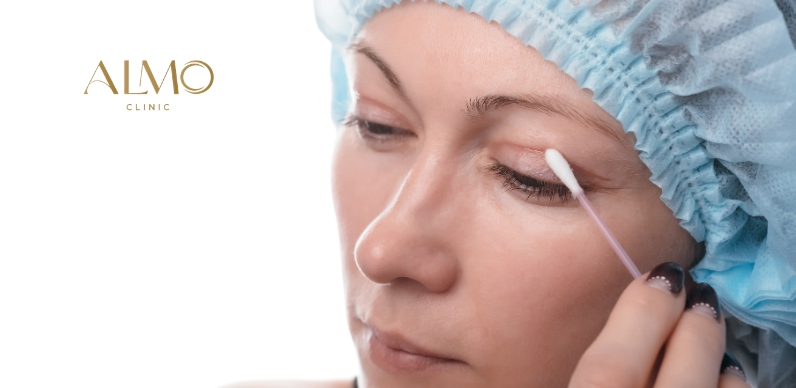
Under-eye bags have two possible origins: fluid retention (which varies with sleep and salt intake) or herniated orbital fat (which is permanent). The first can improve with lymphatic drainage, diet, and topical treatments. The second cannot.
When the bags are always the same — at 7am, at 8pm, after sleeping, after vacation — it’s fat herniation. The fatty tissue that surrounds the eyeball has migrated slightly forward and is visible under the lower eyelid skin.
Non-surgical treatments like Juvelook can improve skin quality and soften the transition between the bag and the cheekbone. But structural fat bags only disappear with lower blepharoplasty.
4. The weight of your eyelids is getting in the way of daily life
There’s a point where excess skin on the upper eyelid stops being purely aesthetic and starts affecting everyday life. Some patients describe:
- A feeling of “heaviness” or eye fatigue by the end of the day
- Having to consciously raise their brows to see better
- Trouble applying eye makeup because the eyelid “doesn’t have room”
- Sunglasses or eyeglasses feeling uncomfortable because the eyelid pushes against them
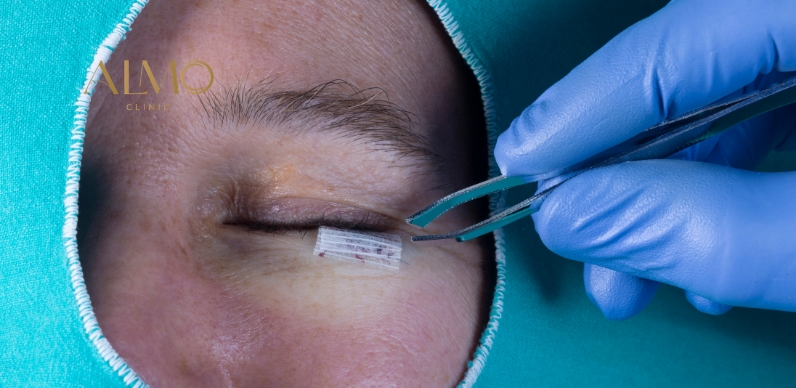
When excess skin is actually touching or nearly touching the lashes, blepharoplasty is clearly indicated.
5. The non-surgical treatments you were using aren’t cutting it anymore
Periocular treatments — radiofrequency, bio-stimulators, microfocused ultrasound — have an ideal window where they deliver their best results: when sagging is mild and the tissue still responds to contraction and regeneration stimuli.
If you’ve been through one or two treatment cycles and the results keep diminishing, or the effects aren’t lasting as long as they used to, that’s a sign the sagging has outgrown what technology can fix. That doesn’t mean the treatments failed — it means the degree of correction needed is beyond their capacity.
AccuTite, for example, is an excellent option for mild upper eyelid sagging before real excess skin develops. Once the excess is visible, surgery is the logical next step.
Do you recognize yourself in any of these signs?
Seeing yourself in one or more of these situations isn’t a diagnosis. It’s an indication that a consultation with a board-certified plastic surgeon is worth having.
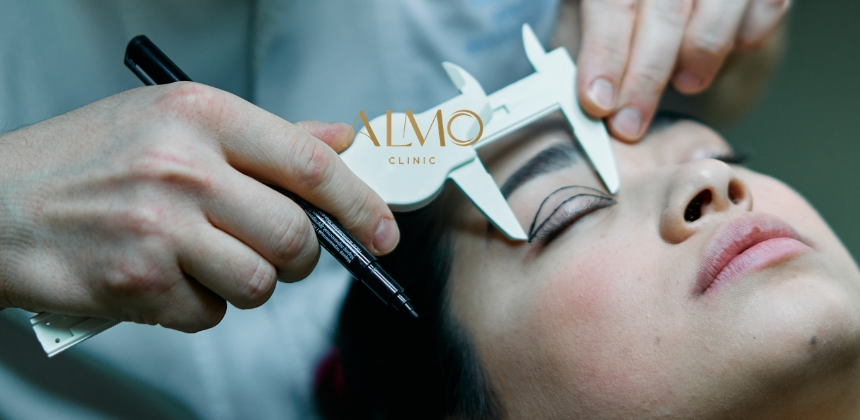
In that evaluation, the specialist assesses the degree of excess skin, the presence and volume of herniated fat, eyelid muscle tone, brow position, and whether there’s a functional component. With that information, they determine whether blepharoplasty is the right option, what type of procedure fits your case, and what realistic results look like.
The blepharoplasty recovery guide details what to expect after the procedure, from day 1 to the final result.
See all the details about eyelid surgery →
Recognized yourself in these signs? Book a consultation and get a clear answer about your case.