
Surgeons with specific training
ALMO Clinic's medical team has certified experience in direct implantation with the Choi pen device.
The DHI technique uses a Choi-type implanter that opens the channel and inserts the follicle in a single movement, offering greater control over the angle, direction and density of the transplanted hair.

5.0/5 on 15 Google reviews
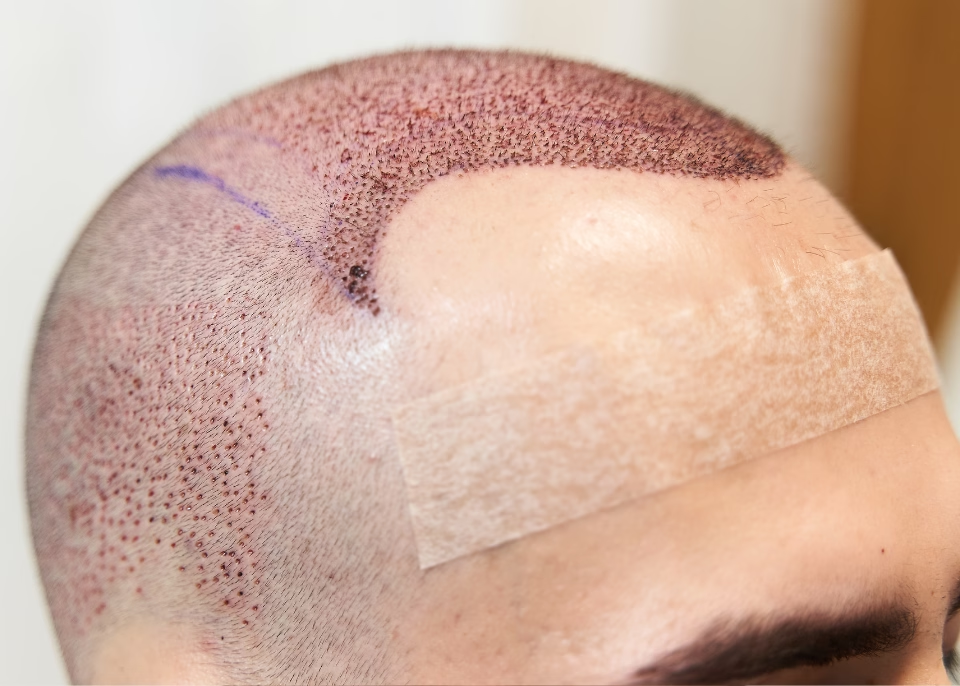
The DHI (Direct Hair Implantation) technique extracts follicles individually just as FUE does, but implants them directly with a Choi implanter, without cutting recipient incisions first. That gives greater control over angle, direction and density, which makes it especially useful along the frontal hairline and when densifying between existing hair. At ALMO Clinic in Bogotá hair transplant starts from $1,125 USD.
Reviewed by Dr. Oscar Barón · Plastic surgeon · SCCP
ALMO Clinic's medical team has certified experience in direct implantation with the Choi pen device.

The DHI technique opens and inserts each follicle in a single movement, controlling the hair angle with millimetric precision.

We carry out periodic check-ups during the 12 to 18 months the transplanted hair takes to fully mature.
In a conventional hair transplant, the implantation angle depends on the surgeon's manual skill when opening the channels. With the Choi implanter, the control of angle, depth and direction is built into the instrument itself: each follicle is positioned with millimetric precision before it enters the tissue.
The difference is especially noticeable along the hairline, where small variations in angle determine whether the result looks completely natural or slightly artificial.
"With the DHI technique there is less room for improvisation and more scope for precision. The Choi pen forces you to decide exactly where each follicle goes before implanting it. For zones where the angle is critical — hairline, eyebrows, beard — that precision is not optional." — Dr. Óscar Barón, Plastic Surgeon Certified by the SCCP.Check whether the DHI technique is for you
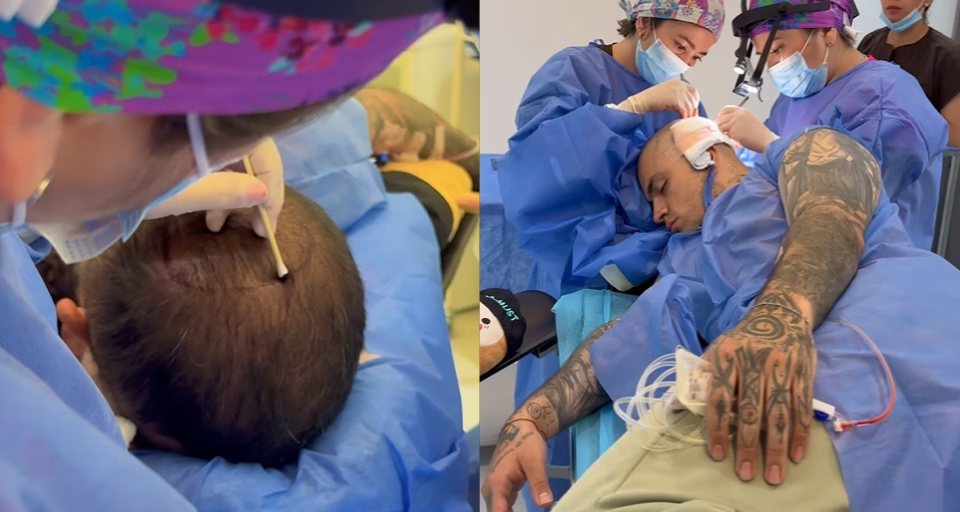
The Choi implanter is a precision device with a hollow needle at its tip. The follicle is loaded into the needle and, by pressing gently on the scalp, the instrument pierces the tissue and inserts the follicle in the same gesture. This simultaneous process minimises the time each follicle remains outside the body, improves the graft survival rate and allows the surgeon to control the depth, angle and direction of each transplanted hair with millimetric precision.
In zones where the hair's exit angle is critical to the aesthetic result — hairline, eyebrows, sideburns, beard — DHI offers clear advantages over conventional channel opening.
Like the FUE transplant, the DHI technique is an outpatient surgery under local anaesthesia. The key difference lies in the implantation phase.
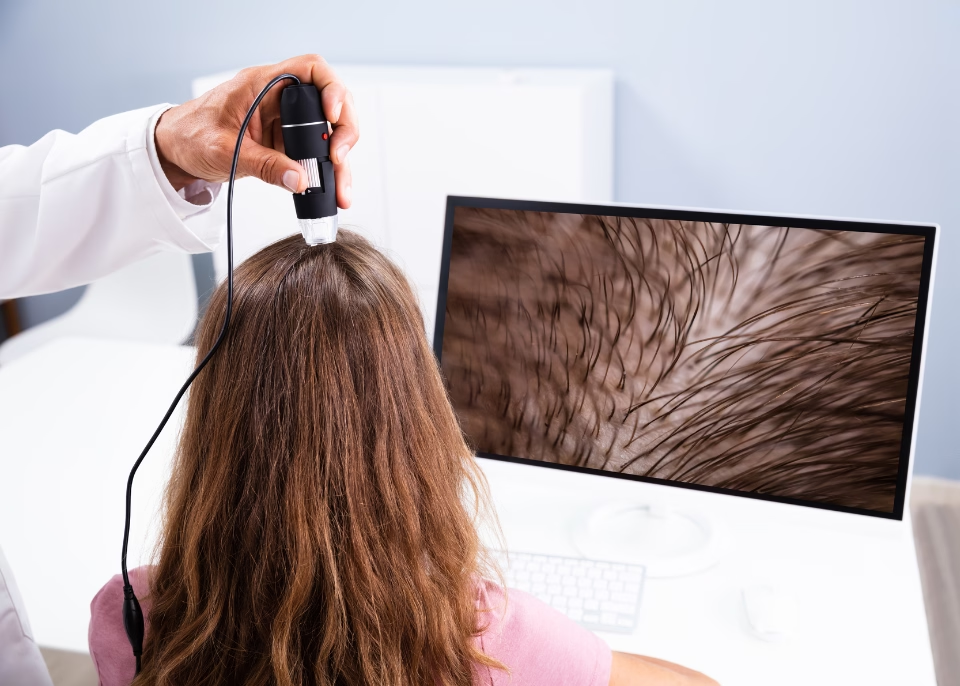
Complete trichological assessment with a digital trichoscope. Design of the hairline and zones to be treated. Analysis of the donor area to determine the number of available follicles and the optimal distribution.
Partial shaving of the donor area (nape and temples). Application of local anaesthesia. The recipient zone can be kept without a full shave in patients with existing hair.
Individual extraction of each follicular unit with 0.7–0.9 mm micro-punches, just as in the FUE technique. The follicles are loaded directly into the Choi implanters to reduce exposure time.
Each Choi implanter loaded with a follicle is pressed gently onto the scalp at the planned angle and direction, inserting the follicle precisely and simultaneously with the opening of the micro-channel.
No linear scars or sutures. The recipient zone shows small crusts that fall off between days 7 and 10. Post-operative care instructions are provided on the same day as the procedure.
Shock loss between weeks 2 and 4 (expected and normal). Growth begins between months 3 and 4. 50–60% of the result by month 6. Definitive result between 12 and 18 months.
Neither technique is superior to the other: one is more appropriate for each case. These are the scenarios in which the DHI technique offers concrete advantages:
DHI makes it possible to transplant without fully shaving the recipient zone. If you have existing hair covering the area to be treated, the procedure can be practically invisible to those around you during recovery.
If you have a receding hairline but with existing hair between the recessions, DHI makes it possible to work with greater precision between that hair without damaging it, respecting the natural direction of the native hair.
For eyebrows and beard, the hair's exit angle is decisive for a natural result. The millimetric control of the Choi implanter over follicle direction makes DHI the reference technique for these specialised transplants.
For a personalised assessment, book a consultation with our specialists. At ALMO Clinic we explain honestly which technique is most appropriate for your specific case.
Most patients arrive having read that "DHI is better than FUE" or the other way around. In practice, there is no superior technique: there is the technique most appropriate for each specific case.
The patient wants to avoid full shaving, works with small zones where the angle is critical (hairline with native hair, eyebrows, beard), or seeks the maximum possible density in a localised area.
More than 3,500 follicles are needed in a single session, the balding is extensive and a wide area is being worked on, or time efficiency is an important factor for the patient.
In some cases we combine FUE for the mass extraction and DHI for implantation in specific zones requiring greater control. The decision is made after the complete trichoscopic analysis, not before.
| Criterion | DHI technique | FUE technique |
|---|---|---|
| Recipient-area shaving | Partial or no shaving | Full shave |
| Implantation method | Simultaneous opening + insertion (Choi) | Pre-opened channels + later insertion |
| Control of angle and direction | Excellent (millimetric) | Very good |
| Capacity per session | Up to 3,500 follicles | Up to 4,000 follicles |
| Preferred indication | Hairline, eyebrows, beard, densification | Extensive balding, large volumes |
| Scarring in donor area | Imperceptible micro-dots | Imperceptible micro-dots |
| Permanent result | Yes | Yes |
The choice between the DHI or FUE technique is decided after a trichoscopic analysis of the donor area, assessment of the area to be treated and a conversation with the patient about their expectations and lifestyle.
At ALMO Clinic we never recommend a technique without a prior diagnosis. If, after the assessment, the DHI technique is not the most appropriate for your case, we say so clearly and guide you towards the option that is.