
Board-certified plastic surgeons
SCCP-certified surgeons apply cartilage-scoring and suture techniques refined over hundreds of otoplasty cases for natural results.
Ear shape significantly influences the overall balance of the face, yet otoplasty is among the most understated procedures in aesthetic surgery. ALMO Clinic's plastic surgeons apply cartilage-scoring and suture techniques refined over hundreds of cases to achieve natural-looking repositioning that holds long-term — without the artificial folding seen in less precise approaches.

5.0/5 on 15 Google reviews
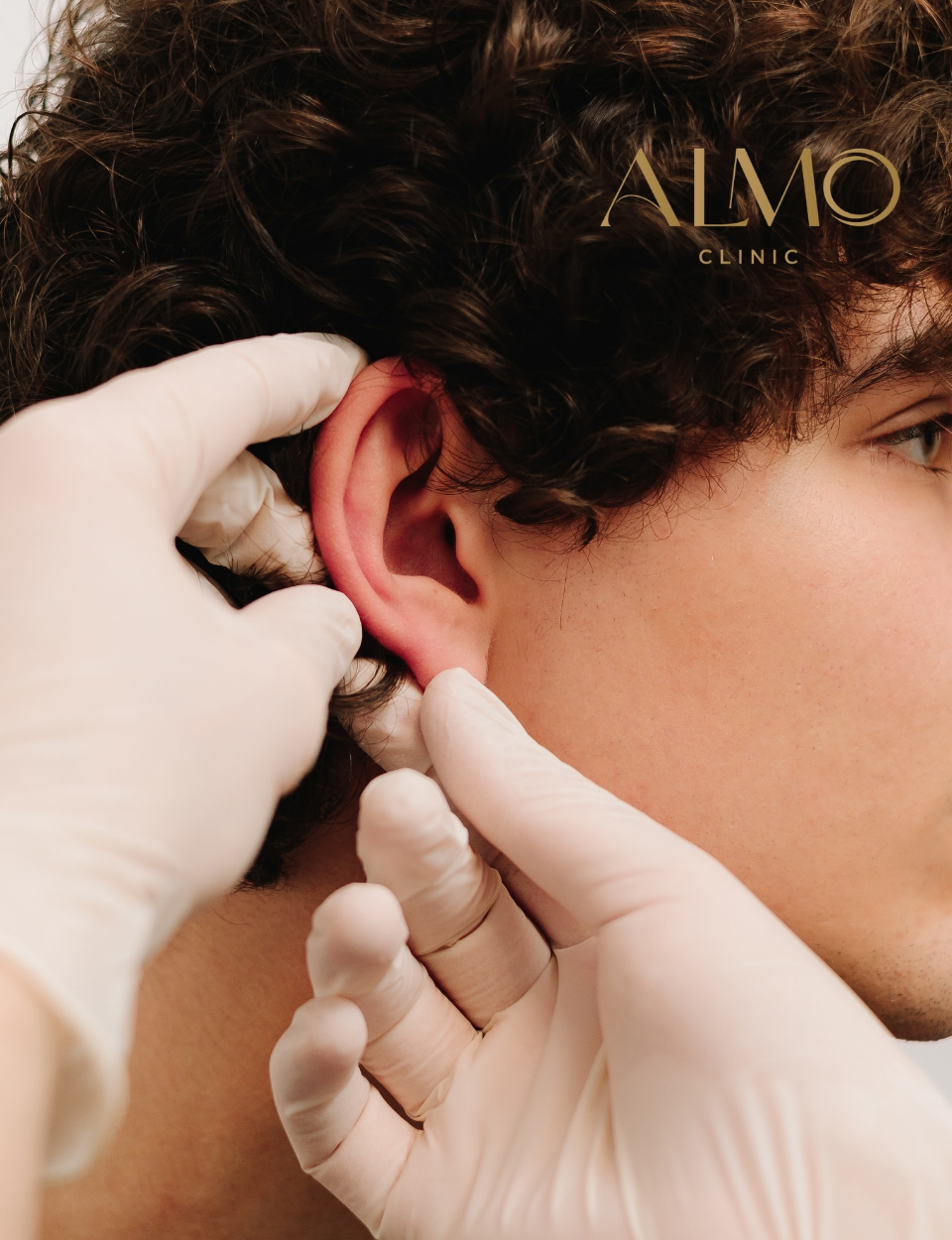
Otoplasty repositions or reshapes the auricle when the ears protrude beyond what facial proportion allows. It corrects prominent ears, asymmetry, cup ear and disproportionate lobes, without affecting hearing or the inner ear. In Colombia at ALMO Clinic it starts from $2,000 USD, is suitable from age 6 to 7, and the result is permanent. Social recovery takes 7 to 10 days.
SCCP-certified surgeons apply cartilage-scoring and suture techniques refined over hundreds of otoplasty cases for natural results.

Antihelix recreation uses proven suture or cartilage-scoring methods chosen according to each ear's elasticity and projection.

Nightly elastic headband use for 4 to 6 weeks supports a permanent result visible within 3 to 6 months.
If there are hairstyles you never wear, photos you avoid, or a constant discomfort every time the wind moves your hair, that's not an overreaction. It's a sign that something bothers you enough to shape your everyday decisions. Otoplasty in Bogotá exists precisely to solve that problem at its root — not to change who you are, but so that the shape of your ears stops being something you think about.
Prominent ears — known as "bat ears" — are an anatomical variation of the auricular cartilage that has nothing to do with the actual size of the ear but with its angle of projection relative to the skull. Surgery corrects that angle with precision: it repositions the cartilage, fixes it in its new position, and hides the scar in the retroauricular sulcus — that natural fold behind the ear that no one sees.
The result is not the look of "someone who had ear surgery." It's the look of someone whose ears simply fit their face. The correction is permanent and social recovery takes between 7 and 10 days. Otoplasty is one of the plastic surgery procedures we perform at ALMO Clinic, and it's often combined with rhinoplasty or blepharoplasty for a complete facial rejuvenation plan.
Ear surgery acts on the cartilage of the auricle — not on hearing or the internal structure of the ear. Understanding what is possible is part of honest result planning.
| Correction | Ear surgery can achieve | The real limit |
|---|---|---|
| Prominent ears (bat ears) | Yes — reduction of projection angle and repositioning of the auricle | Cannot change the absolute size of the ear, only its projection |
| Cup ear deformity | Yes — correction of the helix shape and underdeveloped antihelix | Severe cases may require combined techniques with cartilage graft |
| Asymmetry between ears | Yes — correction of visible differences in projection or shape between both ears | Minor residual asymmetry is normal in any pair of ears |
| Disproportionate earlobes | Yes — through complementary lobuloplasty in the same surgical session | Earlobes torn by piercings require a specific lobuloplasty technique |
| Trauma or secondary correction | Yes — revision of prior otoplasties with unsatisfactory results | Secondary surgery is more complex; the result depends on prior scar tissue |
Otoplasty is not a standardized surgery — each ear has a different anatomy that determines which technique produces the most natural and lasting result. These are the four elements that define the procedure in each case:
In adults and older adolescents, otoplasty is performed under local anesthesia with conscious sedation. This eliminates the risks of general anesthesia, shortens recovery time, and allows the patient to remain comfortable without losing control. In children under 12, general anesthesia is preferred to ensure immobility throughout the surgery.
The antihelix is the inner cartilaginous fold of the ear that, when underdeveloped, causes the auricle to protrude. Recreating it is the central step of otoplasty. The Mustarde technique uses permanent sutures that bend the cartilage and fix it in its new position; the Stenström technique weakens the cartilage on its anterior surface so it naturally adopts the correct curvature. The choice between the two depends on cartilage elasticity and the degree of projection to be corrected.
In some cases, auricular prominence is due not only to the lack of antihelix but also to an excess of concha — the central cavity of the auricle. When this occurs, a partial resection of that cartilaginous tissue is performed to reduce the distance between the ear and the skull. Both corrections can be combined in the same surgical session.
All incisions are made behind the ear, in the retroauricular sulcus. The scar remains completely hidden: it is not visible from the front or in profile. Six months after surgery, that area is virtually indistinguishable from the surrounding skin.
"The otoplasty patient who arrives with the most doubts is not the adult — it's the parent bringing a seven-year-old. The question is always the same: 'will the ears go back?' When the technique is correctly executed and postoperative care is respected, it doesn't revert. What changes is the child's quality of life from that moment on." — Dr. Óscar Barón, Board-Certified Plastic Surgeon SCCP.
To see in detail what to expect week by week after surgery, check out our guide to recovery and postoperative care.
I want to discuss my case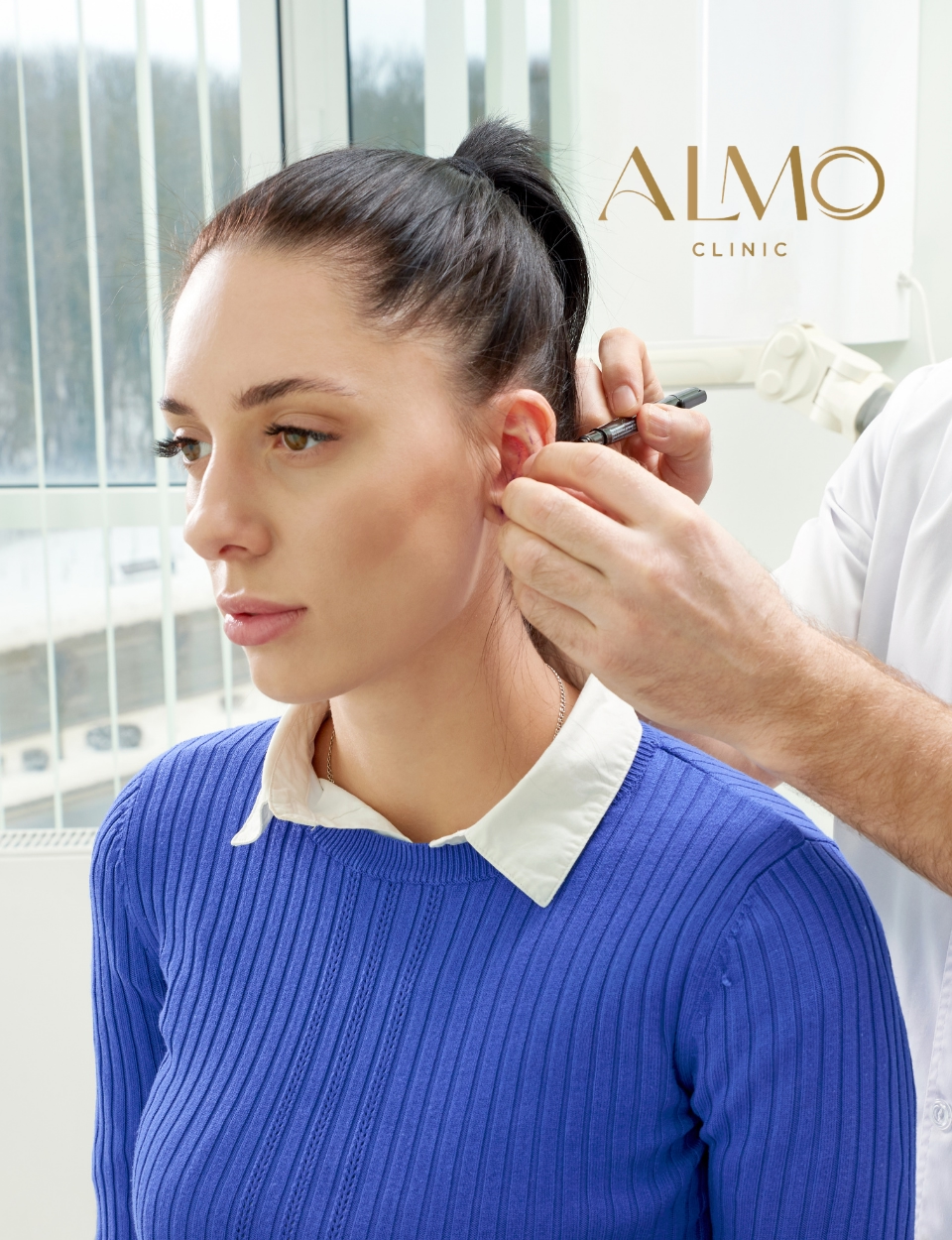
Not all cases of prominent ears require the same surgical approach. The preoperative assessment defines the correct technique, the appropriate type of anesthesia, and the realistic result expectations based on each patient's anatomy.
At that age the auricular cartilage has reached approximately 85% of its adult size and has enough firmness to maintain the correction stably. Operating earlier increases the risk of recurrence because the cartilage is not yet fully formed. Surgery in children is performed under general anesthesia, and the psychological impact of early correction is significant: it prevents years of teasing and negative self-image development.
Otoplasty has no upper age limit. Many adults who lived their entire childhood and adolescence with prominent ears choose to have surgery when their circumstances allow it. In adults, surgery is performed under local anesthesia with conscious sedation, which reduces risks and shortens recovery. The result is equally permanent regardless of the age at which it is performed.
Some patients arrive with asymmetry between both ears — one more prominent than the other — with earlobes torn by piercings or enlarged by stretchers, or with an unsatisfactory result from a previous otoplasty. These cases require a specific approach: secondary surgery is technically more demanding because prior scar tissue limits the options, but in expert hands the results remain natural.