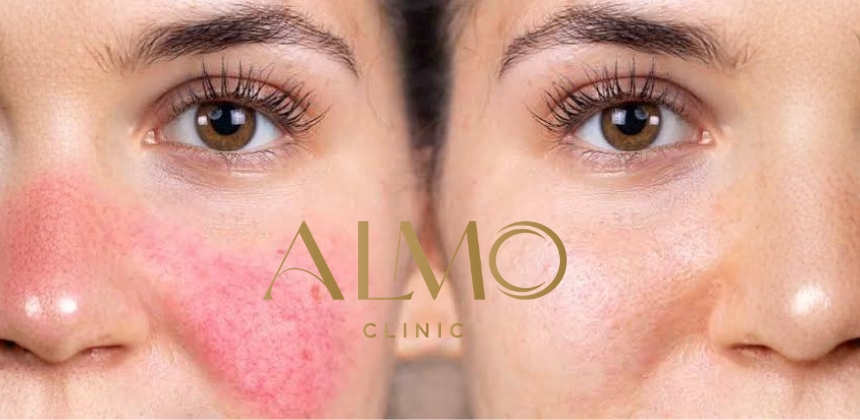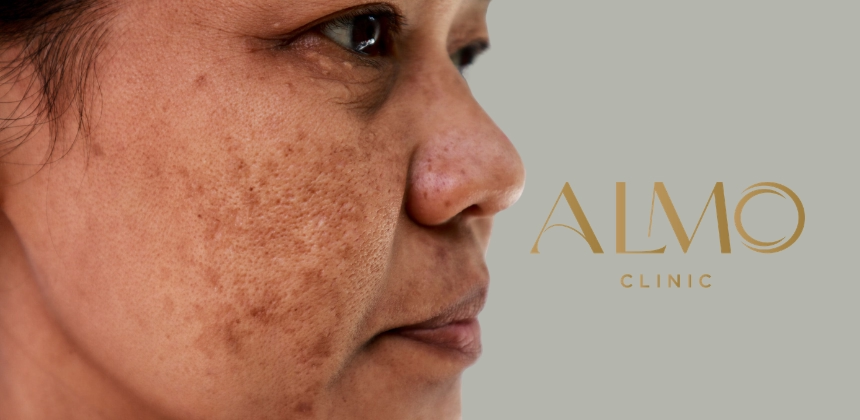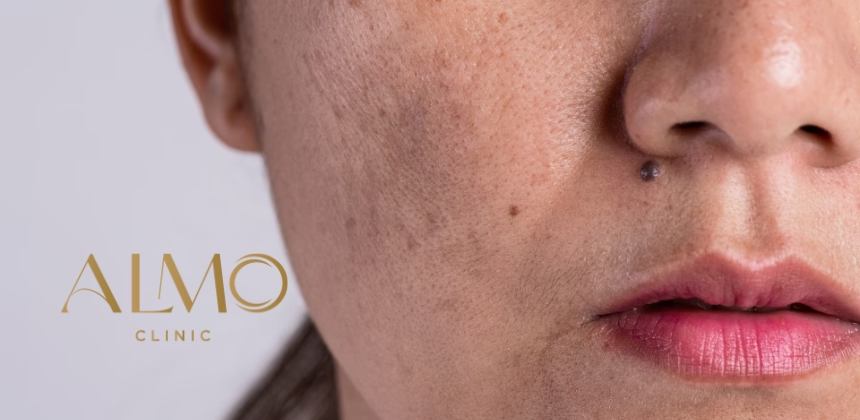
Melasma has no definitive cure: it is a chronic condition prone to recurrence, and what dermatology offers is sustained control. Treatments lighten the patches, but without daily, strict sun protection they return, because radiation — including visible light from screens — reactivates melanocytes. Aggressive treatment can trigger a rebound darker than the original patch. That is why correct management is gradual and maintenance is indefinite.
Reviewed by Dr. Oscar Barón · Cirujano plástico · SCCP
Does not exist
- Basis of control Daily sun protection
- Risk Rebound from aggressive treatment
It is the question that arrives in consultation invariably, usually after months of frustration with pharmacy creams:
“Does melasma have a cure?”
It deserves a direct answer, without evasion.
The honest answer: no cure, but effective control
Melasma is a chronic condition. There is no treatment that eliminates it definitively and permanently, the way a lesion might be excised.
What does exist is effective medical control that can reduce patches to levels imperceptible to the naked eye — and keep them there long-term.
The distinction is not trivial. It matters because:
- If you expect a “cure”, the first relapse will feel like a treatment failure
- If you understand melasma as a managed condition, the protocol makes sense and so does the maintenance
The most useful analogy: melasma is more like hypertension than a sprained ankle. It is not “cured” once; it is controlled with consistency.
Why melasma relapses
Melasma relapses because the melanocytes producing it remain hyperreactive. Treatment can eliminate accumulated pigment, but it does not change the biology of the melanocytes.
The most common relapse triggers:
Sun exposure without adequate protection
The primary one. Even moderate sun exposure without a sunscreen can reactivate melanin production in skin with a melasma history.
In Bogotá, altitude increases UV intensity. One unprotected day in the sun can reverse weeks of treatment.
Hormonal changes
Pregnancy, combined hormonal contraceptives, hormone replacement therapy: any sustained oestrogen increase can reactivate melasma. This is why many patients who had it under control see it return when starting contraceptives.
Stopping the maintenance protocol
When patches disappear, it is tempting to stop the depigmenting actives. A common mistake. The maintenance phase — with photoprotection and actives at lower concentrations or frequency — is what prevents relapse.
What to expect from treatment: realistic timelines
Incorrect expectations are the second most common cause of abandonment (after cost). These are the typical phases of a well-designed melasma treatment:
Week 1 to month 1: Sunscreen and depigmenting actives begin inhibiting new melanin production. Patches do not yet retreat — the already-deposited pigment needs time to be eliminated.
Months 2 to 3: If the melasma is primarily epidermal, first results begin to show: patches lighten, borders diffuse. Peels during this period significantly accelerate elimination of superficial melanin.
Months 4 to 6: More evident results. For epidermal melasma, many patients achieve a 60–80% reduction. For dermal or mixed melasma, progression is slower.
Month 6 onwards: Maintenance phase. The goal is to preserve results with daily photoprotection and supporting actives. Peels may be spaced out to once monthly or every two months.
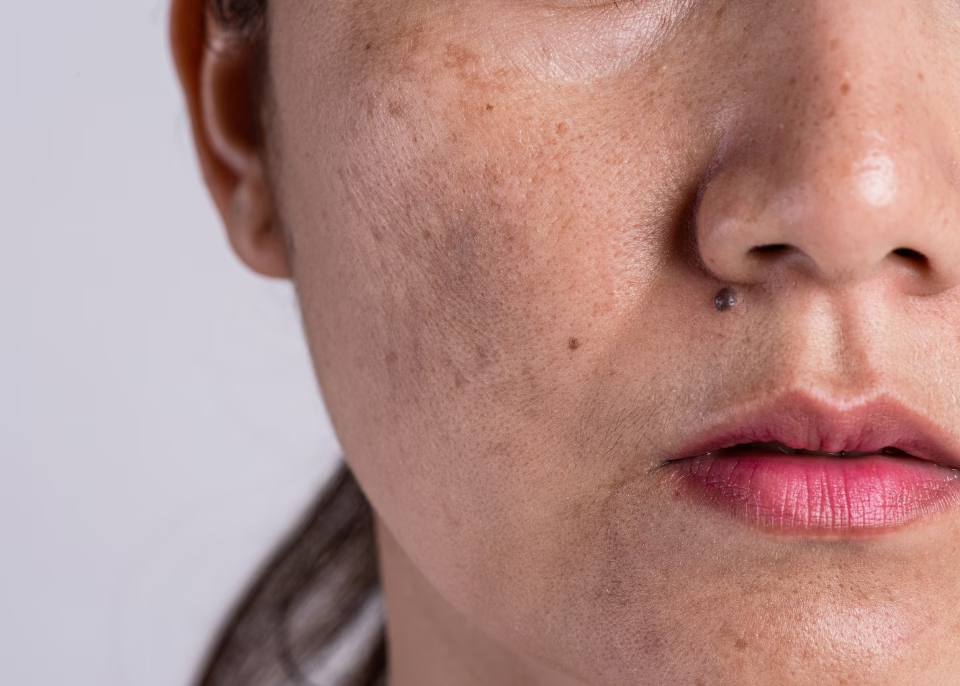
The treatment pillars that actually work
There is no single solution. The most effective protocols combine several tools.
Broad-spectrum photoprotection
Not optional. It is the foundation on which everything else is built. Without it, no depigmenting agent works well.
An SPF 50+ with filters covering visible light (sunscreens with iron oxide pigments) is the standard recommended for melasma.
High-concentration topical depigmenting agents
Ingredients with the strongest clinical evidence include:
- Hydroquinone (2–4%): The historical standard. Inhibits tyrosinase. Used in cycles (3–6 months) to avoid paradoxical ochronosis
- Tranexamic acid: Has gained significant traction in recent years. Acts on the keratinocyte-melanocyte axis. Excellent tolerability
- Azelaic acid: Safe option, even in pregnancy. Milder but sustained depigmenting effect
- Retinoids: Accelerate cell turnover and potentiate depigmenting agents. Only at concentrations and formulations appropriate for each skin type
Chemical peels
Glycolic acid, mandelic acid and superficial TCA — calibrated by the dermatologist according to phototype and melasma type — significantly accelerate elimination of superficial pigment and improve penetration of topical actives.
Laser and IPL
Second-line tools for melasma, not first-line. In expert hands and with appropriate patient selection, they can contribute to the result. In higher phototype skin or with active dermal melasma, a poorly chosen laser can worsen the condition — including a phenomenon called post-inflammatory hyperpigmentation.
How we see it at ALMO
When a patient arrives asking “is there a cure?”, the first thing we do is slightly reframe the question: what result is achievable in your specific case?
Because the prognosis for epidermal melasma in someone with no active hormonal load who will be rigorous with photoprotection is completely different from that of someone with deep dermal melasma, a recent pregnancy and an outdoor working life.
We design the protocol on a foundation of realism. We do not promise results we cannot guarantee, but we do map the most efficient path for each case.
Book your melasma evaluation at ALMO Clinic →
Ready to find out what result is realistically achievable in your specific case? Reach out to our team.
Schedule your melasma consultation </a>
Frequently asked questions
How long does it take to see improvement with melasma treatment?
Depends on the type of melasma. For epidermal melasma, first visible results usually appear between months 2 and 3. For dermal or mixed melasma, it can take 4 to 6 months or more. Consistency with the sunscreen and actives is decisive.
Can melasma disappear completely?
In epidermal melasma cases with rigorous photoprotection and an appropriate medical protocol, patches can become imperceptible to the naked eye. But the underlying melanocytes remain hyperreactive; if photoprotection is abandoned, melasma can return.
Is hydroquinone safe for melasma?
Yes, in controlled use cycles (typically 3–6 months) at appropriate concentrations (2–4%), hydroquinone is an effective treatment with an acceptable safety profile for most adults. It is not indicated in pregnancy or in children.
Does a beauty salon peel help with melasma?
Peels in beauty salons tend to be superficial and at low concentrations, which may not be sufficient for dermal melasma. Also, in skin prone to hyperpigmentation, an improperly applied peel can worsen patches. Melasma peeling should be done under medical supervision.
Why did my melasma come back after it cleared?
The most common reason is sun exposure without adequate protection or restarting hormonal contraceptives. Melasma does not “go away for good”: photoprotection is a permanent habit, not a temporary one.