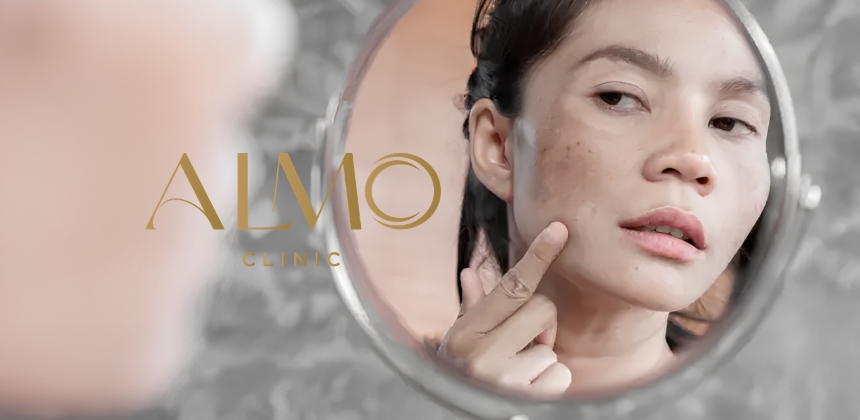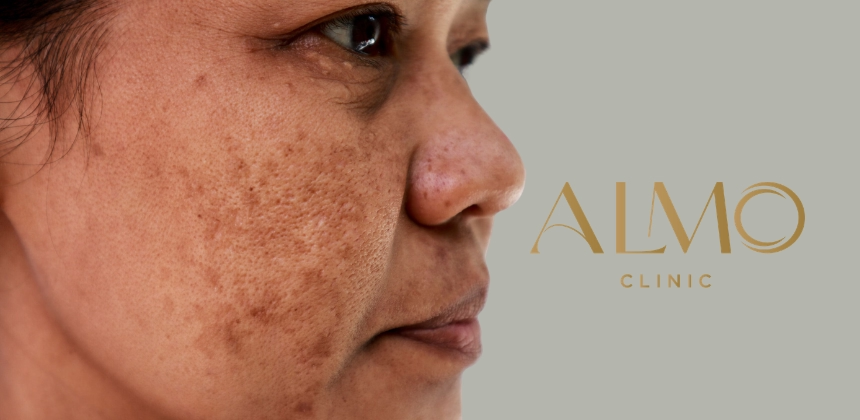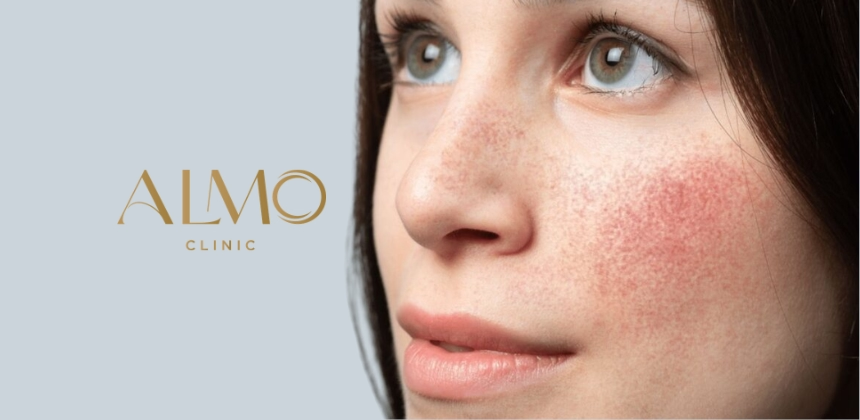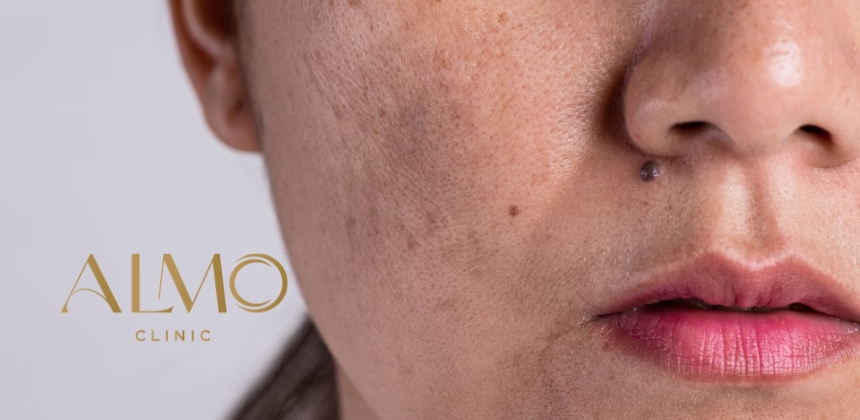
Melasma is symmetrical brown patching, most often on the cheeks, forehead and upper lip, caused by melanin overproduction. It is classified by depth: epidermal, the most superficial and most responsive; dermal, deeper and resistant; and mixed. Triggers are hormonal — pregnancy, contraceptives — plus sun exposure and genetic predisposition. At ALMO Clinic in Bogotá peel treatment starts from $87 USD.
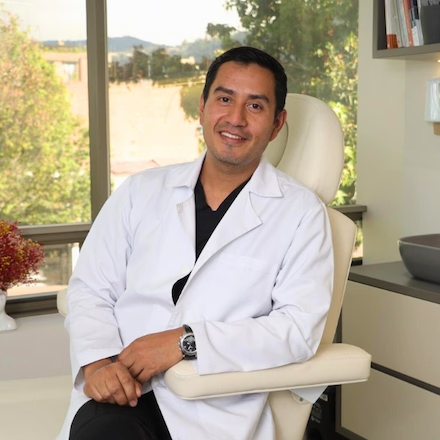
Reviewed by Dr. Oscar Barón · Cirujano plástico · SCCP
$87 USD
- Best prognosis Epidermal melasma
- Triggers Hormones and sun
The patches appeared some time ago. At first they were subtle — a slight darkening on the cheeks, something above the upper lip. You tried brightening creams from the pharmacy. You used sunscreen. And they are still there, perhaps even more noticeable than before.
If this pattern sounds familiar, you are most likely dealing with melasma.
The good news: it has a solution. The less good news: “use sunscreen” is necessary but not sufficient.
What melasma is — and why it is not an ordinary pigment spot
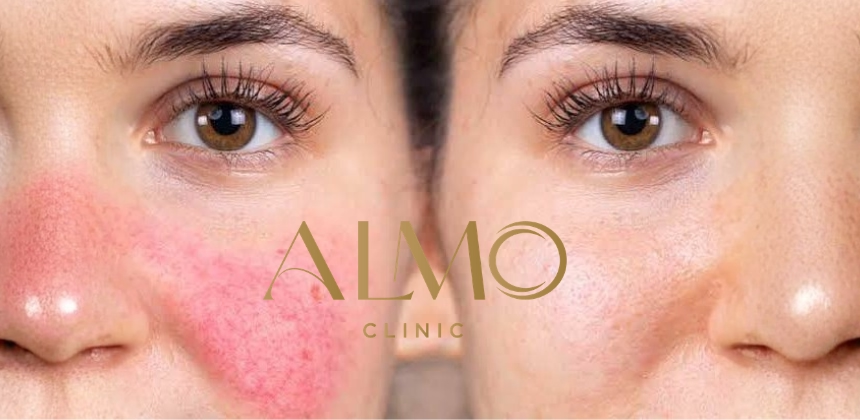
Melasma is a chronic cutaneous hyperpigmentation that results from overproduction of melanin by melanocytes — the cells responsible for skin colour.
The problem is not that there are more melanocytes than normal. It is that the existing ones become hyperreactive: they produce melanin disproportionately in response to certain stimuli, especially ultraviolet radiation and hormonal fluctuations.
The result is symmetrical patches — typically on both cheeks, forehead, upper lip and chin — brown or grey-brown in colour, with irregular but well-defined borders.
Unlike freckles or common sun spots, melasma has hormonal and vascular roots in addition to the solar component. That is why it does not clear up simply by avoiding the sun, and why over-the-counter brighteners rarely resolve it.
The 3 classifications of melasma that a dermatologist evaluates
The type of melasma you have directly determines which treatments will work and how quickly.
Epidermal melasma
Pigmentation sits in the superficial layers of skin — the epidermis. Under Wood’s lamp (a diagnostic ultraviolet light), the patches stand out clearly because the contrast is greater.
This is the subtype that responds best to treatment. Chemical peels, high-concentration depigmenting topicals and certain laser treatments act directly on the affected layer.
Dermal melasma
Melanin is deposited in the dermis, in deeper layers. Under Wood’s lamp, the contrast decreases because the light cannot penetrate as deeply.
It is more resistant to treatment. Superficial peels do not reach this depth; longer protocols and tools that act deeper are required.
Mixed melasma
The most common in clinical practice. Both epidermal and dermal components are present simultaneously. Treatment must address both layers.
Identifying the type requires evaluation with a dermoscope and/or Wood’s lamp. This is not something you can determine by looking in a mirror.
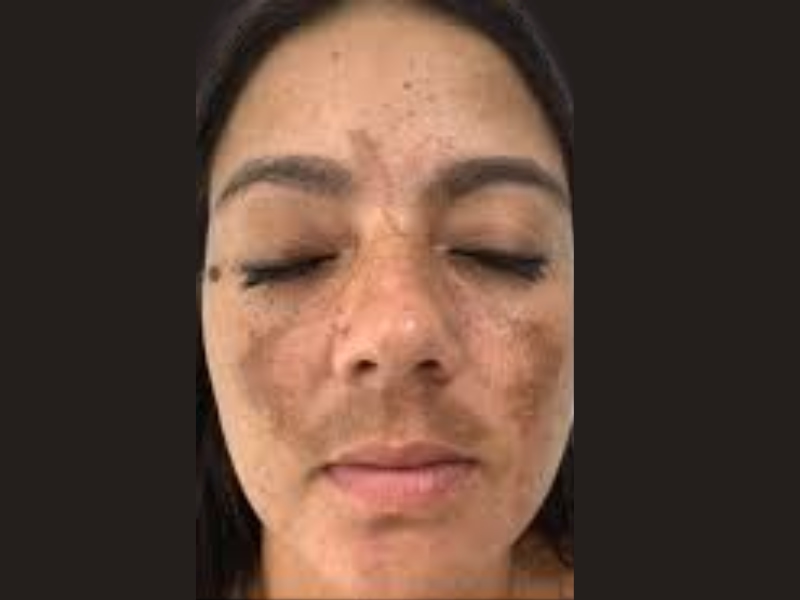
Why melasma appears: the triggering factors
There is no single cause. Melasma results from the interaction of several factors, and understanding them is fundamental to preventing recurrence.
Ultraviolet radiation
The primary trigger. UVA and UVB radiation directly stimulate melanocytes, which produce melanin as a defence mechanism. In melasma-prone skin, this response is exaggerated.
Important: visible light (blue light from screens and direct sunlight) can also activate melasma, even without UVA/UVB. This is why standard sunscreen — which blocks UV but not visible light — is not always sufficient.
Hormonal factors
Oestrogen and progesterone stimulate melanocytes. This explains the high prevalence of melasma in:
- Pregnancy (called chloasma or “the mask of pregnancy”)
- Women taking combined oral contraceptives or hormonal patches
- Hormone replacement therapy during menopause
In these situations, the combination of hormonal load + sun exposure is particularly potent in activating melasma.
Genetic predisposition
Melasma tends to be hereditary. If your mother or sisters have it, your risk is significantly higher.
Skin phototype
Most frequently affects people with Fitzpatrick types III to VI — medium, brown or dark skin tones. This includes a large part of the Latin American population.
Paradoxically, these skin types also have more naturally active melanocytes, making them more reactive to the stimuli that trigger melasma.
Heat
Heat — even without solar radiation — can stimulate melanocytes. Some patients notice worsening after cooking over a flame, frequenting saunas or during periods of intense heat.
Who is most at risk
The most common profile in consultation is a woman aged 25 to 50 with medium or mixed-race skin, a family history of pigmentation and a history of pregnancies or hormonal contraceptive use.
But melasma also appears in men — representing 10 to 20% of cases — and can develop in people with no hormonal factors whatsoever, simply from cumulative sun exposure.
What all these cases have in common: melanocytes that produce melanin disproportionately in response to certain stimuli. Treatment aims to reduce that reactivity and eliminate the accumulated pigmentation.
How we see it at ALMO
The most common mistake we see in patients who come to consultation is having spent months on over-the-counter brightening products — kojic acid, niacinamide, liquorice extract — without first identifying what type of melasma they have.
Those ingredients are not useless. It is that without knowing whether the melasma is epidermal, dermal or mixed, you are applying a solution blindly.
The correct diagnosis — with Wood’s lamp, full clinical history and phototype assessment — is the starting point that defines the entire subsequent protocol.
Book your melasma evaluation at ALMO Clinic →
Not sure which type of melasma you have? Ask our dermatology team directly.
Ask about your melasma type </a>
Frequently asked questions
Is melasma the same as chloasma?
Chloasma is the name given to melasma when it appears during pregnancy. Technically it is the same condition; the difference is the context in which it develops.
Is melasma dangerous to health?
No. Melasma is a benign condition with no risk of malignancy. However, it can have a significant impact on self-esteem and quality of life, and without treatment it tends to progress.
Can men get melasma?
Yes. Although far less common than in women, men can develop melasma — generally associated with cumulative sun exposure rather than hormonal factors.
How is melasma different from other pigmentation spots?
Melasma is distinguished by its symmetrical distribution, its relationship with hormonal and solar factors and its preferential location in the centrofacial zone. Sun spots (lentigines) are smaller, isolated and lack symmetrical distribution. A definitive diagnosis is made by the dermatologist.
Does melasma get worse in summer?
Yes. Greater sun exposure in summer is the most potent trigger. Patients with melasma should maximise photoprotection year-round, but especially during months of higher radiation.
Can melasma disappear on its own?
In some postpartum cases or after stopping oral contraceptives, melasma may improve spontaneously. However, it rarely disappears completely without medical treatment. And without strict photoprotection, it tends to return.