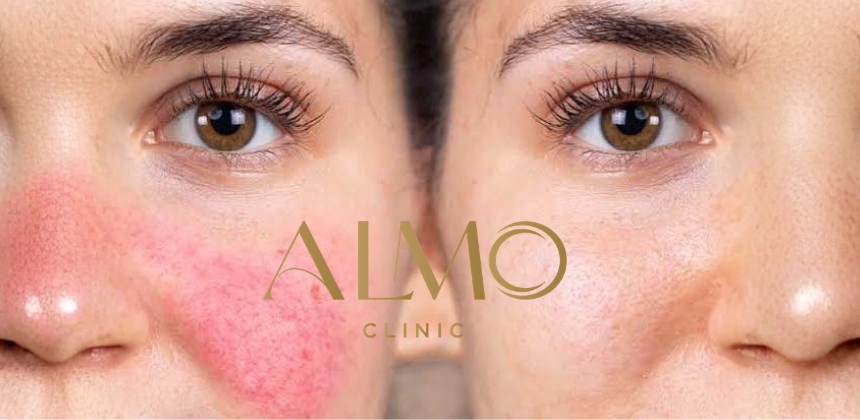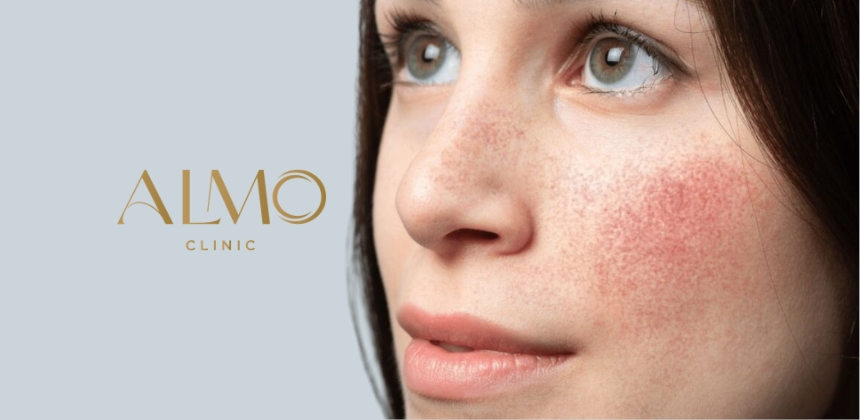
Behind rosacea sits a vascular abnormality and an exaggerated immune response, with involvement of the mite Demodex folliculorum, which is more abundant on rosacea-prone skin. The most reproducible triggers are sun exposure, abrupt temperature change, alcohol — red wine especially — spicy food, very hot drinks and stress. Identifying your own is the part of treatment that yields most, because the disease is controlled by preventing flares.
Reviewed by Dr. Oscar Barón · Cirujano plástico · SCCP
$225 USD
- Main trigger Sun exposure
- Key to control Identify your triggers
You have been dealing with the flare-ups for months. Sometimes they catch you off-guard: a glass of red wine with dinner and the next morning your skin is on fire. An intense workout and the redness that won’t subside for hours. The mid-morning sun during a short walk.
If you have rosacea, this is not random. There is a biological logic behind it.
Why rosacea appears: the mechanisms science has identified
Dermatology does not yet have a single definitive cause for rosacea. What it does have are multiple identified biological mechanisms acting in an interconnected way.
Neurovascular dysfunction
In rosacea-prone skin, the facial blood vessels show an exaggerated response to stimuli that would cause a minimal reaction in other people.
Heat, stress or exercise trigger normal vasodilation in any skin. But in rosacea, this vasodilation is disproportionate and sustained. The vessels do not contract with the same efficiency, which produces persistent erythema and — over time — permanent telangiectasias.
Altered innate immune response
Rosacea patients show elevated levels of antimicrobial peptides — especially cathelicidins — in the skin. In normal conditions, these molecules form part of the skin’s defence system. In rosacea, they are chronically expressed and trigger inflammation without any real infection.
This is the basis of the papulopustular subtype: papules and pustules are not caused by bacteria as in acne, but by this dysfunctional immune response.
Cutaneous microbiome and Demodex folliculorum
Demodex folliculorum is a microscopic mite that naturally inhabits the follicles of most adults. But in rosacea-prone skin, its density is significantly higher.
The relationship is complex: it is not clear whether Demodex causes rosacea or whether chronic inflammation creates a favourable environment for its proliferation. What has been demonstrated is that treating Demodex excess (with topical ivermectin) improves inflammatory symptoms.
Genetic predisposition
Rosacea tends to be familial. Having first-degree relatives with the condition multiplies the risk. Genes related to immune response and vascular regulation appear to play a central role.
The triggers: what activates flare-ups
On top of that biological foundation, external factors act as switches. Identifying them — and managing them — is a central part of managing the condition.
Sun and UV radiation
The most universal trigger. Ultraviolet radiation directly stimulates vasodilation and the inflammatory response. One day of sun exposure without protection can leave the skin flushed for days.
In Bogotá, this has a specific implication: at 2,600 metres above sea level, UV radiation is 20 to 30% more intense than at sea level, even on overcast days. Photoprotection is not optional — it is a structural part of treatment.
Heat — not only from the sun
Any heat source can trigger a flare-up: very hot showers, saunas, cooking over direct flame, heated environments, hot drinks.
The mechanism is the same: exaggerated vasodilation of the facial vessels.
Intense physical exercise
Aerobic exercise raises core temperature and dilates vessels, which in rosacea skin can trigger erythema that takes hours to subside.
This does not mean exercise must be avoided — it means approaching it strategically: exercise in cool environments, frequent hydration, applying cold water to the face during activity.
Alcohol
Red wine is the worst offender: it contains histamines, tannins and sulphites that have a direct vasodilatory effect. Beer and spirits can also be triggers, though less frequently.
Some patients can tolerate small amounts of white wine or beer without symptoms. Others react to any alcohol at all.
Spicy foods
Capsaicin — the active compound in chillies and hot peppers — activates nerve receptors that produce intense facial vasodilation. It is one of the fastest and most predictable triggers.
Emotional stress
Stress activates the sympathetic nervous system, which has a direct effect on facial vessels. It is not a coincidence that many rosacea flare-ups coincide with periods of intense work or emotional tension.
Cosmetics and topical products
Alcohol in gels and toners, fragrances, strong exfoliating acids (high-concentration AHA/BHA) and retinols can irritate rosacea skin and worsen erythema.
In general, rosacea-prone skin benefits from minimalist routines: gentle cleansers, ceramide moisturisers, physical sunscreen (zinc oxide) — and nothing more.

How to identify your own triggers
Not every rosacea patient reacts to the same factors. The trigger profile is personal.
A useful tool is a flare-up diary: for 4 weeks, record what you ate, what you drank, your stress level and sun exposure, correlating it with the days your erythema worsened.
With that information you can identify your primary triggers and prioritise their management — which on its own can significantly reduce the frequency and intensity of flare-ups.
How we see it at ALMO
In the initial consultation we always ask about triggers because they change the treatment approach.
A patient whose primary trigger is the sun needs to reinforce photoprotection urgently — even before starting any procedure. One with active ocular rosacea needs coordination with ophthalmology.
Rosacea treatment is not just a laser or a cream. It is a personalised protocol that takes into account each skin’s biology and the factors that are activating it.
If your flare-ups are frequent and the triggers are unclear, the next step is a full dermatology evaluation.
Book your rosacea consultation at ALMO Clinic →
Want help identifying your specific triggers? Our dermatology team can guide you through the process.
Schedule your rosacea evaluation </a>
Frequently asked questions
Does stress cause rosacea?
Stress does not cause rosacea, but it can trigger and aggravate flare-ups. Sympathetic nervous system activation produces facial vasodilation that in predisposed skin leads to pronounced erythema. Managing stress is part of the rosacea control protocol.
Does sun exposure worsen rosacea even on cloudy days?
Yes. UVA radiation penetrates clouds and reaches the skin even without direct sun. In Bogotá, the altitude intensifies this radiation. A sunscreen is necessary every day of the year, regardless of weather.
Can I still exercise if I have rosacea?
Yes, with adaptations. Exercising in cool or well-ventilated environments, staying well hydrated and applying cold water to the face during activity can reduce the impact. Aquatic exercise (swimming in cool water) is generally better tolerated than high-intensity outdoor aerobics.
Does coffee trigger rosacea flare-ups?
The relationship is mixed. Hot coffee can trigger vasodilation through the heat effect more than through the caffeine itself. Some people tolerate cold coffee without problems. Caffeine alone does not appear to be a significant trigger for most patients.
Which cosmetics should I avoid if I have rosacea?
Avoid products with alcohol (isopropanol, ethanol as top ingredients), menthol, camphor, retinol at high concentrations, potent exfoliating acids and fragrances. Opt for fragrance-free formulations with ceramides and physical sunscreen (zinc oxide or titanium dioxide).