
Surgeon-led recovery checks
Your surgeon performs the suture removal and monitors eyelid healing at each stage of your recovery.
Clinical guide to blepharoplasty recovery. Real day-by-day timeline, postoperative care for upper and lower eyelids, scar evolution, and when the final result appears.

5.0/5 on 15 Google reviews
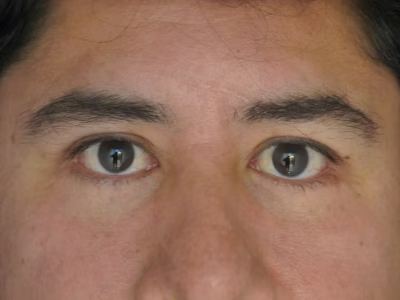
Social recovery after blepharoplasty takes 7 to 10 days, which is when swelling and bruising fade enough to go out normally. Desk work resumes in week 2 and makeup between weeks 2 and 3. Sutures come out around day 5 to 7. The upper eyelid scar sits inside the natural crease and finishes maturing at about 6 months.
Your surgeon performs the suture removal and monitors eyelid healing at each stage of your recovery.

Incisions placed within natural eyelid folds allow fast healing and scars that become virtually invisible over time.

Presentable appearance within seven to ten days, with scar maturation and swelling reduction tracked through month six.
The eyelid on day 3 is not the eyelid you'll have at month 3. That surprises a lot of patients who weren't expecting it. The swelling in the first few days makes the eyelids look puffier, with bruising around the eye — the exact opposite of what they came in for.
Blepharoplasty recovery happens in two distinct phases. The first, lasting 7 to 10 days, is the visible adjustment: swelling, bruising, and sutures. The second, the quiet phase, can stretch up to 6 months while deep inflammation gradually fades and scars mature. Understanding this turns postoperative check-ups into calm, reassuring appointments — not sources of worry.
One of the most common questions in the first few days is: "When will I see the result?" The practical answer: the day the sutures come out, between day 5 and day 7. By then, swelling has gone down enough to appreciate the new eyelid opening and the corrected position.
The result keeps improving over the following weeks. The periocular area has excellent circulation, which makes healing fast and predictable. By month 1, most patients already look very close to their final result. Full scar maturation takes 6 to 12 months — but that process is invisible to everyone else.
"I always tell my blepharoplasty patients: the day-5 photos are yours, but they're not your result. The real result comes when you stop noticing the scar in the mirror — and that happens sooner than they expect." — Dr. Óscar Barón, Board-Certified Plastic Surgeon SCCP.Schedule your blepharoplasty evaluation
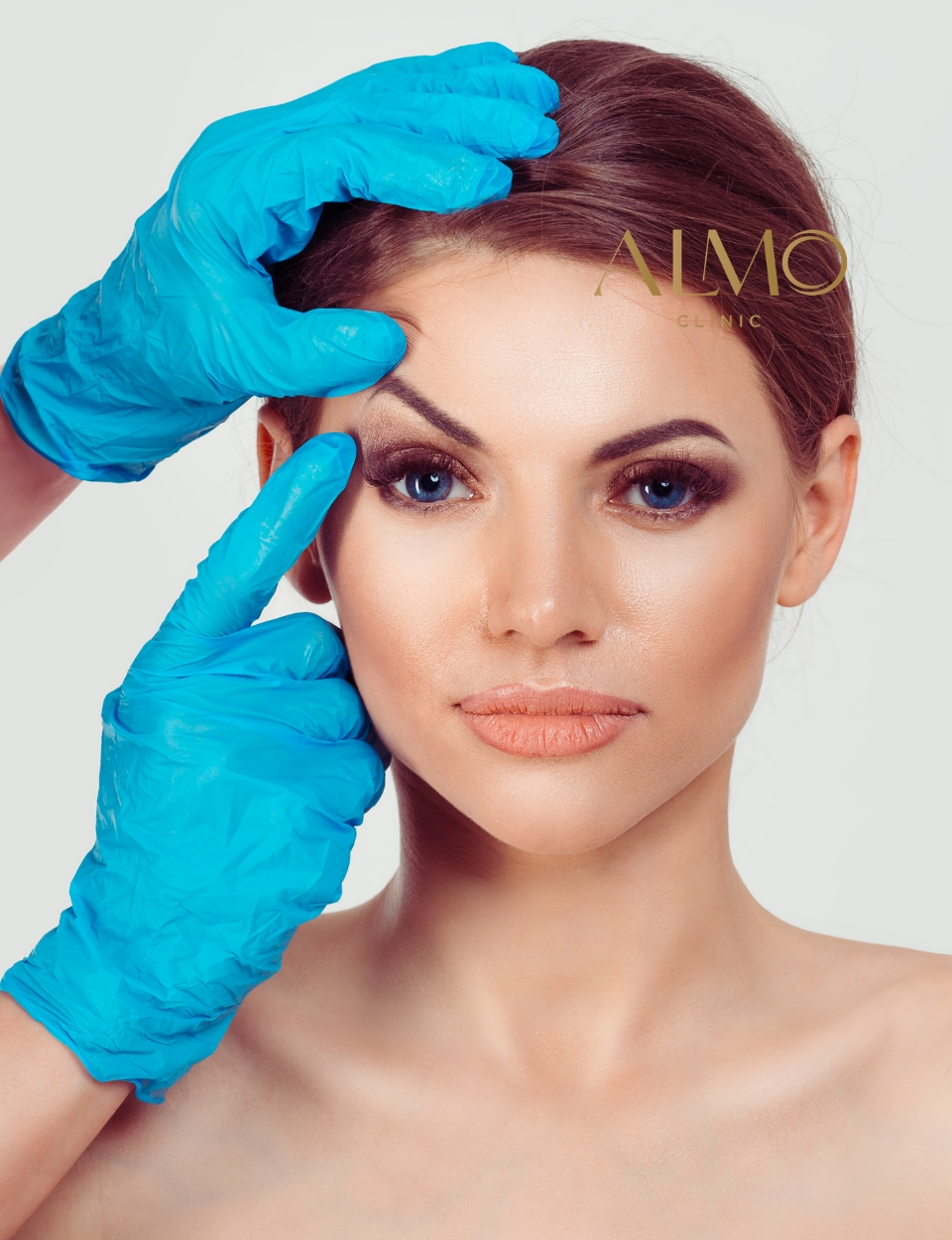
The first 7 days are the most intense part of the postoperative period
| Day | What's normal | Allowed activity | Essential care |
|---|---|---|---|
| Day 1 | Leaving recovery. Swollen eyelids, slightly blurry vision from edema. Tension sensation in the area | Total rest. Companion required for first 24 hours | Head elevated 30–45°. Cold compresses (never directly on eyelid). Don't rub your eyes |
| Days 2–3 | Swelling at its peak. Purple-blue bruising around the eye. Mild itching | Get up to use the bathroom and eat. Very short walks around the house | Continue cold compresses. Artificial tears if dryness. Oral pain medication as directed |
| Days 4–5 | Bruising turning yellow-green. Swelling starting to go down. Eyelids feeling lighter | Moving around the house. Basic sedentary activities | Avoid direct sun exposure. No contact lenses. No makeup |
| Days 5–7 | Suture removal. Result already clearly visible. Bruising mostly resolved | Short outings with sunglasses. Working from home | Start SPF 50+ sunscreen on scars. No direct sun on eyelids |
Some postoperative instructions sound optional — but they're not. These four directly determine the quality of your scar and your final aesthetic result.
For the first 4 weeks, rubbing your eyelids can shift internal absorbable sutures, irritate the eyeball, or create tension on the healing scar. It's the most common mistake — and the most avoidable.
Fresh scars exposed to the sun can permanently hyperpigment. In Colombia, UV radiation is high all year round. Applying SPF 50+ on the eyelids and wearing sunglasses for the first 6 months is essential for the scar to mature invisibly.
From weeks 2–3, your surgeon will recommend a product and gentle massage protocol for the scar. This speeds up maturation, reduces residual firmness, and improves the final cosmetic result.
Temporary dry eye is common in the first few weeks, especially after lower blepharoplasty. Preservative-free artificial tears relieve discomfort without interfering with healing.
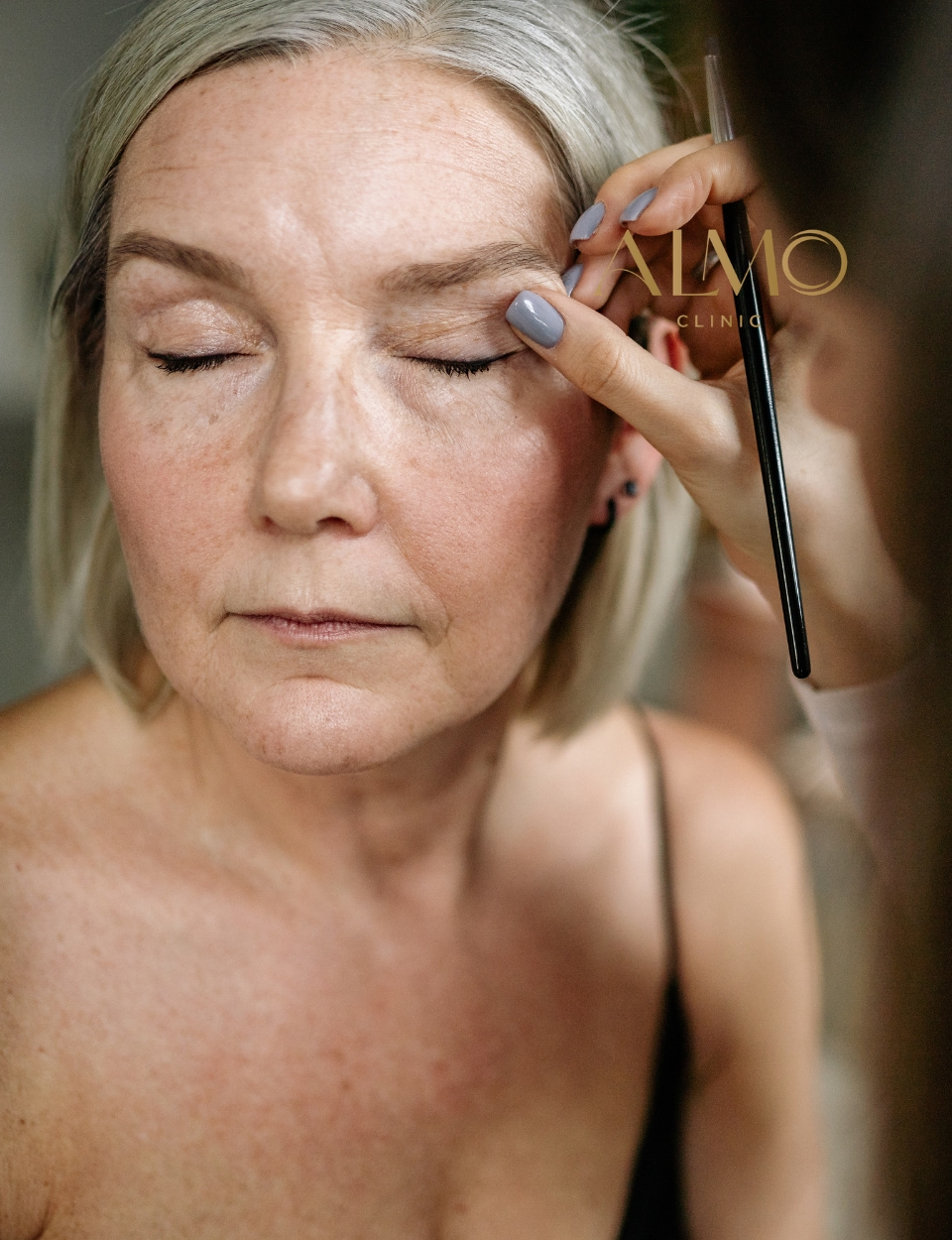
At ALMO Clinic, postoperative follow-up is an integral part of your treatment — not an added service. These are the signs that require immediate contact.
Bleeding at the incision site that doesn't stop with gentle compression within 10 minutes requires immediate contact with the medical team. Don't wait for your next scheduled appointment.
Sudden loss or change in vision at any point during recovery is an ophthalmological emergency. Go to the ER immediately and notify your surgeon. It's very rare, but it requires immediate attention — don't wait.
A change in eyelid skin color toward dark blue or black, or fever above 101.3°F (38.5°C) combined with local redness and warmth, may indicate complications that require same-day medical evaluation.
At ALMO Clinic, your peace of mind and safety during the postoperative period are our number one priority. Everything is tailored for your comfort.