After major weight loss the skin does not retract on its own; post-bariatric procedures remove that excess area by area. In Colombia at ALMO Clinic in Bogotá, brachioplasty starts from $3,000 USD, thigh lift from $3,500 USD and circumferential body lift from $7,500 USD. Surgery requires weight stable for at least 6 months and corrected nutritional deficiencies; when several areas are involved, procedures are staged 3 to 6 months apart.
- Brachioplasty $3,000 USD
- Body lift $7,500 USD
- Between stages 3–6 months
Reviewed by Dr. Andrés Parra · Cirujano plástico · especialista en láser
In summary: Post-bariatric body contouring addresses excess skin at the arms, abdomen, thighs, and breasts that cannot retract after major weight loss — it is reconstruction, not cosmetic enhancement. Two prerequisites are non-negotiable: 6–12 months of weight stability and correction of nutritional deficiencies common after bariatric surgery (protein, B12, iron, vitamin D). Most programs are staged across two trips to Colombia roughly 3–6 months apart, with a complete program costing approximately $16,500 USD all-inclusive in Colombia versus $35,000–$60,000+ in the US.
What massive weight loss leaves behind — and what surgery can address
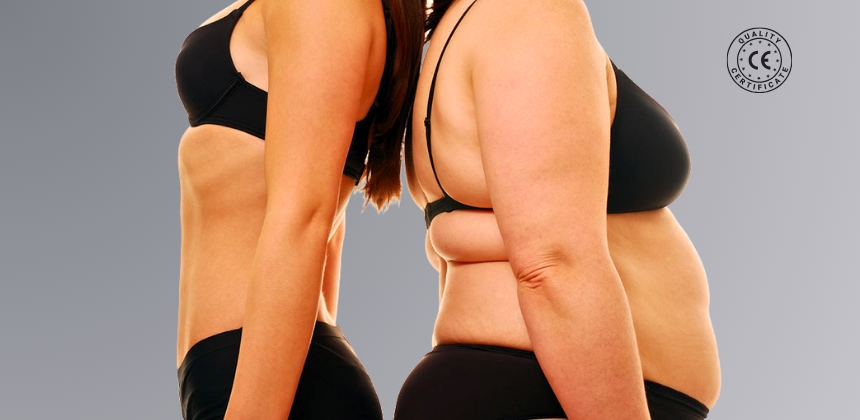
Bariatric surgery and significant dietary weight loss are medical achievements. The metabolic transformation, the reduction in cardiovascular and diabetes risk, the return to physical mobility — these are substantive health gains. But human skin has a finite retraction capacity that depends on elastin content, age, speed of weight loss, and the total volume lost. When a significant amount of adipose tissue is removed from the body rapidly, the skin envelope does not adapt proportionally.
The result is excess skin — redundant folds at the arms, abdomen, thighs, buttocks, and breasts that do not retract with additional weight loss or exercise. These folds are not a cosmetic inconvenience. They create chronic skin irritation and intertrigo in the folds, limit physical movement, make clothing fitting impossible in the affected areas, and require significant hygiene effort to manage. For patients who spent years overcoming obesity, these functional limitations undermine the quality of life that weight loss was supposed to deliver.
Post-bariatric body contouring addresses this. It is reconstruction, not enhancement — surgical correction of a structural problem that non-surgical interventions cannot resolve.
The four core procedures
Brachioplasty (arm lift)
The inner arm from axilla to elbow loses its structural support when the adipose cushion beneath the skin is reduced. The resulting skin fold hangs from the arm, limits full shoulder and arm range of motion, produces friction irritation, and makes short sleeves or fitted clothing unwearable. Brachioplasty resects the excess skin along the inner arm, restoring functional range and normal arm proportions. The scar — along the inner arm — is the tradeoff that patients must understand and accept before proceeding. With proper scar care, it fades to a pale line over 12–18 months, but it is permanent.
Circumferential body lift (lower body lift)
The most extensive single procedure in the post-bariatric program. It addresses excess skin around the full trunk circumference: anterior abdomen, flanks, and lower back in a single operation. The “abdominal apron” (pannus) typical of massive weight loss patients is removed anteriorly while the procedure simultaneously lifts the buttocks and upper thighs posteriorly. Hospital stay is 24–48 hours. Drains remain for 7–14 days. Recovery is 2–3 weeks of active rest with 6–8 weeks of activity restrictions.
Thigh lift (cruroplasty)
Excess skin from the inner thighs causes persistent chafing during walking, skin breakdown, and recurrent irritation. Cruroplasty resects this skin with the incision positioned along the inguinal crease and inner thigh. The inguinal crease location is the most hygienically demanding scar in post-bariatric surgery — it requires careful wound care to prevent maceration in the fold during recovery.
Post-bariatric breast lift and breast surgery
Weight loss depletes glandular breast volume and produces significant ptosis (drooping). The nipple-areolar complex descends and the breast loses the upper pole fullness that characterizes a supported appearance. Mastopexy repositions the areola-nipple complex, removes excess skin, and reshapes the breast. When volume loss is severe, implants can be added to the lift simultaneously.
Candidacy: when you’re actually ready
The timing of post-bariatric body contouring is a clinical decision, not a calendar milestone. Two prerequisites are non-negotiable:
Weight stability: The body must be at a stable weight for 6 to 12 months before any post-bariatric procedure. Operating during active weight loss creates results that will change — sometimes significantly — as additional weight is lost. The excess skin resected is calibrated to the current anatomy; a body that continues losing weight will change that calibration. A letter from your bariatric or internal medicine team documenting weight stability is part of the pre-surgical assessment.
Nutritional status: Bariatric surgery — particularly gastric bypass — creates specific nutritional deficits that impair wound healing. Protein, iron, vitamin B12, vitamin D, and zinc are frequently depleted chronically. Before body contouring surgery, complete labs assess current levels. Identified deficits must be corrected, typically over 3–6 months of targeted supplementation. Low albumin or hemoglobin levels significantly increase wound complication rates. Post-bariatric patients have slightly higher baseline wound complication rates than the general surgical population, and nutritional optimization is the most controllable factor in reducing this risk.
A practical note: Some post-bariatric patients reach their surgeon consultation frustrated by being told to wait. The waiting is not bureaucratic caution — it is the difference between a procedure performed in conditions that support healing and one that creates preventable complications. Proceeding before weight is stable or before nutritional deficits are corrected routinely produces outcomes that require revision.

Staged program planning for international patients
Post-bariatric body contouring is not completed in one surgical session in most cases. The extent of skin removal across multiple anatomical regions, the surgical time required, and the anesthetic risk accumulation all argue for staged planning. A typical program for a patient with excess skin in all major zones might look like:
Stage 1 (first trip to Bogotá, ~12 days):
- Circumferential body lift as the priority procedure (most functionally impactful)
- Brachioplasty combined in the same session if health status allows
- Recovery in Bogotá for 10–12 days before flying home
Between stages (3–6 months):
- Complete healing of Stage 1 wounds
- Nutritional status reassessment
- Labs to confirm readiness for Stage 2
- Virtual follow-up with the surgeon to evaluate Stage 1 result and plan Stage 2
Stage 2 (second trip to Bogotá, ~10–12 days):
- Thigh lift and/or post-bariatric breast surgery
- Recovery and pre-flight clearance
The 3–6 month interval between stages is not arbitrary. It allows the inflammatory response from Stage 1 to completely resolve, the nutritional stores depleted by wound healing to be replenished, and the surgeon to evaluate the Stage 1 result objectively before designing Stage 2. Rushing this interval to complete the program faster consistently produces worse outcomes.

What the program costs in Colombia vs the US
| Procedure | Colombia (all-inclusive) | US all-in range |
|---|---|---|
| Brachioplasty (bilateral) | $12,000,000 (~$3,250 USD) | $6,000–$12,000 |
| Circumferential body lift | $20,000,000 (~$5,400 USD) | $12,000–$25,000 |
| Thigh lift / cruroplasty (bilateral) | $14,000,000 (~$3,800 USD) | $6,000–$12,000 |
| Post-bariatric breast lift (mastopexy) | $15,000,000 (~$4,050 USD) | $6,000–$14,000 |
| Complete program (all 4 areas) | $61,000,000 (~$16,500 USD) | $35,000–$60,000+ |
These figures include surgeon, anesthesiologist, certified OR, supplies, and follow-up for the Colombia column. The US column reflects total all-in costs — surgeon fee plus anesthesia, facility, and supplies billed separately.
A North American patient completing the full post-bariatric program across two trips to Bogotá — including flights, 10–12 days of accommodation per trip, and all surgical stages — typically spends $20,000–$26,000 total. The equivalent program at US prices approaches $50,000–$70,000 for equivalent surgical quality, and access to a single surgeon experienced in all required procedures is not guaranteed.
The math is compelling. But the decision to travel to Colombia for this type of program also requires confidence in the continuity of care across multiple visits, the quality of post-operative follow-up between stages, and the ability to manage recovery logistics in an unfamiliar city. These are not obstacles — most patients find them manageable with preparation — but they are real considerations that belong in the decision.
Colombia has built a strong technical reputation specifically in post-bariatric and massive weight loss body contouring, driven by the high surgical volume that experienced centers in Bogotá have developed over years of practice. SCCP-certified surgeons with documented experience in this patient population are the correct practitioners for this type of program, and finding them in Colombia is straightforward through verified certification registries.
If you’re planning your post-bariatric journey, our surgical team can help design a staged program tailored to your anatomy and timeline.
Request your post-bariatric consultation </a>
Medical information for educational purposes. Individual assessment requires consultation with an SCCP-certified plastic surgeon experienced in post-bariatric body contouring.