
Surgeon-controlled precision
Dr. Óscar Barón uses the piezoelectric instrument's tactile feedback to control every osteotomy with millimeter accuracy.
Ultrasonic rhinoplasty uses piezoelectric instrument to work nasal bone with greater precision and less trauma than conventional chisels. We explain how it works, in which cases it applies and what difference it makes in recovery.

5.0/5 on 15 Google reviews
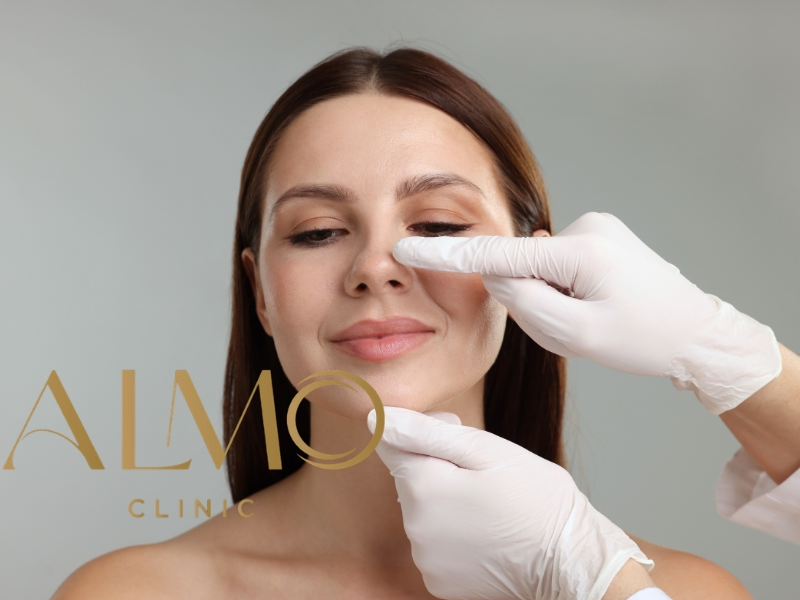
Ultrasonic or piezoelectric rhinoplasty uses high-frequency vibrations to cut and shape nasal bone selectively, without damaging the surrounding soft tissue. The classic technique uses a chisel and mallet, which fractures bone less precisely and causes more bruising and swelling. In Colombia at ALMO Clinic it starts from $4,500 USD. The practical difference is a cleaner recovery and greater precision over the dorsum.
Reviewed by Dr. Oscar Barón · Plastic surgeon · SCCP
$4,500 USD
Dr. Óscar Barón uses the piezoelectric instrument's tactile feedback to control every osteotomy with millimeter accuracy.

High-frequency vibrations at 25–30 kHz cut only nasal bone, sparing surrounding vessels, nerves, and soft tissue.

Reduced soft-tissue trauma means less bruising and a more uniform, predictable swelling curve in the first weeks.
Conventional rhinoplasty uses chisel and hammer to fracture the nasal bone. The mechanical blow is effective, but transmits force to surrounding blood vessels and soft tissues: more bleeding, more pronounced bruises around the eyes, and a more intense recovery in the first days.
The piezoelectric ultrasonic technique works the bone with high-frequency vibrations that act selectively on mineralized tissue, without affecting surrounding soft tissues. The result is greater precision in bone cutting, less soft tissue trauma, and a more predictable postoperative period, especially in the first two weeks.
The ultrasonic technique does not replace conventional in all cases — it surpasses it in cases where bone work is the main component. When correction focuses on tip or septum without bone involvement, both techniques give equivalent results.
In dorsum hump corrections, closure osteotomies, and secondary revisions with altered bone anatomy, the piezoelectric tissue selectivity marks a real difference in result and initial recovery.
"Piezoelectric gives me tactile information and control that the chisel cannot provide. When working a complex osteotomy, that control difference is not minor — it's what determines result precision." — Dr. Óscar Barón, Plastic Surgeon.Check if it applies to your case
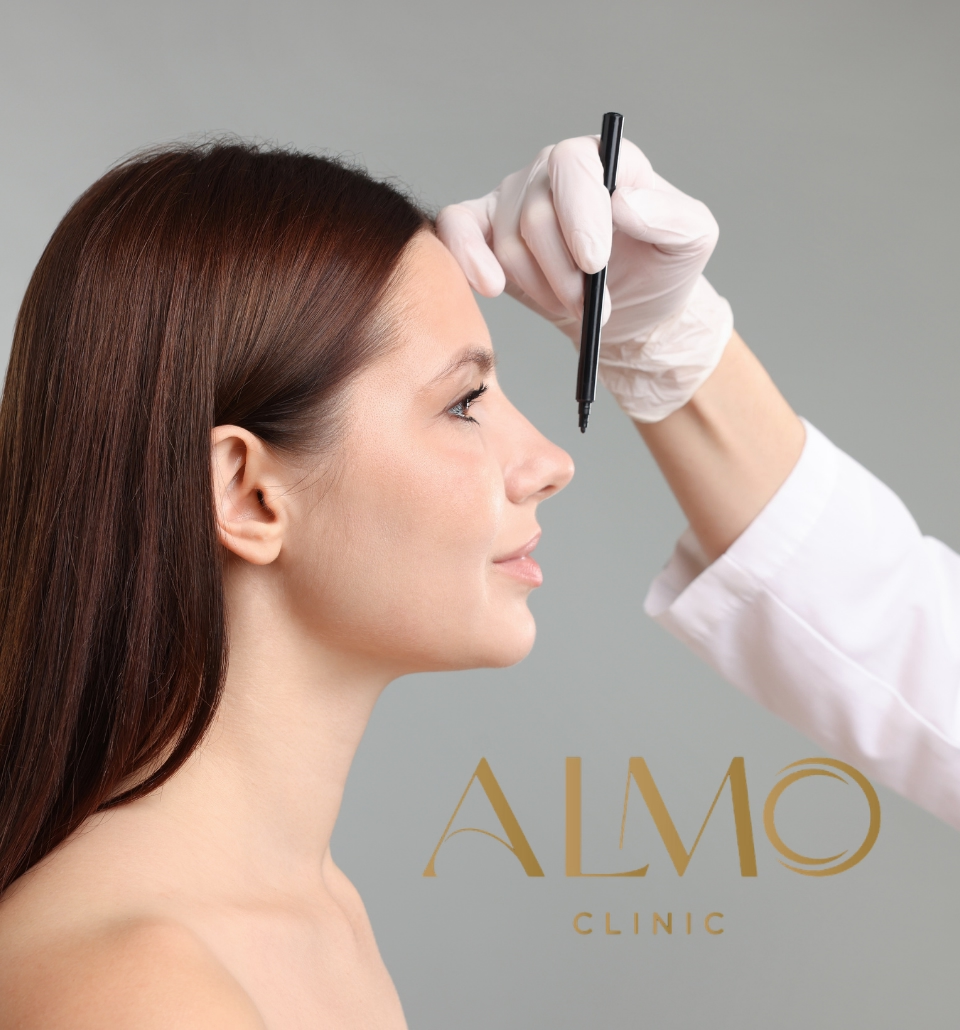
Both techniques produce excellent results in expert hands. The difference is in the mechanism and recovery profile
| Factor | Ultrasonic rhinoplasty | Traditional rhinoplasty |
|---|---|---|
| Bone instrumentation | Piezoelectric (ultrasonic vibrations) | Metallic chisel + hammer |
| Soft tissue trauma | Reduced — tissue selectivity | Greater — mechanical impact affects adjacent tissues |
| Intraoperative bleeding | Less | More |
| Postoperative swelling | Less and more predictable | More intense in first days |
| Periorbital hematomas | Less pronounced | More frequent and evident |
| Precision in osteotomies | High — controlled millimeter cut | Good — depends more on surgeon skill |
| Ideal cases | Bone humps, closure osteotomies, secondary revisions | Tip corrections, septum, augmentation rhinoplasty |
| Osteoplasty (bone thickness) | High-speed drills + Piezótomo for precise contouring | Chisel and gouge |
| Additional cost | Yes — specialized instrumentation of higher cost | Base |
Understanding the mechanism helps understand why the instrumentation marks a real clinical difference in the right cases.
The piezoelectric instrument converts electrical energy into mechanical vibrations of high frequency (25-30 kHz). These vibrations are transmitted to the surgical tip in contact with the bone.
At that frequency, vibrations cut mineralized tissue (bone, calcified cartilage) but do not affect blood vessels, nerves, or soft tissue. The surgeon works in a clear field with less bleeding.
The Piezótomo allows following the planned cutting line with millimeter precision. In closure osteotomies after hump reduction, this directly impacts final symmetry.
In addition to the Piezótomo, we use high-speed drills to perform osteoplasty: the process of reducing the thickness of the nasal bones to achieve a more refined contour. This combination of instruments allows more precise and controlled bone sculpting than the conventional chisel technique.
Without mechanical blow to soft tissues, the postoperative inflammatory cascade is less. Bruising or ecchymosis does not appear or is notably less compared to traditional osteotomies with a chisel, and social recovery is faster.
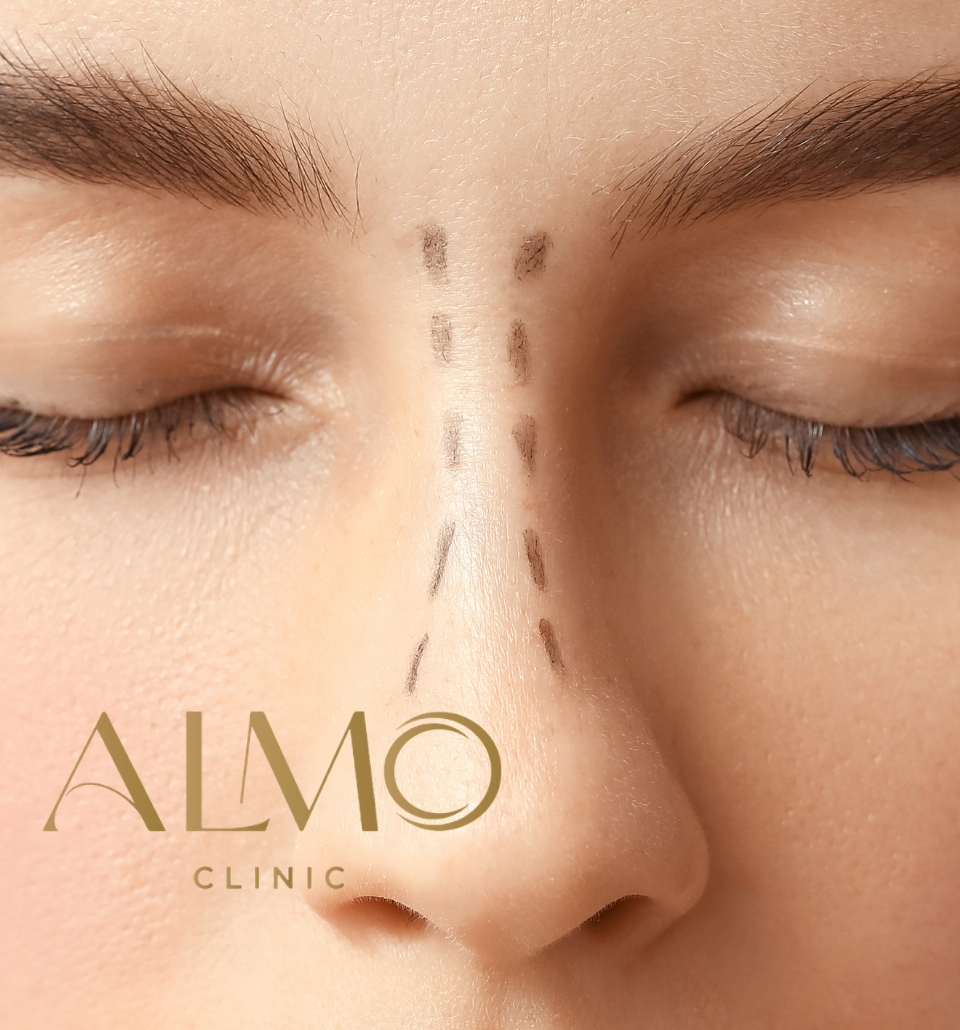
The real benefits that mark the difference in cases where bone work is the main component of the rhinoplasty
Without mechanical impact on periorbital soft tissues, bruises around the eyes are notably less pronounced compared to conventional technique. The difference is more visible in the first 5-7 days.
The piezoelectric cut follows the planned line with millimeter precision. In dorsum hump corrections, this translates to more exact resection and more symmetrical closure osteotomies.
Less soft tissue trauma makes swelling evolution in first days more uniform and predictable. The patient can plan return to social activity with greater confidence in times.
Your surgeon evaluates nasal anatomy and defines if piezoelectric provides a real advantage for your specific case. Not all cases need it — in those that do, it marks a concrete difference.
Schedule your rhinoplasty evaluation5.0 · 15 reviews on Google
ALMO is more than excellent. From the moment you arrive, the care they offer, the warmth and empathy add to the valuable and wonderful experience with their professionals, especially with Dr. Oscar Barón, a human being with very special ethical and professional values…
The best clinic in Bogotá. Dr. Andrés Parra answered all my questions about the procedure, and I'm happy with the results — highly recommended!
My experience was extremely satisfying. I found a very professional team, led by Dr. Martha Peñarredonda, to whom I am deeply grateful. I always felt supported, and everything was clear and well explained…
Very good care. Dr. Oscar Barón is an excellent surgeon, and Yohana's attention was the best. Very happy with the service I received.
Dr. Parra is the best in the city! I recommend him 100%.