In summary
Lymphatic massage after lipo helps clear post-surgical swelling while the tissues heal. It starts only when your surgeon allows it: in ALMO Clinic's protocols, around week 2 after liposculpture and around days 10–14 after a BBL. The number of sessions depends on the procedure and on how swelling evolves; as a reference, our recovery guides list three to four sessions per week in the first month after liposculpture and two to three after a BBL.
Reviewed by Dr. Oscar Barón · Plastic surgeon · SCCP
When your surgeon allows it
- After liposculpture Around week 2
- First month (lipo / BBL) 3–4 / 2–3 sessions a week
Last updated: October 2026 · Medically reviewed by Dr. Oscar Barón, SCCP plastic surgeon
Swelling is a normal part of healing after liposuction, and lymphatic massage is one of the tools surgeons use to manage it. The questions patients ask most are always the same: when to start, how many sessions, whether they can do it themselves and, if they are flying in for surgery, how to fit the massages into their trip. This guide answers each one.
Why massage after lipo matters
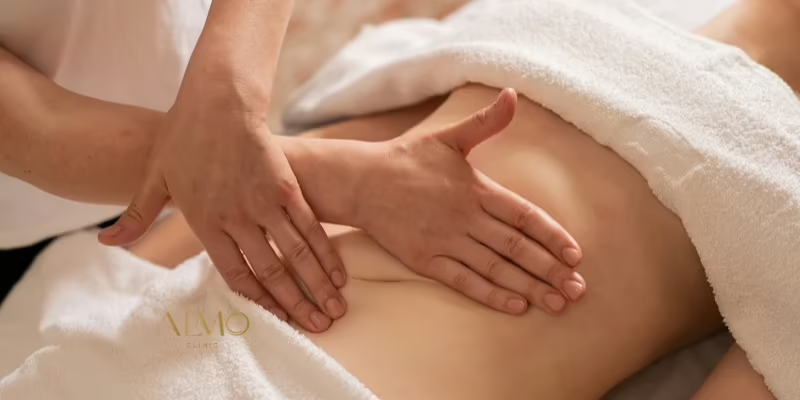
Liposuction disrupts the small lymphatic vessels that drain fluid from the tissues. Until they recover, fluid builds up and causes swelling, tightness and discomfort. Lymphatic massage after lipo uses gentle, rhythmic strokes to guide that fluid towards the lymph nodes, which helps reduce swelling and supports smoother healing of the tissues.
It works together with the rest of your liposuction recovery: the compression garment, walking, hydration and your follow-up visits. It does not remove fat and it does not change the result of the surgery on its own; what it helps with is the fluid and the comfort of your recovery.
It is also part of preventing irregular healing. Hard lumps and bands under the skin, known as fibrosis, are more likely when fluid stays in the tissues for a long time. We explain how fibrosis forms and how it is treated in our guide to fibrosis after lipo.
When to start lymphatic massage after lipo
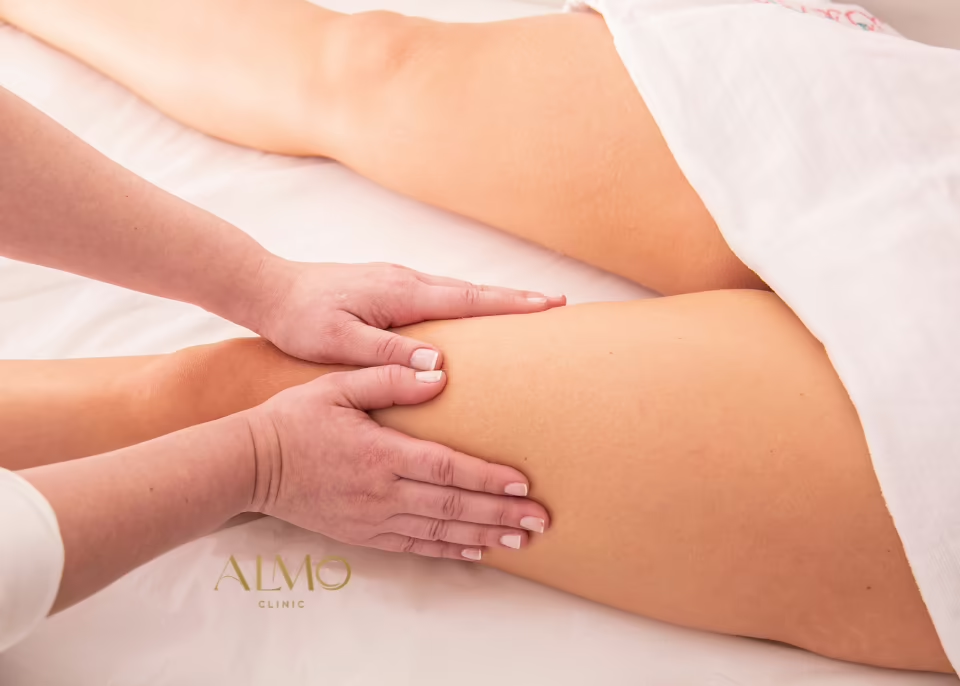
Start only when your surgeon gives you the go-ahead at your post-op check-up. The timing depends on the procedure, the areas treated and how your skin and incisions look. As a reference, in ALMO Clinic’s protocols:
- After liposculpture: lymphatic drainage starts around week 2, as described in our liposculpture recovery guide.
- After a BBL: around days 10–14, with specific positioning rules to protect the transferred fat. See the BBL recovery guide.
Other surgeons may use different timings. If you were operated elsewhere, follow your own surgeon’s instructions.
How many lymphatic massages after lipo?
There is no single number that fits everyone. The right plan depends on how much was treated, how your body responds and how quickly the swelling goes down. Your surgeon adjusts it as you heal.
After lipo 360 and BBL
Lipo 360 treats the whole torso, and a BBL adds fat transfer to the buttocks, so swelling covers a large area. As a reference, ALMO Clinic’s recovery guides list three to four sessions per week during the first month after liposculpture and two to three per week during the first month after a BBL, then fewer sessions as the swelling resolves. During those weeks, the therapist adapts the position so you do not sit or lie directly on the buttocks.
After a tummy tuck
After a tummy tuck the abdomen has an incision and, often, drains for the first days. Lymphatic drainage usually starts once the drains are out and your surgeon allows it, as explained in our tummy tuck recovery guide. The pressure is adapted to the incision and the sensitivity of the skin.
Can I do my own lymphatic massage after lipo?
Not at the beginning. In the first weeks the tissues are tender, the incisions are healing and it is easy to press too hard. Post-op massage should be done by a therapist trained in plastic surgery recovery and coordinated with your surgeon.
Some surgeons later teach patients a gentle self-massage to continue at home, especially when they travel back after surgery. If yours does, keep the pressure light and stop if it hurts. Deep “lump-breaking” massages are not lymphatic drainage and can make inflammation and fibrosis worse.
Planning your massages if you have surgery abroad
If you are flying to Colombia for surgery, plan the massages before you book your trip, not after.
How many days to stay
Your surgeon tells you how long to stay based on your procedure and on how you heal. Build in time for the first post-op check-up and for the first block of massage sessions, and book a flexible return. At ALMO Clinic, an 8-session post-op package can be scheduled around your stay, with care in English, and we also see patients who had surgery at another clinic if they bring their surgeon’s instructions.
Continuing care when you fly home
Before you leave, ask your surgeon how many more sessions you need and how often, and get a written summary of your surgery for the therapist at home. Keep wearing your compression garment as instructed and keep your follow-up visits, in person or virtual.
Signs something is wrong: when to call your surgeon
Lymphatic massage should make you feel more comfortable, not worse. Contact your surgeon, and do not wait for your next session, if you notice:
- Pain that increases instead of decreasing.
- Fever, or skin that is red, hot or oozing near an incision.
- One leg much more swollen than the other, or calf pain.
- A sudden, tense swelling in one area, which can be a fluid collection.
- Shortness of breath or chest pain: seek emergency care.