In summary
Stretch marks are thin scars that form when the skin stretches faster than the dermis can adapt and its collagen and elastic fibers tear. Their color tells their age: red stretch marks are recent and still inflamed, white ones are older and atrophic. They never disappear completely, but recent red stretch marks respond better to medical treatment.
Reviewed by Dr. Martha Peñarredonda · Plastic surgeon · SCCP
Recent, respond better
- White stretch marks Older, harder to treat
- Go away completely No
Last updated: October 2026 · Medically reviewed by Dr. Martha Peñarredonda, SCCP plastic surgeon
Most people have, or will have, a stretch mark somewhere. What changes from person to person is their color, their size and how long they have been there, and that is exactly what decides what treatment can do. This guide explains what red and white stretch marks mean, why they appear, whether they go away, and what works for each type.
What do red stretch marks mean?
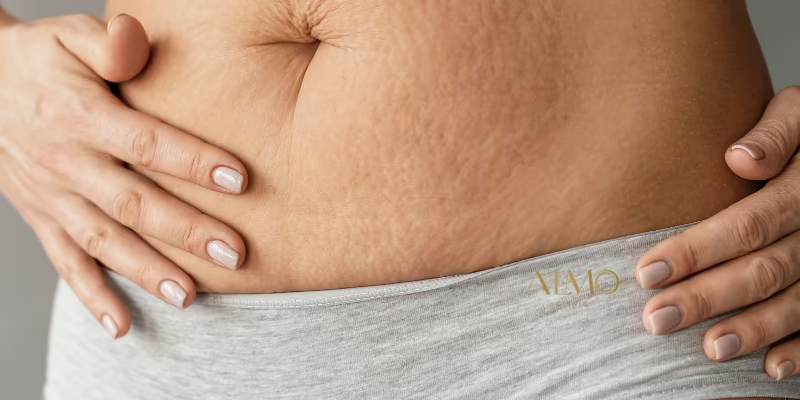
Red stretch marks, also called striae rubrae, are recent. Stretch marks (striae) form when the skin stretches faster than the dermis, the layer under the surface, can adapt: its collagen and elastic fibers tear and heal as a thin scar. In that early stage there is inflammation and active blood vessels in the area, which gives them a pink, red or purple color. They can feel slightly raised or itchy.
Red stretch marks mean the skin is still repairing itself. That is why they are the type that responds best to treatment.
What do white stretch marks mean?
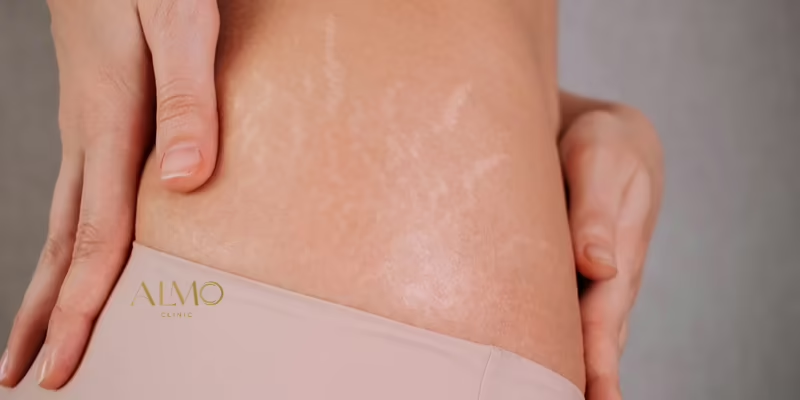
Over months, the inflammation fades and the stretch mark turns white or silvery. White stretch marks, or striae albae, are older, atrophic scars: the skin inside the mark is thinner, may look slightly sunken and no longer has pigment or active blood vessels. They are harder to improve, although they can get better.
White vs red stretch marks: why the color matters for treatment
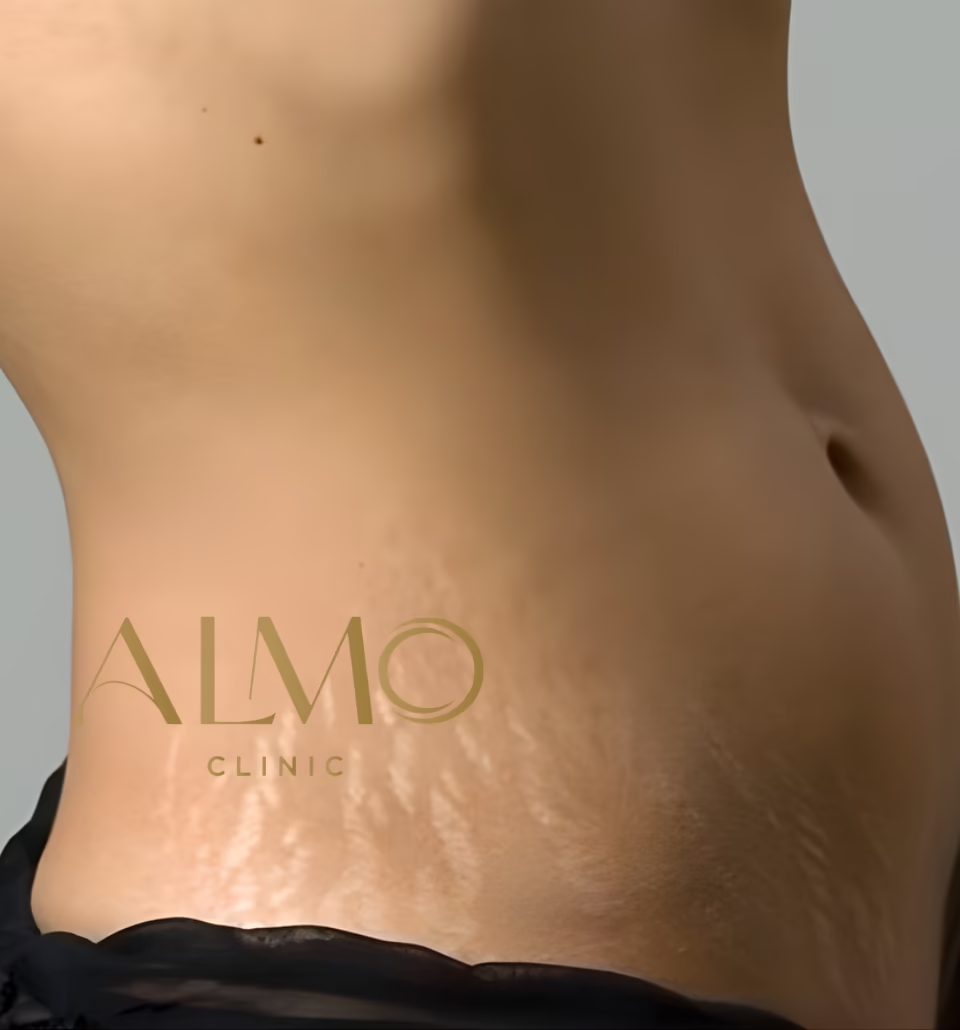
Color is the best clue to a stretch mark’s age, and age is what most affects the result:
- Red stretch marks: the skin is still remodeling, so treatments that reduce redness and stimulate collagen tend to work better.
- White stretch marks: the scar is mature. Treatment mainly improves texture and width; changing the color is harder.
Purple stretch marks usually behave like red ones. The exception is wide, dark purple stretch marks that appear quickly on the stomach, armpits or thighs together with weight gain in the face and trunk, muscle weakness or high blood pressure: they can be a sign of excess cortisol (Cushing’s syndrome) and need a medical check.
Do stretch marks go away?
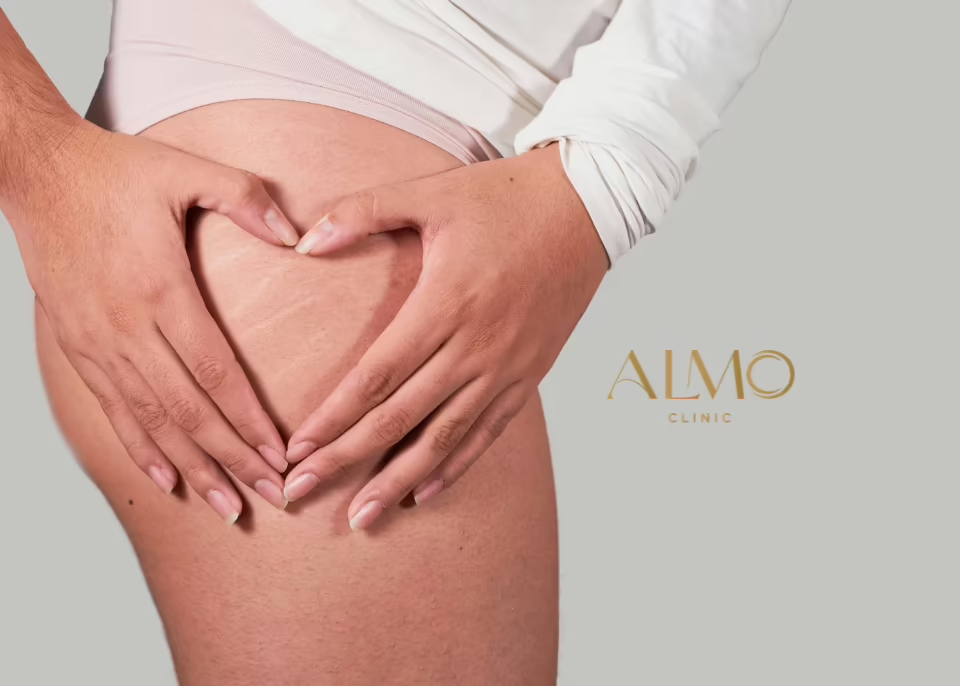
Stretch marks fade, but they do not go away completely: a scar in the dermis never fully disappears. What can change is how visible they are, their color, texture and width. The biggest factor is how recent they are.
After pregnancy
During pregnancy, the stomach, breasts, hips and thighs grow in a few months while pregnancy hormones make the dermis more prone to tearing. After birth, red stretch marks slowly fade to white over the following months. Genetics play a big role, so they do not depend only on how much weight gain there was.
When you lose weight
When you lose weight, stretch marks do not go away, but they may look different: smaller or, on the other hand, more noticeable if the skin becomes loose. If there is excess, loose skin with stretch marks on the stomach after weight loss or pregnancy, skin treatments are not enough; that skin can only be removed with surgery.
How to get rid of red stretch marks
The best moment to act is while they are still red:
- Do not wait for them to turn white: early treatment gives the best chance of making them less visible.
- Vascular lasers and light-based treatments can reduce the redness.
- Radiofrequency microneedling stimulates new collagen in the dermis and works on red stretch marks too.
- Retinoids are sometimes used on recent stretch marks, only with medical advice and never during pregnancy or breastfeeding.
Keeping the skin hydrated helps comfort and flexibility, but creams alone do not repair the torn fibers.
How to remove white stretch marks
White stretch marks need treatments that reach the dermis and trigger collagen remodeling. Several sessions, weeks apart, are usually needed, and the result builds up gradually.
Laser therapy
Fractional lasers create tiny columns of controlled injury that the skin repairs with new collagen, improving the texture of white stretch marks. The type of laser and number of sessions depend on the stretch mark and your skin tone.
Microneedling and radiofrequency
Microneedling creates micro-channels in the skin; adding radiofrequency delivers heat to the dermis to remodel collagen with little damage to the surface. On the body this is done with technologies such as Morpheus8 Body.
If you want to know which option fits your stretch marks, at ALMO Clinic we assess the type of stretch mark before proposing a protocol: see our stretch marks treatment.
Ask about your type of stretch marks