
In summary
Exosomes are tiny vesicles that cells release to communicate, carrying proteins, lipids and genetic material. In aesthetic medicine they are used to support facial skin regeneration: skin quality, texture and recovery after other procedures. The evidence is still developing and the FDA has stated there are no FDA-approved exosome products, so look for certified products, physician application and no promised results.
Reviewed by Dr. Martha Peñarredonda · Plastic surgeon · SCCP
Cell-communication vesicles
- Used for Supporting skin regeneration
- Evidence Still developing
Last updated: October 2026 · Medically reviewed by Dr. Martha Peñarredonda, SCCP plastic surgeon
Exosomes are one of the most talked-about words in aesthetic medicine, and one of the most confusing. People ask what they are, whether they are the same as stem cells, what they do for the face and whether they really work. This guide explains it plainly, with what the evidence and regulators actually say.
What are exosomes?
The cells in your body constantly communicate with each other. One way they do it is by releasing tiny vesicles, like little bubbles, that travel to other cells and deliver their contents. Those vesicles are exosomes.
Inside they carry proteins, lipids and genetic material that work as molecules of communication: they tell the receiving cell to switch certain processes on or off. That is why they are studied in regenerative medicine, as a way to support tissue repair.
One key point: exosomes are not cells. They do not divide or turn into other cells. Depending on the manufacturer, products may be made from stem cell cultures or other sources, but what is applied are the vesicles.
Exosomes vs stem cells vs PRP
- Stem cells: living cells that can multiply and turn into other cell types. Exosomes are not cells; they are messages that cells, including stem cells, release.
- PRP (platelet-rich plasma): made from your own blood, concentrating platelets and their growth factors. Exosomes come from a manufactured product, not from your blood.
- Exosomes: cell-derived vesicles with proteins and genetic material that signal other cells, used to support regeneration.
All three are used in regenerative aesthetics, but they are different things, and comparisons of how well each works are still limited.
What exosomes do for the face
Skin rejuvenation and repair
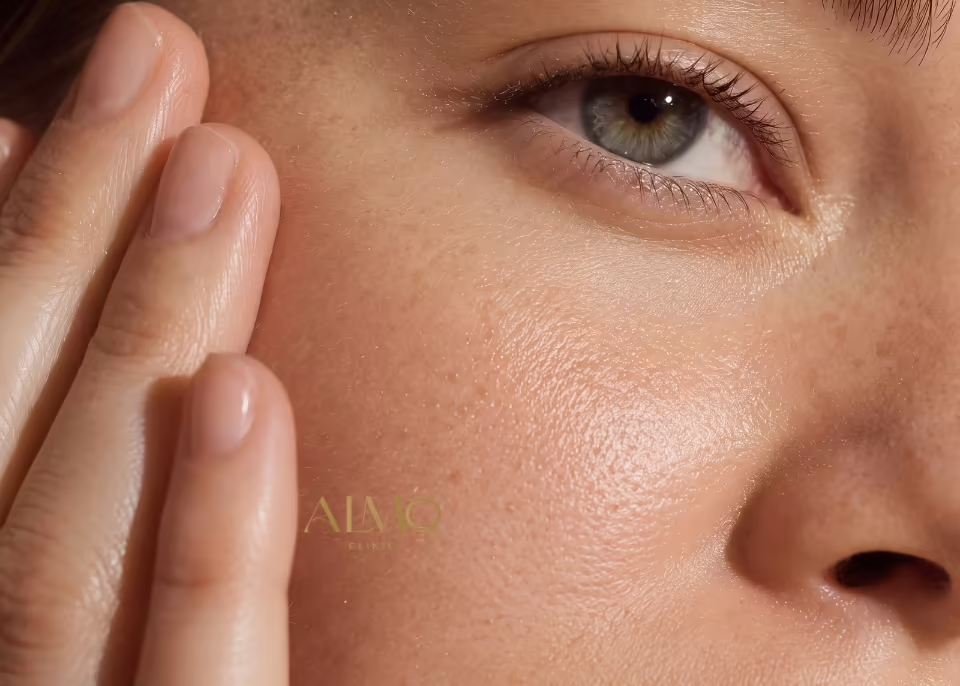
The idea is that the signals carried by exosomes stimulate skin cells, such as the fibroblasts that produce collagen and elastin, and help calm inflammation. That is why they are often used to support recovery after procedures that create a controlled injury in the skin, such as laser or microneedling.
Over several sessions, the goal is better skin quality: more even texture, more radiance and support for firmness. These are gradual changes, and they vary from person to person. Exosomes do not fill lines or lift the skin.
Exosome facial vs exosome injection
You will see two terms. An exosome facial usually means the product is applied to the skin surface, often right after a procedure that opens micro-channels, such as microneedling. An exosome injection places the product into the skin with fine needles. Which approach is used depends on the product and on your skin assessment, and it should always be decided and performed by a physician.
What is exosome treatment like?
A responsible exosome treatment starts with an assessment of your skin and medical history. Then the physician applies the product to the face, neck or chest depending on the goal. The number of sessions and the interval between them depend on the product and your skin.
Always ask for:
- A prior assessment of your skin.
- A certified product, with known origin. Ask exactly which product will be used.
- Application by a physician, under sterile conditions.
Exosomes before and after: realistic results
Social media is full of exosome before and after photos, but many combine several treatments or do not say how many sessions there were. Realistic expectations are a gradual improvement in skin quality that shows after several sessions and lasts longer with daily skincare and sun protection. No product erases deep wrinkles or replaces a treatment for firmness or volume.
Safety, side effects and regulation
The most common side effects are local and short-lived: redness, mild swelling or small bruises where the product is applied. The biggest risk is not exosomes as a concept but products of unknown origin or quality and treatments without medical control.
On regulation: in December 2019 the US Food and Drug Administration stated that there are currently no FDA-approved exosome products and issued a public safety alert about clinics marketing unapproved stem cell and exosome products with unsupported claims to treat diseases. Research on exosomes in skin is promising but still early, much of it from laboratory work and small clinical studies. Be cautious with any promise of guaranteed results.
Exosome treatment is usually avoided, or assessed with extra care, during pregnancy and breastfeeding, with an active infection, cold sore or wound in the area, or with a known allergy to any component of the product.
Exosomes combined with PDRN
PDRN (polydeoxyribonucleotide) is another regenerative ingredient with a well-documented safety profile in regenerative medicine. Combining it with exosomes aims to add two ways of supporting skin repair in one treatment.
At ALMO Clinic in Bogotá we offer PDRN + Exosomes, always applied by a physician after a skin assessment and with a certified product. If deep hydration is your main goal, a skin booster may fit better; for firmness, a biostimulator such as Juvelook.
Ask if exosomes are right for your skin