
In summary
There are three main types of dark circles: pigmented (excess melanin), vascular (blood vessels showing through thin skin) and hollow (volume loss that casts a shadow), plus eye bags. Each needs a different treatment: sun protection and depigmenting care, skin quality and allergy control, biostimulators or hyaluronic acid, or blepharoplasty for eye bags. Many people have a mix.
Reviewed by Dr. Martha Peñarredonda · Plastic surgeon · SCCP
Pigmented, vascular, hollow
- Eye bags Corrected with surgery
- First step Identify your type
Last updated: October 2026 · Medically reviewed by Dr. Martha Peñarredonda, SCCP plastic surgeon
Dark circles are one of the most common concerns we see, and one of the areas where the most useless products are sold. The reason is simple: not all dark circles are the same. A pigmented, a vascular and a hollow dark circle have different causes and different treatments. Knowing which type you have is the first step to choosing something that works.
What causes dark circles?
The skin of the lower eyelid is among the thinnest on the body, so any change underneath shows through. Dark circles come from a combination of factors:
- Genetics: many dark circles run in families and appear early.
- Pigment: excess melanin in the area, more common in darker skin tones and with sun exposure.
- Blood vessels showing through thin skin.
- Volume loss with age, which deepens the groove under the eye and casts a shadow.
- Habits and allergies: lack of sleep, rubbing your eyes and allergies make almost every type worse.
The types of dark circles
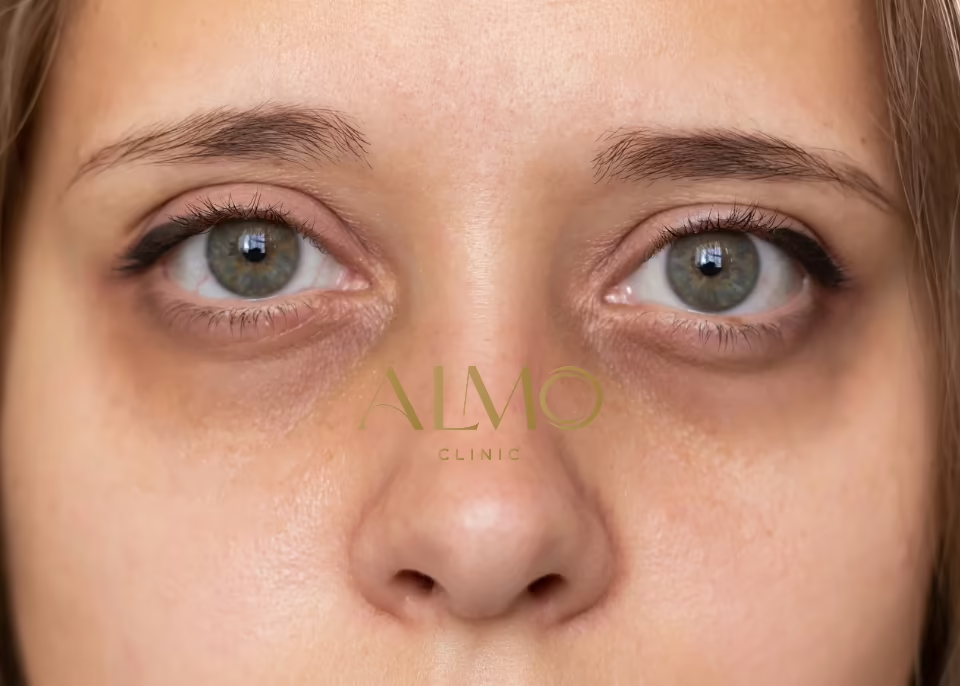
Pigmented dark circles
They look brown or almost black and do not change much when you stretch the skin. They come from excess melanin in the area, are more common in darker skin, often run in families and get worse with sun and rubbing.
Vascular dark circles
They have a bluish, purple or reddish tone and are more visible when you are tired, have allergies or have just woken up. They appear when the eyelid skin is thin enough to show the blood vessels underneath, and they usually lighten a little when the skin is stretched.
Hollow (structural) dark circles
These are not a color problem but a volume problem: with age or because of your facial structure, a groove forms under the eye and light casts a dark shadow. That is why they change with the lighting, and why they make the face look tired.
Eye bags and mixed types
Eye bags are bulges caused by fat pushing forward under the eye; the shadow beneath them is often mistaken for a dark circle. Many people also have mixed types, for example pigment plus volume loss, and each component needs its own treatment.
How to tell which type you have: the pinch test
Stand in front of a mirror with good light:
- Gently pinch or stretch the skin under your eye. If the color does not change, pigment dominates. If it lightens or looks bluer or more purple, it is mostly vascular.
- Change the light: light your face from above, then from the front. If the darkness fades a lot with light from the front, it is a hollow, shadow-type dark circle.
- Look at your profile: if you see a bulge under the eye, there are eye bags.
This test is a guide, not a diagnosis. Many dark circles are mixed, and at your assessment the physician looks at the whole eye area to decide what to treat first.
Dark circles under eyes treatment by type
There is no single cure for dark circles. What works depends on the cause.
Bio-stimulators and hyaluronic acid
- Biostimulators stimulate collagen and improve the quality and thickness of the skin around the eyes, useful when the skin is thin. One example is Juvelook, which we explain in our guide to Juvelook for crow’s feet, eyelids and dark circles.
- Hyaluronic acid can restore volume in the groove of hollow dark circles. It is a delicate area that needs an experienced physician, and it is not right for everyone.
- A skin booster improves overall skin quality, including this area.
Daily habits still matter for every type: sun protection around the eyes, enough sleep, treating allergies and not rubbing your eyes.
Laser
For pigmented dark circles, physician-prescribed depigmenting treatments and some lasers are used, always combined with sun protection. Cosmetic dark circle treatments of this kind take several sessions and maintenance.
When the answer is surgery (blepharoplasty)
If the shadow comes from eye bags, no filler or cream removes them: the long-lasting solution is eyelid surgery. See blepharoplasty in Colombia and when it is indicated.
Ask which type of dark circles you have