PDLLA (poly-D,L-lactic acid) is a biodegradable polymer that, once injected, activates fibroblasts to produce new collagen. It differs from the PLLA in Sculptra in its molecular structure: PDLLA particles are smaller and more regular in surface, which lowers the risk of nodules and allows use on thin skin such as the eye area. It is the active ingredient in Juvelook, which at ALMO Clinic in Bogotá starts from $700 USD per session.
Reviewed by Dr. Oscar Barón · Cirujano plástico · SCCP
$700 USD
- Advantage over PLLA Lower nodule risk
- Collagen visible 2–3 months
If you’ve been comparing biostimulators, you’ve seen PDLLA come up repeatedly. Juvelook uses it. Technical materials reference it constantly. But almost no clinic takes the time to explain what it actually is, why it matters and how it differs from the PLLA found in Sculptra.
That difference isn’t just chemical — it has direct consequences for which areas the product can treat, how safe it is and what kind of results you can realistically expect.
This article covers PDLLA from the angle that actually matters to you as a patient: what it is, how it works in your skin and why its structure is the reason Juvelook can do something other biostimulators cannot.
What is PDLLA: poly-D,L-lactic acid
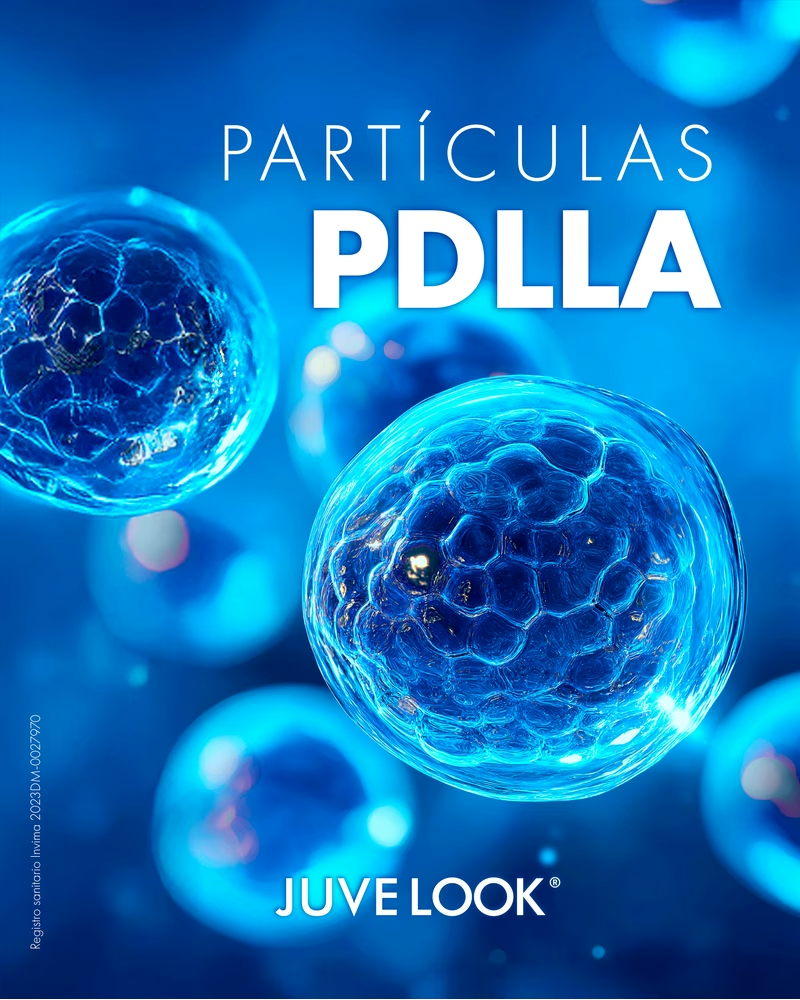
PDLLA stands for poly-D,L-lactic acid, a biodegradable polymer from the polylactic acid (PLA) family. This is not a new or experimental material — polylactic acid has been used in medicine for decades in the form of absorbable sutures, orthopaedic screws and drug delivery systems.
What makes PDLLA relevant in aesthetic medicine is that when injected into the dermis, it acts as a biostimulator: it does not fill or add volume from the outside, but instead triggers a controlled response in fibroblasts that prompts them to produce more of your own collagen.
The body breaks down PDLLA naturally and completely. The microparticles are metabolised into water and carbon dioxide, leaving no permanent residue. That degradation process is, paradoxically, what activates collagen production.
PDLLA vs PLLA: the difference that changes everything
This is the most important distinction that most people never learn.
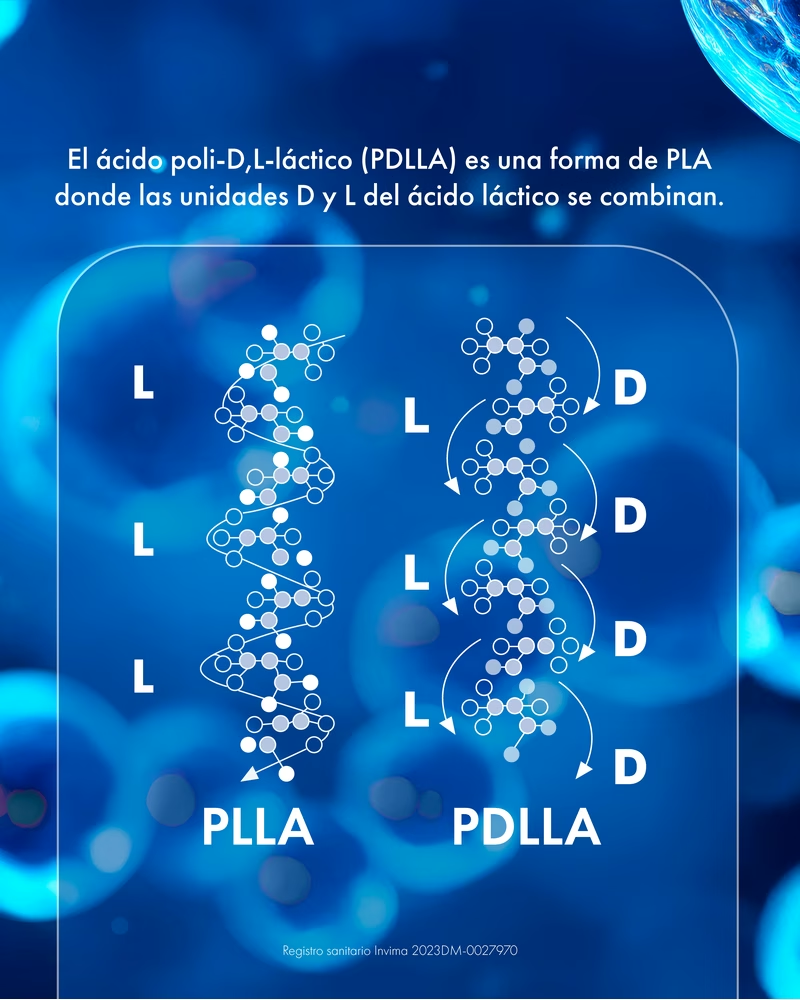
Polylactic acid has two molecular forms: the L (levo) form and the D (dextro) form. The PLLA (poly-L-lactic acid) used in Sculptra is made exclusively from the L form. The PDLLA used in Juvelook combines both forms in roughly equal proportions.
That structural difference has practical consequences:
| PLLA (Sculptra) | PDLLA (Juvelook) | |
|---|---|---|
| Composition | L isomers only | D + L isomers |
| Particle size | Larger particles | Smaller particles |
| Degradation rate | Slower | Faster and more controlled |
| Required concentration | High | Low — equal efficacy |
| Periocular zone | Contraindicated | Can be used safely |
| Immediate result | No | Yes (thanks to HA in Juvelook) |
The key is that PDLLA, having a less regular polymer chain (mix of D and L), produces smaller particles and allows lower concentrations without losing the ability to stimulate collagen. That makes it possible to work in areas where the tissue is more delicate — such as the skin around the eyes, which is only 0.5 mm thick.
The spherical multiporous morphology: why particle shape matters
Beyond chemical composition, the way PDLLA particles are manufactured in Juvelook marks a further distinction.
The particles have a spherical morphology and a multiporous structure — think of spheres with many tiny pores on their surface. That architecture increases the contact surface area between the particle and the surrounding tissue, generating a more efficient interaction with fibroblasts.
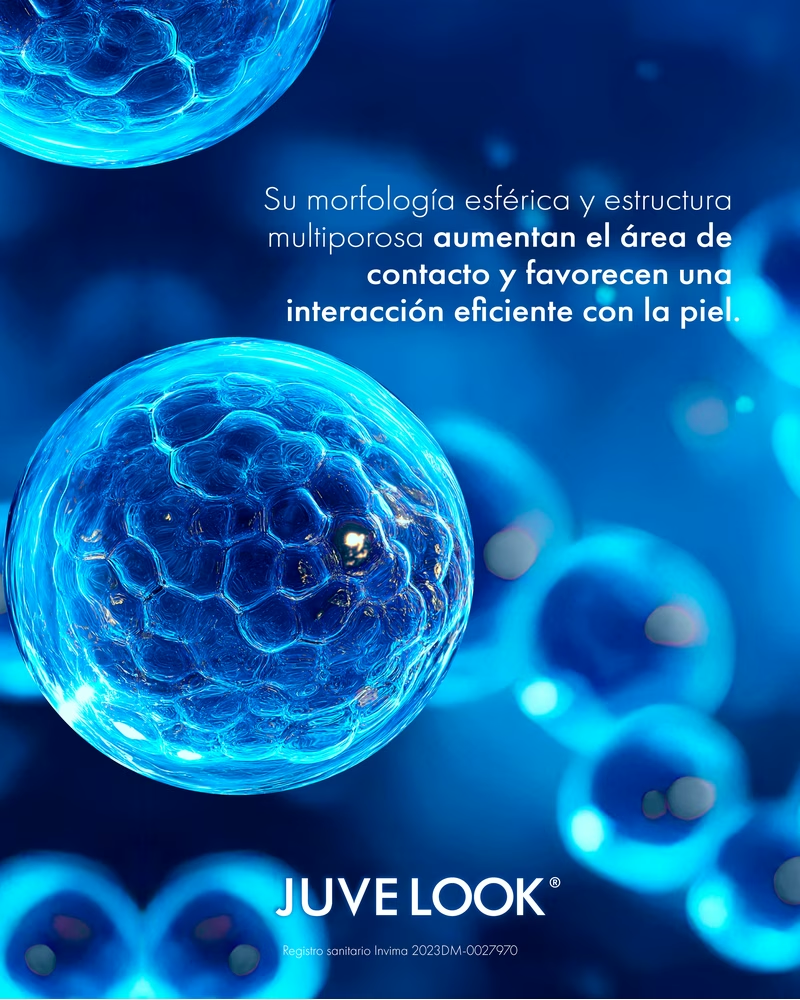
In practical terms: you get more effective stimulation with a smaller amount of PDLLA because the particles are designed to maximise tissue contact. That design reduces the need for high concentrations — which is precisely what makes use in sensitive areas possible.
How PDLLA acts in the skin: from the lab to your collagen
The mechanism of action of PDLLA works as follows:
1. Injection into the dermis with a microcannula PDLLA microparticles are deposited in the dermal tissue using a microcannula, which reduces trauma and minimises bruising risk.
2. Controlled inflammatory response The immune system detects the PDLLA particles as foreign material and generates a low-grade inflammatory response. This response is the trigger for the stimulation process.
3. Fibroblast activation Fibroblasts — the cells responsible for producing collagen and elastin — activate in response to that inflammatory signal. They begin producing type I collagen (structural firmness) and type III collagen (elasticity and flexibility).
4. Progressive collagen production This process is not immediate. New collagen builds over weeks and consolidates over the first 3 to 6 months. Results are gradual and natural — they improve over time rather than appearing all at once.
5. Natural degradation As PDLLA is metabolised, the body converts it into water and CO₂. That process takes several months, and during that time it continues stimulating collagen production. Once the PDLLA has completely disappeared, the collagen produced remains — and that collagen is yours.
The full structural result is visible between 3 and 6 months after treatment and is maintained for 18 to 24 months with the full protocol of 2 to 3 sessions.
PDLLA + hyaluronic acid: why the combination outperforms each ingredient alone
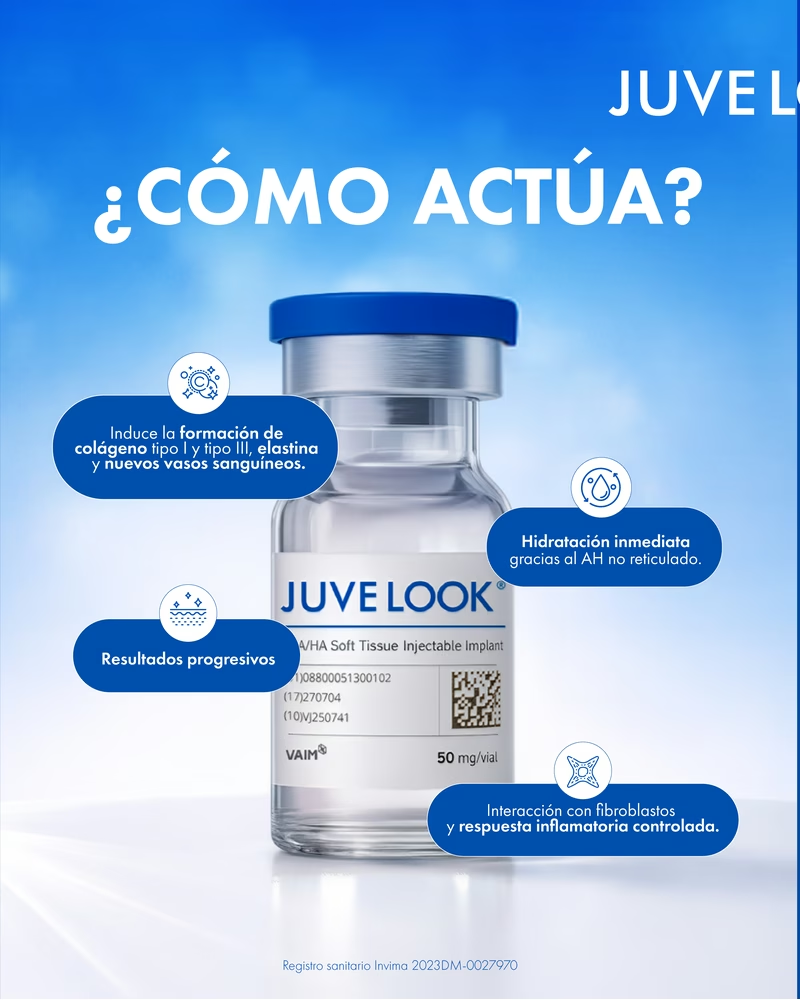
Juvelook combines PDLLA with non-crosslinked hyaluronic acid, and that combination is intentional — each component enhances the other.
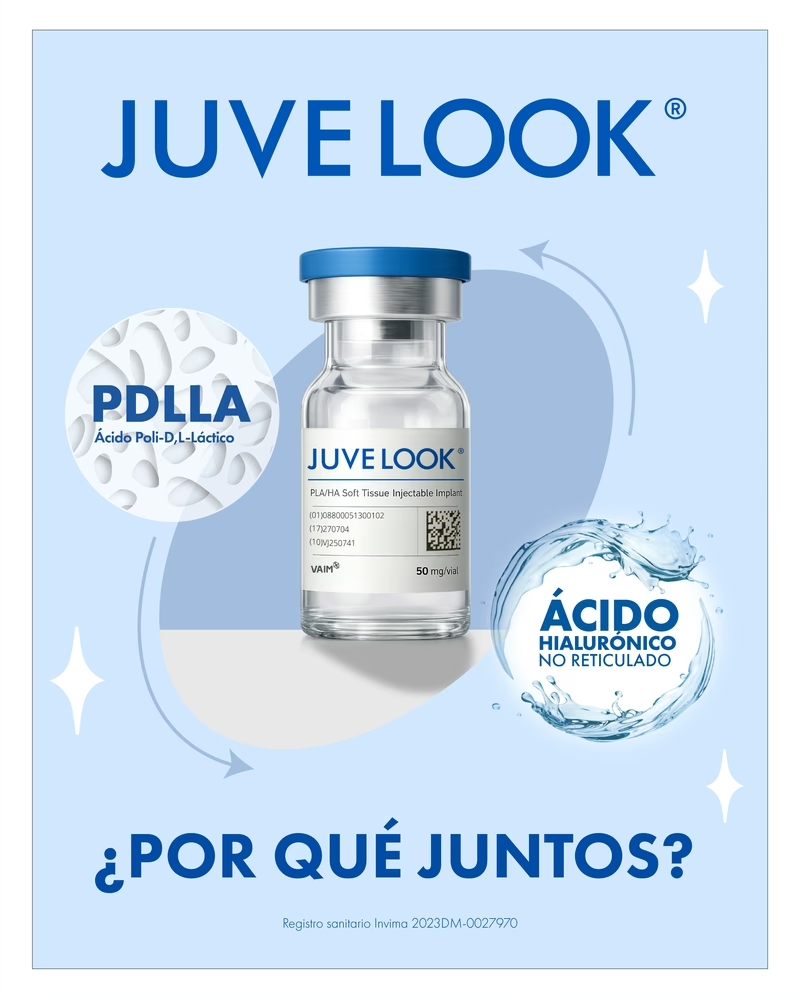
The hyaluronic acid in Juvelook does not act as a filler. It is non-crosslinked, meaning it does not form a volume-occupying gel — it integrates into the tissue, hydrating it and improving the extracellular environment. That more hydrated and nourished environment makes it easier for PDLLA to interact efficiently with fibroblasts.
From a results perspective, the combination solves the main drawback of pure biostimulators: the waiting period. With PDLLA alone (as in Sculptra), the patient sees no result on the day of treatment — they must wait weeks. With Juvelook, the hyaluronic acid delivers a visible result from day one: hydration, luminosity and surface smoothness that confirms the treatment has taken effect. The PDLLA then builds the structural long-term result.
PDLLA safety in Juvelook: what distinguishes the product
Two safety aspects are relevant when discussing PDLLA in Juvelook:
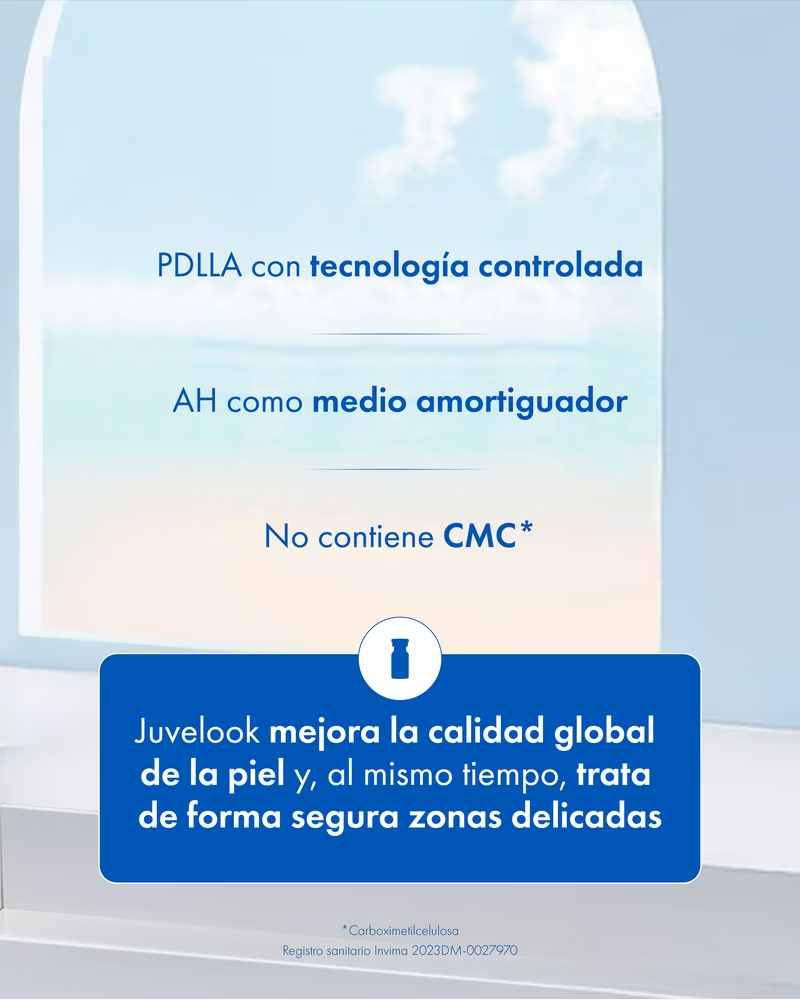
PDLLA contains no CMC. Some biostimulators and fillers use carboxymethylcellulose (CMC) as an excipient. The absence of CMC in Juvelook is a safety feature that reduces the risk of adverse reactions in delicate tissues.
The low concentration makes the periocular zone viable. Sculptra and Radiesse, with higher concentrations and larger particles, have the area around the eyes contraindicated. Juvelook standard — at 50 mg/vial — can be applied safely to crow’s feet, eyelids and dark circles when the specialist has the appropriate technical training.
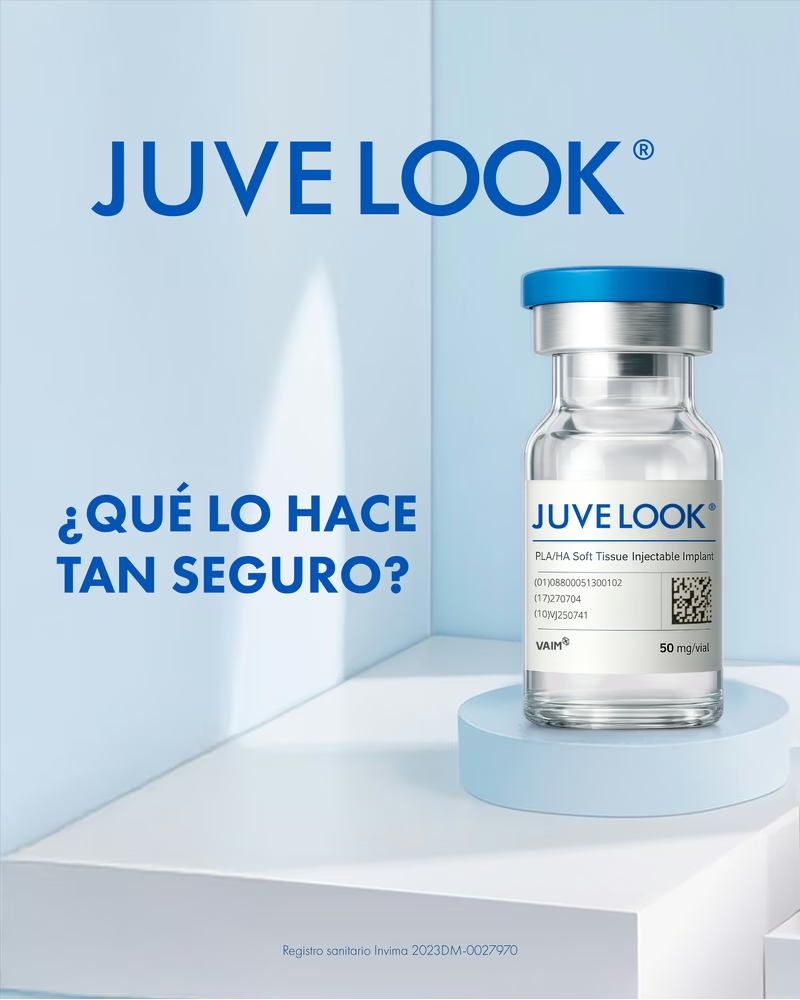
An important note for patients: there is a higher-concentration version called Juvelook Volume (200 mg/vial) that must NOT be applied to the periocular zone. It comes from the same manufacturer (VAIM, South Korea), but different concentrations mean different indications and different application zones. When enquiring at a clinic, confirm which version of the product they use and for which areas.
At ALMO Clinic we use Juvelook standard with protocols certified by the product’s international trainers, Dr Hong-seok Kim and Dr Lee Jin-seok.
Frequently asked questions about PDLLA
Is PDLLA safe for all skin types? PDLLA is biocompatible and has been used in medicine for decades. In aesthetic medicine, it is safe for the most common skin phototypes in Colombia (Fitzpatrick III to V) when applied by a certified specialist. A preliminary assessment rules out individual contraindications such as active inflammation, pregnancy or specific allergies.
How long does PDLLA take to disappear from the body? PDLLA particles degrade completely into water and carbon dioxide. That process takes several months. Collagen stimulation occurs during the degradation — which is why results are progressive and the collagen produced remains after the PDLLA has fully metabolised.
Are PDLLA and PLLA the same thing? No. Although both are polylactic acids, PLLA uses only L isomers and produces larger particles that require higher concentrations. PDLLA combines D and L isomers, producing smaller particles that can be used at lower concentrations with equal efficacy and a better safety profile in delicate areas.
Does Juvelook’s PDLLA give immediate results? PDLLA alone does not give immediate results — collagen takes weeks to build. However, Juvelook combines PDLLA with non-crosslinked hyaluronic acid that acts on the same day: visible hydration and luminosity from the first session. The structural result from the PDLLA consolidates between months 3 and 6.
How many sessions are needed for PDLLA to take effect? The standard Juvelook protocol is 2 to 3 sessions spaced 4 weeks apart. Each session adds more collagen stimulation. The full result is visible around months 3–6 and is maintained for 18 to 24 months. An annual maintenance session extends the effect.

Juvelook on real skin
This is how Juvelook's PDLLA works: visible hydration from the first session and progressive improvement in firmness, texture and luminosity over the following weeks.
Learn about the full treatmentIf you would like to know whether Juvelook is the right treatment for your case and how PDLLA can be applied to your skin, the next step is a personalised assessment at ALMO Clinic. No commitment — just the information you need to make a well-informed decision.
Have specific questions about how PDLLA would work on your skin? Talk to our medical team directly.
Talk to our medical team </a>