Juvelook's PDLLA activates fibroblasts to rebuild collagen where acne destroyed it, filling the depression from below rather than resurfacing the top. It works best on atrophic rolling and shallow boxcar scars, which have a broad base; on ice pick scars, very narrow and deep, results are limited and combining with CO2 laser or subcision is advisable. At ALMO Clinic in Bogotá it starts from $700 USD per session.
Reviewed by Dr. Oscar Barón · Cirujano plástico · SCCP
$700 USD
- Best response Rolling and boxcar
- Limited response Ice pick
Acne scars are among the most common concerns in aesthetic medicine — and among the most frustrating for those who live with them. Not because there are no treatments, but because there are far too many treatments that overpromise and underdeliver. Most act on the surface when the real problem lies in the deep structure of the tissue.
Juvelook reaches that structure. Its PDLLA activates fibroblasts to rebuild collagen where acne destroyed it. But not all scars respond in the same way, and being honest about that is just as important as explaining how the treatment works.
This article explains which types of acne scars respond best to Juvelook, what results are realistic and when combining it with other treatments makes more sense.
Why atrophic acne scars are so resistant to treatment
To understand why Juvelook can help, it’s important to first understand why acne scars are so persistent.
When a severe acne lesion becomes inflamed, it destroys collagen and fatty tissue in the dermis. The body attempts to repair that damage, but the repair is imperfect: instead of rebuilding the original structure, it forms scar tissue that sits below the skin’s surface level. The result is a visible depression — what we call an atrophic scar.
There are three main types:
- Rolling scars: undulating depressions with soft edges, caused by fibrous bands that tether the skin downward. These respond best to biostimulators like Juvelook.
- Boxcar scars: rectangular depressions with defined vertical edges. They respond well to combined treatments.
- Icepick scars: very deep, narrow pores. The most difficult to treat and generally require specific procedures such as punch excision or TCA cross.
The challenge with all these types is the same: the deficit is not at the surface — it’s in the architecture of the tissue. Products that act only above the surface — creams, superficial peels — do not reach the level where the damage occurred.
How Juvelook’s PDLLA acts on acne scars
PDLLA works precisely in the layer where the damage formed: the dermis.
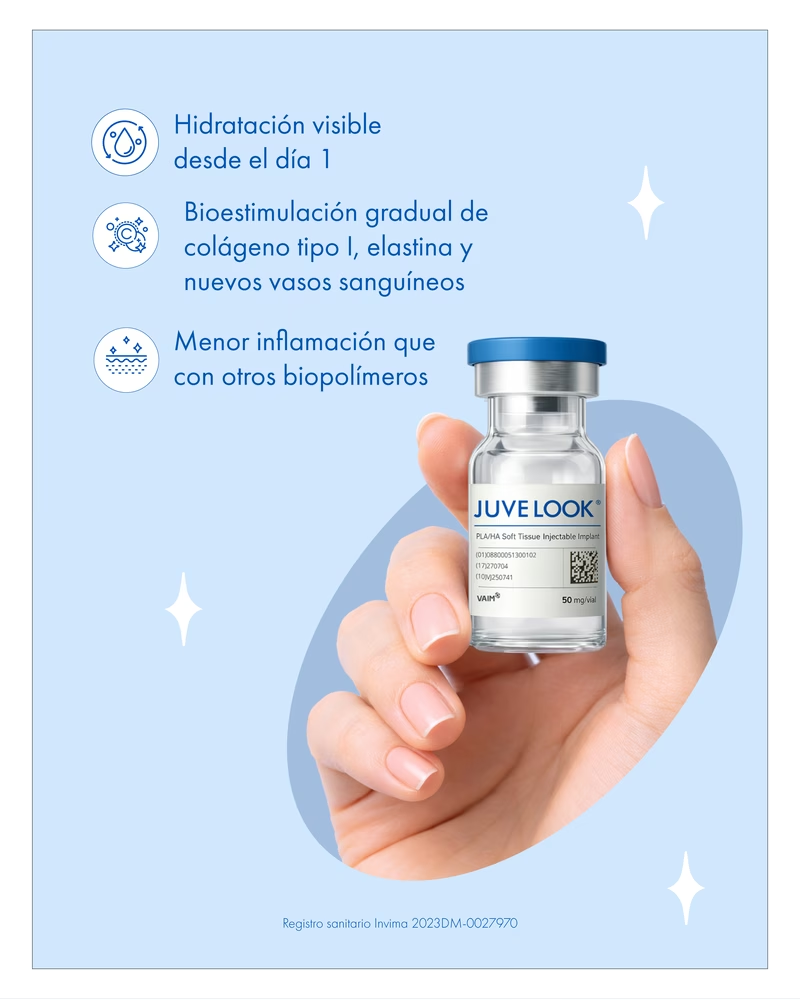
When injected, PDLLA microparticles trigger a controlled inflammatory response that activates fibroblasts — the cells responsible for producing type I and type III collagen, the two types that give skin its firmness and elasticity.
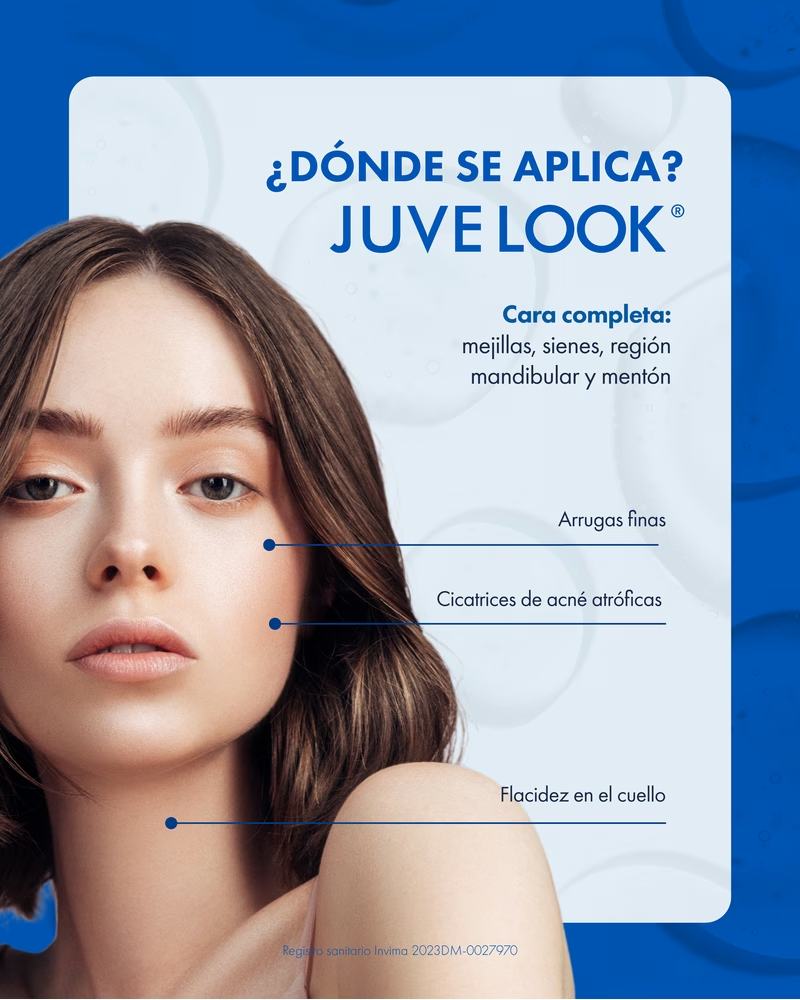
In areas with atrophic scarring, that new collagen begins to fill the structural deficit that created the depression. The process is progressive — it does not happen overnight — but over the weeks following treatment, the skin begins to gain thickness and the appearance of scars softens.
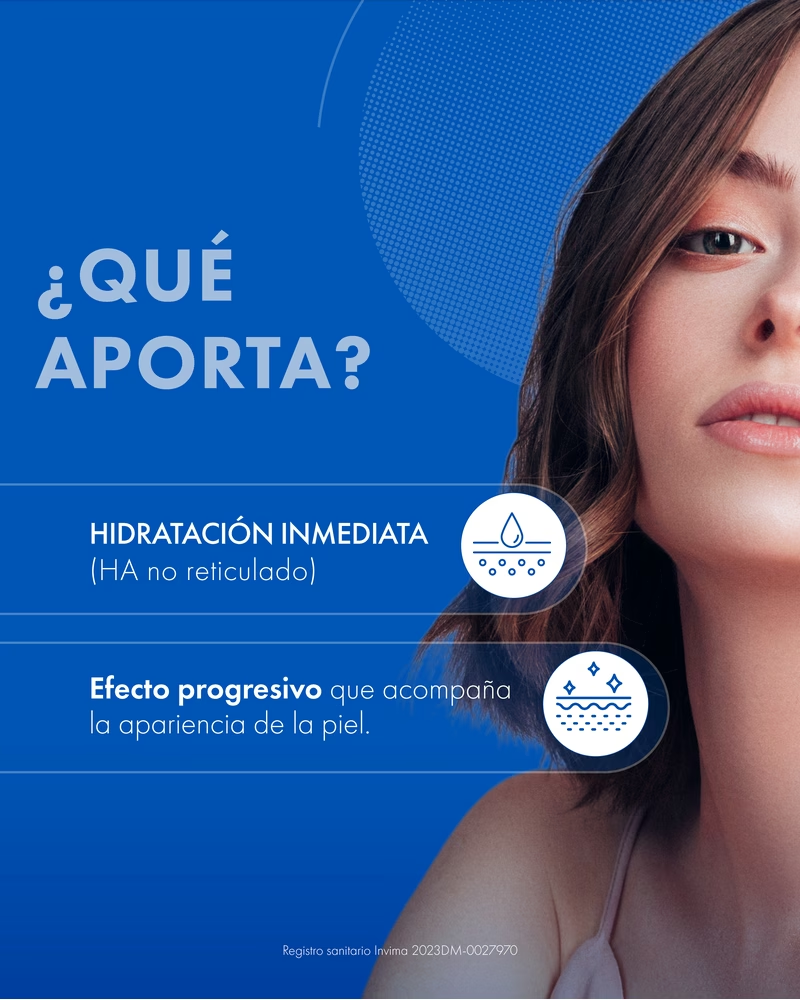
The non-crosslinked hyaluronic acid that accompanies PDLLA in Juvelook contributes immediate surface hydration from the first session. That hydration improves texture and makes scars visually less pronounced while the PDLLA builds the structural result.
What results are realistic with Juvelook for acne scars
This is where medical honesty matters more than commercial enthusiasm.
Juvelook significantly improves overall skin quality, surface texture and the appearance of mild to moderate atrophic scars — particularly rolling-type scars and areas with diffuse superficial volume loss.
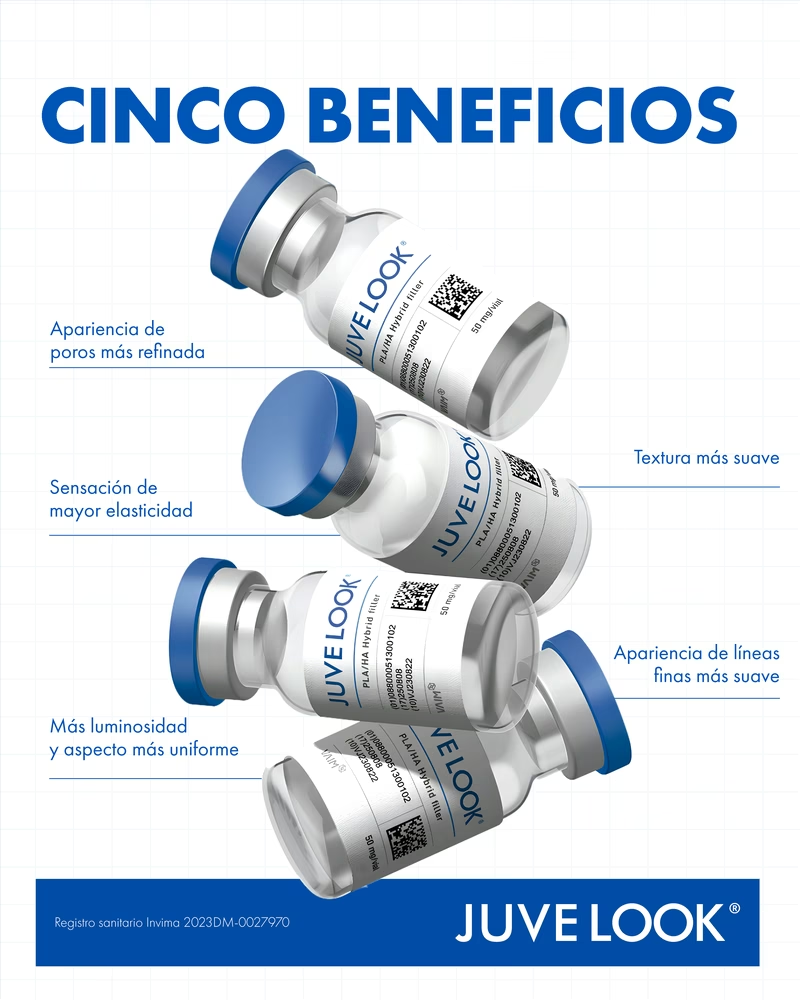
What to expect with the full protocol (2–3 sessions):
- Improved overall texture and surface uniformity
- Reduced appearance of rolling and superficial scars
- More refined pore appearance
- Greater luminosity and perceived elasticity
- Better skin quality as a foundation for other treatments
What Juvelook cannot do on its own:
- Eliminate deep icepick scars (these require punch excision or TCA cross)
- Fully resolve severe boxcar scars with very defined edges without combined treatments
- Completely restore pre-acne skin texture in cases of extensive scarring
The difference between realistic expectations and disappointment with any treatment is whether the specialist tells you this before the procedure, not after.
The timeline: when results appear
| Period | What happens |
|---|---|
| Day 1 | Improved hydration and luminosity from hyaluronic acid |
| Week 1–4 | PDLLA activates fibroblasts — invisible but active process |
| Month 1–3 | Progressive improvement in texture and softening of superficial scars |
| Month 3–6 | Full structural result — notable improvement in rolling scars |
| Month 18–24 | Maintained effect — annual maintenance session |
Juvelook combined with other acne scar treatments
For moderate to severe acne scars, Juvelook often works best as part of a combined protocol rather than as a standalone treatment.
Juvelook + Morpheus8 Morpheus8 uses fractional radiofrequency with microneedling to remodel scar tissue. The generated heat breaks down the fibrotic tissue that tethers scars downward, while Juvelook stimulates production of new collagen to fill that space. The combination addresses the problem through two simultaneous pathways. A typical protocol: Morpheus8 first (2–3 sessions), then a Juvelook cycle.
Juvelook + Fractional CO₂ laser Fractional CO₂ laser vaporises columns of scar tissue and stimulates intense surface renewal. Juvelook acts in the dermis to rebuild the collagen base that the laser does not reach. This combination is particularly effective for boxcar scars with subdural volume loss.
The prior assessment determines the protocol Not all skin types or scarring patterns respond the same way. Fitzpatrick V–VI skin, common in Colombia, requires a different approach to lighter skin types to avoid post-inflammatory hyperpigmentation. The specialist assesses scar type, skin phototype and treatment history to design the most appropriate protocol.
Who is a candidate for Juvelook for acne scars
To be a candidate for Juvelook in the context of acne scars, a few basic conditions need to be met:
Active acne must be under control. Treating scars while active acne is present makes little sense — new scars are forming at the same time. Controlling active acne, with dermatology if necessary, is the first step.
Expectations must be realistic. Juvelook significantly improves skin quality and superficial scars, but it does not erase severe scars in a single session. The result is progressive and cumulative.
No active contraindications. Pregnancy, breastfeeding, active infection in the treatment area and known allergies to the product components are absolute contraindications. The assessment rules these out.

Frequently asked questions about Juvelook and acne scars
Can Juvelook completely eliminate acne scars? In most cases, Juvelook significantly improves scar appearance but does not eliminate them entirely — especially deep or icepick scars. For rolling and superficial scars, the improvement can be very significant. The prior assessment establishes what result is realistic for each scar type.
How many sessions are needed for acne scars? The standard protocol is 2 to 3 sessions spaced 4 weeks apart. For moderate to severe scars combined with other treatments, the specialist may recommend an extended protocol. Full results are visible between 3 and 6 months.
Does Juvelook treatment hurt in scarred areas? Topical anaesthesia is applied before the procedure. Most patients report minimal discomfort. The microcannula technique reduces tissue trauma and leads to faster recovery compared to conventional needle techniques.
Does Juvelook work for all skin phototypes? Yes. PDLLA does not generate post-inflammatory hyperpigmentation on its own, making it compatible with Fitzpatrick III–VI phototypes common in Colombia. Correct technique and an appropriate protocol are key to ensuring safety across all phototypes.
Can Juvelook be used if I have active acne? It is not recommended to treat scars while active acne is present. The first step is to control active acne with dermatology; once stabilised, scar treatment can begin.
Can Juvelook for scars be combined with botulinum toxin? Yes. Botulinum toxin treats dynamic wrinkles and does not interfere with PDLLA’s mechanism. Patients who need both approaches can have a combined protocol designed in the same assessment.
If you have acne scars and want to know whether Juvelook is a viable option for your case — and which protocol makes most sense for the type and severity of your scars — the next step is a personalised assessment at ALMO Clinic. No commitment, no empty promises — just an honest analysis of what treatment can and cannot do for you.
Ready to find out which protocol fits your scar type? Schedule your assessment with our team.
Schedule your acne scar assessment </a>