Melasma is a chronic hyperpigmentation from melanin overproduction, associated with hormonal factors — pregnancy, birth control — sun exposure, and genetic predisposition. It's difficult to treat because it isn't cured: it's controlled. Any aggressive treatment can trigger a darker rebound. At ALMO Clinic (Bogotá) it's addressed with peels from $87 USD and combined protocols, always with strict sun protection, which is what sustains the result.
$87 USD
- Approach Control, not cure
- Key to results Daily sun protection

Wood's lamp diagnosis
We classify the depth of your melasma — epidermal, dermal, or mixed — to choose the most effective protocol.

Peeling and Q-switched laser
We combine depigmenting peels with Q-switched or fractional Pico laser depending on how resistant your spots are.

Maintenance to prevent relapse
Sun protection plan and maintenance peels every 3 to 4 months to preserve even skin.
Specialized Melasma Treatment in Bogotá
Melasma is the most frequent reason for dermatology consultations in Colombia, where altitude and UV radiation are constant aggravating factors. At ALMO Clinic we address melasma with a triple-action protocol: melanogenesis inhibition, controlled exfoliation, and specialized sun protection, with laser technology for the most resistant cases, within our dermatology department.
- Wood's lamp diagnosis: We determine the depth of the melasma (epidermal, dermal, or mixed) to choose the most effective protocol.
- Depigmenting chemical peel: Mandelic, lactic, glycolic, or TCA acid depending on your skin phototype, with results from the first session.
- Q-switched or fractional Pico laser: Indicated for refractory melasma with parameters adjusted to minimize the risk of post-inflammatory hyperpigmentation.
- Maintenance protocol: Sun protection and at-home care plan to prevent relapse and consolidate the long-term result.
Types of melasma and how it affects treatment
How deep the melasma sits determines which treatments are effective and which carry risk. Wood's lamp diagnosis is the first step.
Epidermal melasma
Melanin sits in the epidermis. It lightens quickly with peels and topical treatment. The most treatable, with the lowest risk of recurrence with sun protection.
Dermal melasma
Melanin sits in the dermis. More resistant to superficial peeling. Requires deep peels, Q-switched laser, or tranexamic acid for results.
Mixed melasma
A combination of epidermal and dermal components. The most common (65% of cases). Requires combined protocols and more sessions.
Melasma treatment protocol at ALMO Clinic
Every protocol is designed individually. Sun protection isn't a recommendation: it's a mandatory, non-negotiable part of any melasma treatment.
Lightening phase (3–6 months)
Chemical peel every 2–4 weeks (4–8 sessions depending on response). Daily topical depigmenting agents. For refractory melasma, Q-switched or fractional Pico laser every 4–6 weeks with conservative parameters.
Mandatory daily sun protection
Mineral SPF50+ (zinc oxide or titanium dioxide) reapplied every 2 hours during sun exposure. Sun is the main melasma trigger: without strict sun protection, any treatment loses effectiveness.
Maintenance phase (indefinite)
Maintenance peel every 3–4 months to control melanin production. Nightly topical routine with retinoids or mild depigmenting agents. Annual dermoscope check-up to catch early relapse.
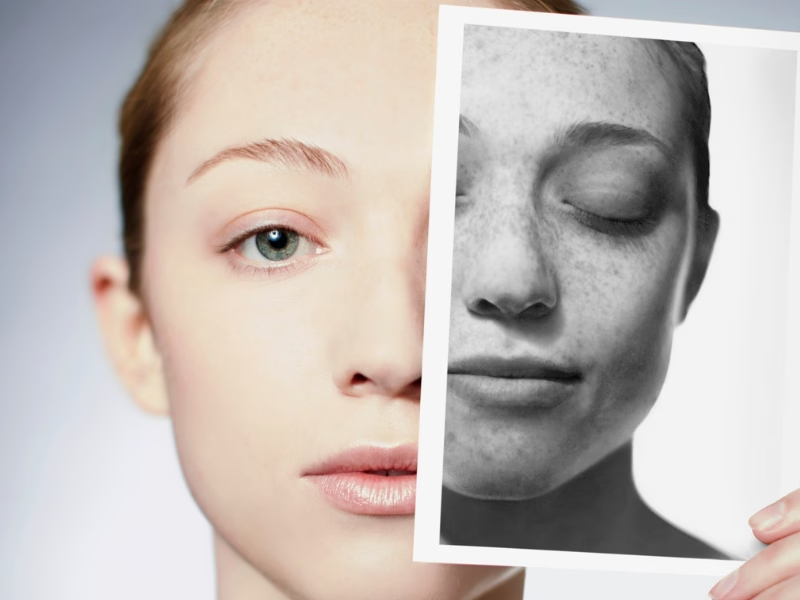
Are you a candidate for melasma treatment?
The depth and extent of your melasma determine the most suitable protocol for your case.
Ideal candidate
- Hormonal spots on forehead, cheeks, or upper lip
- Post-pregnancy melasma or from oral contraceptives
- Committed to daily SPF50+ sun protection
- Not pregnant or breastfeeding at time of treatment
- Phototype III–V (darker Latin skin, adapted treatments)
Factors to evaluate
- Active pregnancy (treatment is postponed)
- Active use of hormonal contraceptives (discontinuation is evaluated)
- Very deep dermal melasma with multiple prior failed treatments
- Expecting results in few sessions without a maintenance phase
- Prior allergic reactions to acids or peeling
FAQ: Melasma treatment
Why treat melasma at ALMO Clinic?
We have dermatologists specialized in pigmentation who understand the specifics of melasma in Latin American skin (phototypes III–V). Every protocol is designed individually to achieve maximum lightening with the lowest risk of post-inflammatory hyperpigmentation. If your skin also shows redness or visible vessels, check out our rosacea and couperose treatment.
Book dermatology consultation