In summary
Gynecomastia is the growth of glandular breast tissue in men, and it must be distinguished from pseudogynecomastia, which is fat alone. The practical test: the gland feels like a firm disc beneath the areola, while fat is soft and diffuse. Causes range from puberty and andropause to anabolic steroids, alcohol and certain medications. Glandular tissue does not respond to diet or exercise: where there is a glandular component, treatment is surgical and combines liposuction with excision.
Reviewed by Dr. Martha Peñarredonda · Plastic surgeon · SCCP
Firm disc under areola
- Fat Soft and diffuse
- Glandular treatment Surgical
Last updated: July 2026 · Reviewed by Dr. Martha Peñarredonda
Roughly one in three men experiences some degree of gynecomastia during his life — yet it remains something men rarely talk about. The result: years avoiding pools, fitted shirts and locker rooms, for a problem with a clear diagnosis and a definitive solution. This guide answers what men actually ask Google.
What gynecomastia is (and what it is not)
Gynecomastia is the growth of glandular breast tissue in men. It is not fat: it is gland — the same structure that forms the female breast. That is why it does not respond to diet or exercise.
Its imitator, pseudogynecomastia, is fat accumulation on the chest, typical of weight gain. In practice, most cases are mixed: gland plus fat. Telling them apart matters because the treatment differs.
The causes: from puberty to steroids
The underlying mechanism is always the same: more estrogenic than androgenic effect on breast tissue. What changes is the origin:
Physiological. Newborns (maternal hormones), puberty (up to 6 in 10 adolescents; usually resolves within 1-2 years) and men over 60 (natural testosterone decline).
Drugs and substances. Anabolic steroids — a frequent cause in men who train —, certain medications (antiandrogens, some antacids, antiretrovirals, psychiatric drugs), excess alcohol and marijuana.
Medical conditions. Liver or kidney disease, hyperthyroidism, hypogonadism and, rarely, hormone-producing tumors. This is why any new gynecomastia in an adult deserves medical evaluation before planning surgery.
Idiopathic. In a large share of cases no cause is found. The treatment remains the same.
Gland or fat? The test your surgeon performs
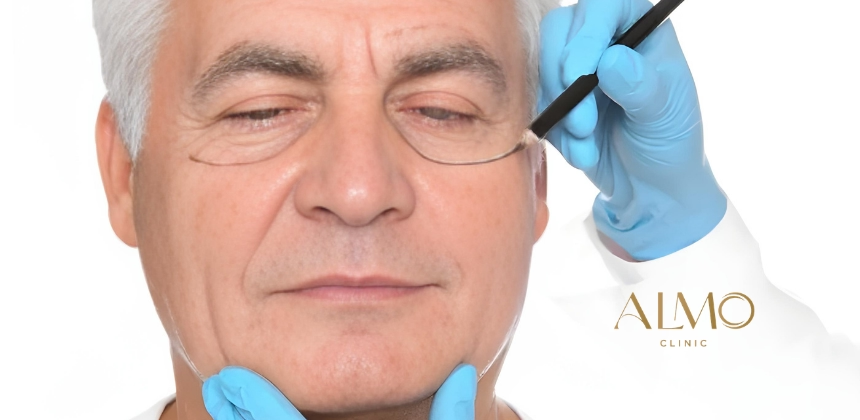
During the examination, the surgeon gently pinches the tissue under the areola:
| Finding | Suggests | Usual treatment |
|---|---|---|
| Firm, defined disc under the areola | True gynecomastia | Gland excision |
| Soft, diffuse tissue, no nodule | Pseudogynecomastia | Liposuction |
| Both components | Mixed (most frequent) | Combined technique |
| Hard, fixed, off-center lump or discharge | Requires work-up | Ultrasound / prior evaluation |
Ultrasound is ordered in doubtful cases. If an active hormonal cause is suspected, it is studied and treated first: operating without correcting the cause increases the risk of recurrence.
The definitive treatment is surgical
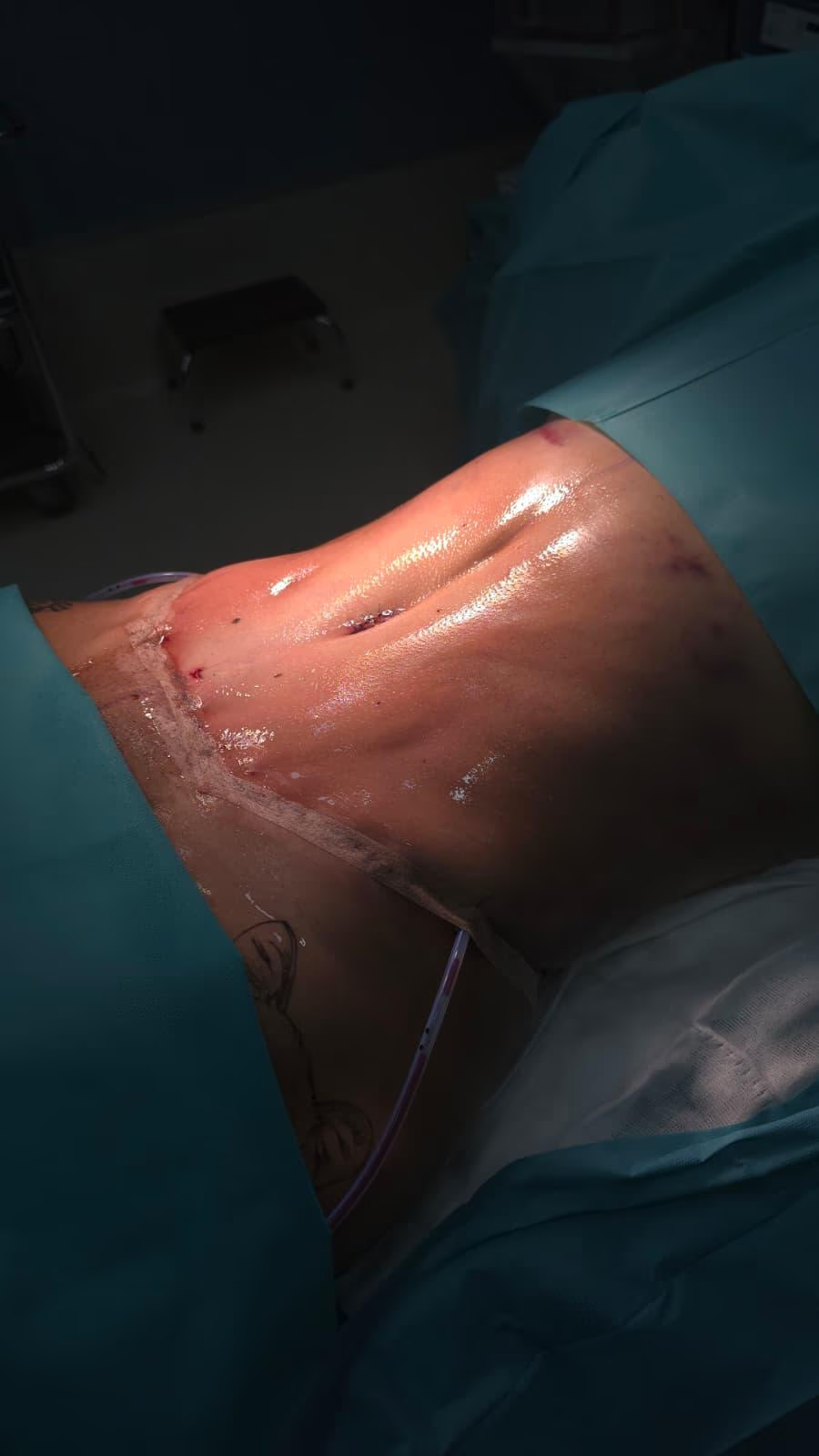
Once gynecomastia has been established for 12-24 months, the gland becomes fibrotic and neither weight loss nor medication reverses it. Correction is a moderately complex surgery:
- Liposuction of the fatty component, through 3-4 mm incisions.
- Gland excision through a semicircular incision at the edge of the areola, nearly imperceptible once matured.
- Combined technique in mixed cases — the most common scenario.
Back to work takes 5-7 days, with a compression vest for about 4 weeks. The result is permanent as long as the cause does not persist (steroids, implicated medication, major weight gain). If other areas of localized fat concern you, liposculpture can be combined in the same surgical session.
For international patients, Bogotá offers board-certified plastic surgeons at a fraction of US prices; our plastic surgery safety guide for Colombia explains what to verify before booking.
Frequently asked questions
Does gynecomastia hurt?
There can be tenderness to the touch, especially during active growth phases. Persistent or intense pain is not typical and should be evaluated.
Will chest exercises get rid of it?
No. Building the pectoral muscle can even make the gland more visible by pushing it forward. Only mild pseudogynecomastia improves with body fat loss.
At what age can it be operated?
In adolescents, surgeons wait at least 1-2 years because pubertal gynecomastia usually resolves on its own. In adults with stable gynecomastia there is no age limit if general health allows it.
Can gynecomastia come back after surgery?
The excised gland does not grow back. Recurrence is linked to persistent causes: steroids, implicated medications or major weight gain.
Stop hiding it: it has a solution
Established gynecomastia does not go away on its own, but it can be corrected permanently with a short-recovery surgery and minimal scarring. The first step is the correct diagnosis: gland, fat or both — and ruling out causes that must be treated first.
Book your specialist assessment