A hair transplant in Colombia is safe when three conditions are met: the practitioner is a physician registered in ReTHUS, the Ministry of Health registry, and not a technician working unsupervised; the facility holds a Health Secretary licence; and the extraction and implantation are performed by the medical team rather than delegated entirely to assistants. Colombia regulates medical practice through those registries, so verification is possible before you travel. Price far below market usually means one of the three is missing.
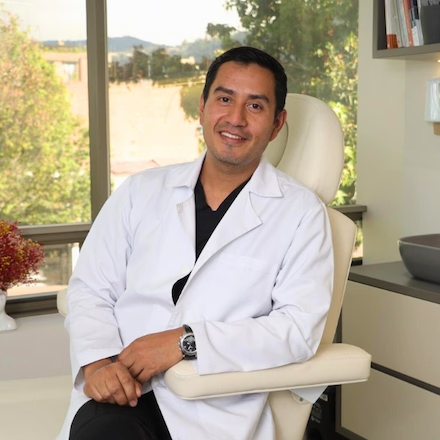
Reviewed by Dr. Oscar Barón · Cirujano plástico · SCCP
ReTHUS registry
- Verify facility Health Secretary licence
- Ask Who does the implantation
Safety is — and should be — the number one concern for anyone considering a hair transplant abroad. When you are evaluating clinics in a country you may not know intimately, questions about medical standards, oversight, and quality control are entirely justified.
The short answer is yes, a hair transplant in Colombia can be safe — provided you choose a licensed, certified clinic with qualified surgeons and transparent practices. Colombia has a well-established regulatory framework for healthcare, and many clinics meet or exceed international standards.
This guide provides the information you need to evaluate safety objectively, recognize red flags, and make a confident decision. Review the credentials of ALMO Clinic’s trichology team to see what a safe, professional clinic looks like.
Medical regulation in Colombia
Colombia’s healthcare system is regulated at multiple levels, providing oversight for medical facilities and practitioners.
Ministry of Health (Ministerio de Salud)
The Ministry of Health is the primary regulatory body that establishes healthcare policy, defines standards for medical practice, and oversees the health system nationwide. All medical facilities must register with the Ministry and comply with its regulations.
INVIMA
The National Institute for Food and Drug Surveillance (INVIMA) regulates medical devices, pharmaceuticals, and biological products used in healthcare. For hair transplant clinics, INVIMA oversight applies to surgical instruments, anesthesia medications, and any medical devices used during the procedure.
District Health Secretariats
Local health authorities in each city issue operating licenses to clinics and perform inspections to ensure compliance with infrastructure, hygiene, and safety standards. In Bogotá, the District Health Secretariat is responsible for this oversight.
Clinic licensing requirements
To obtain and maintain an operating license, a clinic must meet requirements including:
- Adequate physical infrastructure with designated surgical areas
- Sterilization protocols that meet national standards
- Emergency equipment and trained personnel
- Proper waste disposal procedures
- Patient record management and privacy protections
- Professional liability insurance
What certifications to look for
When researching clinics, the following credentials indicate a commitment to quality and safety:
Surgeon certifications
Your surgeon should be a licensed medical doctor with board certification in a relevant specialty. In Colombia, hair restoration is often performed by specialists in dermatology, plastic surgery, or general surgery with additional fellowship training in hair transplantation.
Look for surgeons who are members of:
- ISHRS (International Society of Hair Restoration Surgery) — the leading international professional organization
- SCCP (Sociedad Colombiana de Cirugía Plástica) — Colombian Society of Plastic Surgery
- ACD (Asociación Colombiana de Dermatología) — Colombian Dermatology Association
Facility certifications
A safe clinic will have:
- Current operating license from the local health authority
- Registered surgical facility status
- Accreditation from a recognized quality certification body
- Documented infection control protocols
International patient support
Clinics that regularly treat international patients should offer:
- English-speaking coordinators
- Transparent written quotes with no hidden fees
- Virtual consultation capability
- Clear postoperative care instructions
- Emergency contact availability
Red flags that identify risky providers
Just as there are safe, reputable clinics, there are also providers that cut corners. Here are the warning signs to watch for:
No in-person surgeon involvement
Some operations assign a salesperson to handle the initial consultation, and the surgeon only appears briefly during the procedure — or not at all. Ask specifically: will the surgeon who evaluates you be the same person who performs the extraction and implantation? A safe clinic ensures the surgeon is present throughout.
Pressure to book immediately
High-pressure sales tactics — “Book today for a 50% discount” or “This price is only available for the next 24 hours” — are characteristic of clinics that prioritize revenue over patient care. Reputable clinics give you time to make an informed decision.
Refusal to share credentials
If a clinic is unwilling or slow to provide the surgeon’s full name, license number, or professional memberships, consider this a significant red flag. Transparency is a hallmark of quality.
Unrealistic promises
Any clinic that guarantees a specific number of grafts without examining you, or promises results that seem too good to be true, should be approached with caution. Ethical clinics provide realistic expectations based on your individual examination.
No follow-up protocol
What happens if you have questions after returning home? Clinics that lack a structured follow-up protocol — or charge excessively for postoperative queries — are prioritizing the procedure over the outcome.
Negative patient reviews
While no clinic has a perfect record, consistent patterns in negative reviews — especially regarding poor communication, lack of surgeon involvement, and unsatisfactory results — are important to heed.
Why patients from the US and Europe choose Colombia
Despite being a relatively distant destination for European patients, Colombia has become a leading choice for hair restoration. The reasons extend beyond cost savings.
High standard of care: Many Colombian hair restoration surgeons have trained at prestigious international institutions. The country’s medical education system produces well-qualified specialists who are competitive with their peers in the US and Europe.
Regulatory accountability: Colombia’s healthcare regulations provide meaningful oversight. Licensed clinics are subject to inspections and must maintain compliance to operate. This creates a baseline of safety that protects patients.
Cultural hospitality: Colombian healthcare culture emphasizes personal attention and warmth. International patients frequently remark that they feel genuinely cared for rather than processed through a system.
Experience with international patients: Clinics like ALMO have extensive experience coordinating care for patients from abroad. From airport transfers to language support to follow-up care across time zones, this infrastructure makes the experience smooth and safe.
Comparable surgical outcomes: When performed by qualified surgeons in licensed facilities, FUE hair transplant outcomes in Colombia are equivalent to those achieved in the US and Europe. The technique is standardized, and the equipment is the same.
For a detailed look at our safety protocols and certifications, meet ALMO Clinic’s trichology team.
Frequently asked questions
Is it safe to fly after a hair transplant?
Yes. Most patients can fly 24 to 48 hours after the procedure. We recommend waiting at least 48 hours to ensure the grafts are stable. Staying in Bogotá for 7 to 10 days after surgery allows for initial healing and a follow-up visit before your return flight.
How do Colombian clinics compare to US clinics in safety standards?
Licensed Colombian clinics must meet national safety standards that cover sterilization, facility infrastructure, and professional qualifications. While the specific regulatory framework differs from the US, the practical safety standards in reputable clinics are comparable. The key is choosing a clinic that meets or exceeds international standards.
What happens if there is a complication after I return home?
Reputable clinics provide remote follow-up and can coordinate with your local physician if needed. Before traveling, confirm the clinic’s complication management protocol and whether they offer telemedicine support after your departure.
Are medications and anesthesia in Colombia safe?
Yes. Medications and anesthesia products used in Colombian clinics are regulated by INVIMA, which applies international safety standards. Commonly used anesthesia agents (lidocaine, epinephrine) and postoperative medications (antibiotics, anti-inflammatories) are the same as those used in the US and Europe.
How do I verify a clinic’s license before traveling?
You can request the clinic’s operating license number and verify it with the local health authority. Additionally, ask for the surgeon’s professional license number. A legitimate clinic will provide this information without hesitation.
Want to verify our credentials or ask about our safety protocols directly? Reach out to our team.
Ask about our safety credentials </a>