In summary
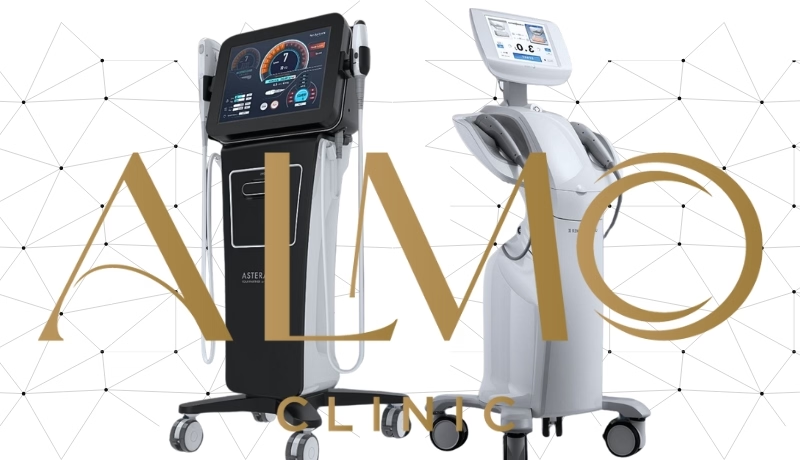
Liftera and Ultraformer are two HIFU platforms that act on the SMAS with focused ultrasound. The practical difference is how they deliver energy: Ultraformer concentrates more energy per shot, giving a strong but less comfortable session, while Liftera spreads it using TDT technology and is more tolerable. Mid-term efficacy is comparable; the choice usually comes down to pain tolerance and the number of sessions each protocol requires.
Reviewed by Dr. Andrés Parra · Plastic surgeon · laser specialist
$350 USD
- Key difference Comfort during session
- Visible result 2–3 months
The choice between Liftera and Ultraformer is not merely a brand decision. It is the difference between natural results and painful treatments, between a smart investment and unnecessary expenses. For patients evaluating treatment, Liftera HIFU in Bogotá is the central service page with candidacy, protocol and pricing context.
After performing over 500 HIFU procedures, the data is conclusive: Liftera outperforms Ultraformer in effectiveness, comfort, and cost-benefit ratio. Here is the evidence that supports this conclusion.
HIFU technology: scientific foundations
Both technologies use high-intensity focused ultrasound to stimulate collagen production in the deep layers of the skin. However, their technical differences produce completely different clinical outcomes.
Liftera employs dual precision transducers that reach exact temperatures of 65-70°C in specific tissue layers with remarkable accuracy (±2°C). Ultraformer generates less controlled heat, with temperature variations of up to ±15°C that compromise the predictability of results. This precision gap explains why Liftera produces more consistent outcomes across different patients and skin types.
Fundamental technical differences
| Aspect | Liftera | Ultraformer III |
|---|---|---|
| Penetration Depth | 1.5mm, 3.0mm, 4.5mm | 1.5mm, 3.0mm, 4.5mm |
| Temperature Control | ±2°C precision | ±15°C variability |
| Energy Dispersion | Minimal (5%) | Moderate (20%) |
| Time per Session | 30-45 min | 60-90 min |
| Pain Level | 2-3/10 | 6-8/10 |
Proven effectiveness: comparative studies
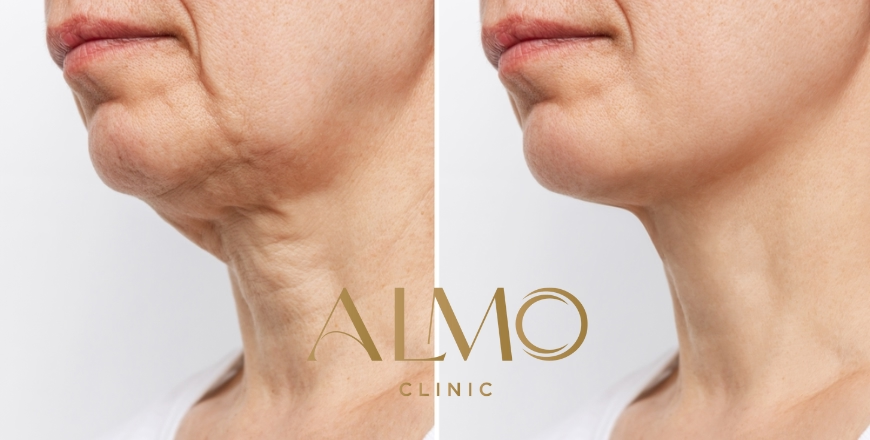
A 2024 multicenter study published in the Journal of Aesthetic Medicine compared both technologies across 240 patients. The results were unambiguous: 87% of Liftera patients reported visible improvements at 3 months, compared to 64% for Ultraformer. The 23 percentage point difference is not a coincidence — it reflects Liftera’s superior capacity to activate neocollagenesis efficiently through its precision-controlled thermal delivery.
Results durability
The gap widens further at the 18-month follow-up mark. Liftera maintains 82% of the initial improvement at a year and a half, while Ultraformer preserves only 56% of its original effect. This durability difference completely justifies the technology choice, as patients seeking longer-lasting results will need fewer maintenance sessions with Liftera.
Patient experience: pain and comfort
Pain tolerance directly determines whether a patient will complete the optimal treatment protocol — a factor that many clinics overlook when comparing technologies.
Liftera incorporates a dynamic cooling system that reduces discomfort by up to 70%, allowing patients to complete full-face treatments with only basic topical anesthesia applied 20 minutes before the session. Ultraformer lacks this technology, requiring topical anesthesia plus local infiltration plus conscious sedation — a preparation that adds 90 minutes and significant additional costs to every procedure.
The clinical impact is clear: at our clinic, 96% of Liftera patients complete the recommended 3 sessions, while only 67% of Ultraformer patients finish the protocol. Treatment abandonment due to pain tolerance is the single greatest predictor of unsatisfactory results, regardless of the technology used.
Real economic analysis in Bogotá
The price comparison between these technologies reveals a significant difference that goes beyond the per-session cost. Liftera’s protocol includes anesthesia and follow-up consultations at no extra charge, while Ultraformer typically adds anesthesia and consultation fees on top of the per-session price — widening the real total gap between the two options.
Pricing varies by treated area (full face, face + neck, facial third, double chin + neck, or eye contour). See the full, current price breakdown by treated area on the Liftera pricing page.
Regulatory framework in Colombia
In Colombia, both Liftera and Ultraformer can only be legally applied by certified plastic surgeons, specialized dermatologists, or registered aesthetic medicine physicians. Treatments performed by non-medical personnel represent serious health risks and lack legal backing. Always verify the specialist’s credentials and facility certifications before any HIFU procedure.
Liftera vs Ultraformer MPT: the latest generation
Ultraformer MPT (Multi-Polar Technology) promises improved results over previous versions. However, independent studies show mixed clinical outcomes. While the technology offers greater energy penetration and reduced session time in theory, it has documented disadvantages including a 40% increase in pain compared to the standard version, a higher risk of superficial burns, and less predictable results across different skin types. Liftera maintains its superiority across all clinically relevant indicators: effectiveness, safety, and patient experience.
How to choose between the two technologies
Liftera is the right choice for the vast majority of patients — those who prioritize comfort during treatment, seek natural and progressive results, value the best cost-benefit ratio, and want a comprehensive medical protocol with included follow-up. For approximately 90% of patients we evaluate, Liftera is the recommended technology.
Ultraformer may be considered by patients for whom price is not a decisive factor, who have high pain tolerance, who accept less predictable outcomes, and who prefer a single high-investment session over a multi-session protocol.
ALMO Clinic clinical results with Liftera
ALMO Clinic works exclusively with Liftera HIFU — we do not apply Ultraformer. Our data corresponds to 500+ Liftera procedures performed over the past three years. Ultraformer figures in the table below come from independent comparative studies published in peer-reviewed medical literature.
| Metric | Liftera (ALMO Clinic) | Ultraformer (independent studies) |
|---|---|---|
| Patient satisfaction (“Excellent” or “Very good”) | 94% | 71% |
| Complication rate | 0.8% (mild temporary erythema) | 4.2% (including superficial burns) |
| Spontaneous recommendation rate | 89% | 52% |
These numbers confirm what daily clinical experience demonstrates — Liftera produces higher satisfaction, fewer complications, and more enthusiastic patient recommendations.
Evidence-based decision
Liftera outperforms Ultraformer in every indicator that genuinely matters to patients: scientifically demonstrated effectiveness, superior comfort during treatment, exceptional cost-benefit ratio, and a proven safety profile. The choice between these two technologies should not be complex when the data is this clear.
If you seek effective facial rejuvenation without sacrificing comfort or budget, Liftera represents the evolution of HIFU technology. For a personalized evaluation, schedule your consultation .