Rosacea is a chronic inflammatory disease of facial skin with four subtypes: erythematotelangiectatic (persistent flushing and visible vessels), papulopustular (with inflammatory lesions mistaken for acne), phymatous (skin thickening, mainly on the nose) and ocular (dry, irritated eyes). It differs from acne in that it produces no comedones. It is controlled rather than cured. At ALMO Clinic in Bogotá IPL treatment starts from $225 USD per session.
Reviewed by Dr. Oscar Barón · Cirujano plástico · SCCP
$225 USD
- Subtypes 4 distinct forms
- Unlike acne No comedones
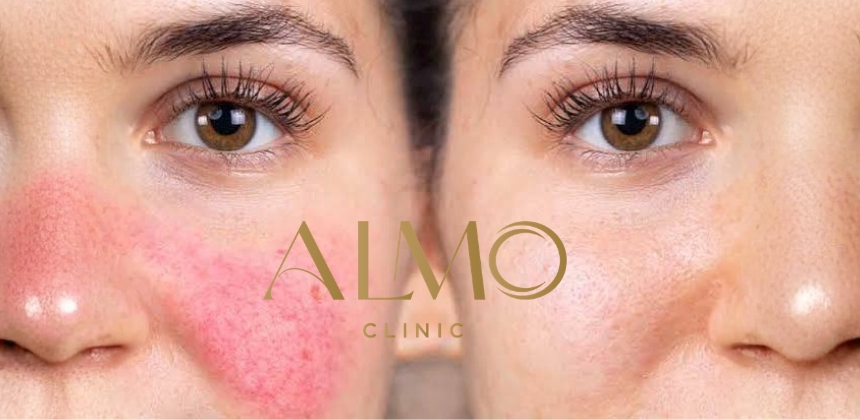
You looked in the mirror this morning and there they were again: flushed cheeks, persistent red vessels that won’t fade, that burning sensation with no obvious cause.
If you have been living with this for months — or years — without a clear diagnosis, you may have rosacea.
You are not alone. It is one of the most common dermatological conditions in adults over 30, and one of the most misunderstood.
What rosacea actually is
Rosacea is a chronic inflammatory skin disease. It is not an allergy. It is not late-onset acne. It is not simply sensitive skin.
It is a condition with vascular and neurological roots that primarily affects the central face: nose, cheeks, forehead and chin.
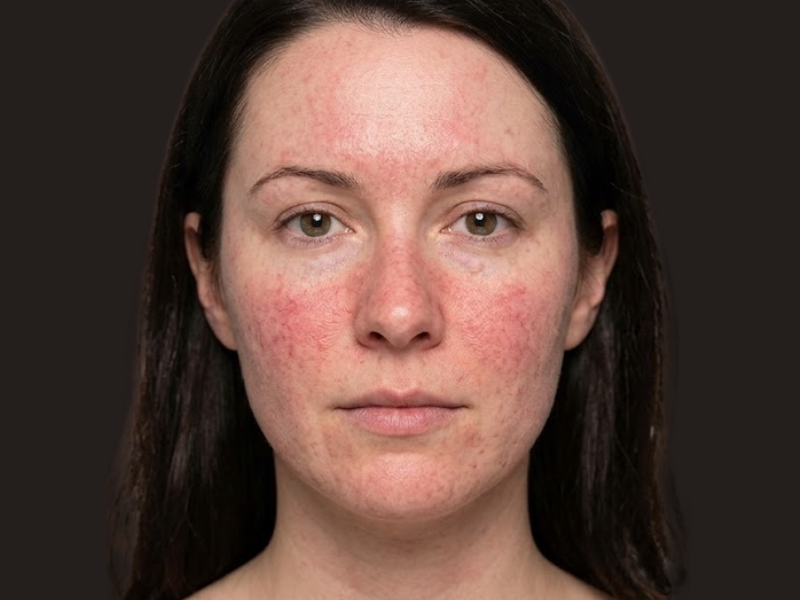
Its most recognisable feature is persistent redness — erythema — but it goes far beyond that. Depending on the subtype, it can manifest as visible blood vessels, papules, pustules, skin thickening or even eye symptoms.
What causes it? There is no single confirmed cause. The most consistently identified factors include:
- Genetic predisposition: rosacea tends to run in families
- Vascular dysfunction: facial vessels over-react to triggers like heat, cold, stress or alcohol
- Altered immune response: chronic low-grade inflammation without infection
- Demodex folliculorum: a microscopic mite that lives in follicles and is denser in rosacea-prone skin
What is clear: rosacea does not improve with better facial cleansing or over-the-counter creams.
The 4 subtypes of rosacea and how to recognise them
Rosacea is not one single disease. Medical classification recognises 4 subtypes with distinct clinical presentations — and one person can have more than one simultaneously.
Subtype 1 — Erythematotelangiectatic (ETR)
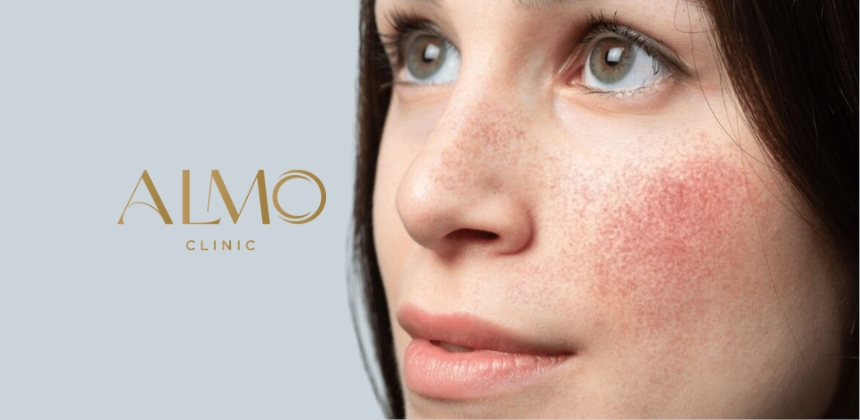
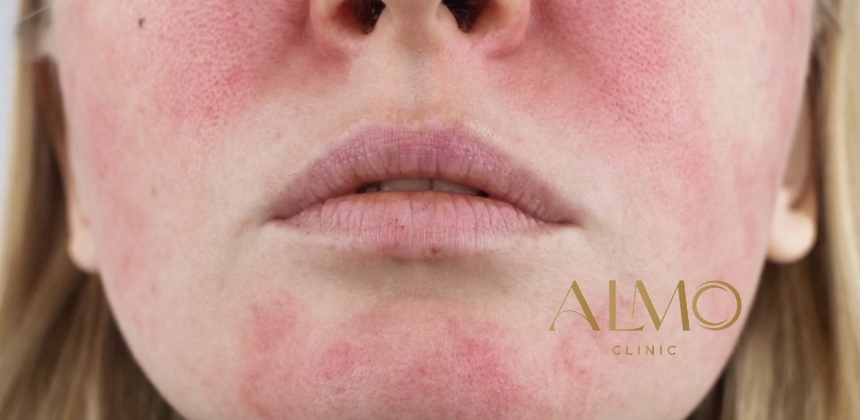
The most common. The main sign is persistent centrofacial erythema: the redness does not disappear between flare-ups, though it intensifies with heat, exercise or stress.
Telangiectasias — the visible “red vessels” — also appear, mainly on the cheeks and nose. Skin tends to be sensitive, with a burning sensation and mild scaling.
Subtype 2 — Papulopustular
This is where the most confusion arises: it looks like acne, but it isn’t.
Papules (solid bumps) and pustules (with purulent content) appear in the central face, without comedones — without blackheads or whiteheads. That is the key difference from acne vulgaris.
The baseline erythema remains. And conventional acne treatments — benzoyl peroxide, retinol — can actually worsen the skin in this subtype.
Subtype 3 — Phymatous
Less common but highly visible. It is characterised by skin thickening and irregular texture, caused by hyperplasia of sebaceous glands and connective tissue.
The best-known manifestation is rhinophyma: the nose takes on a bulbous, reddened appearance. It primarily affects men and, if untreated, can become permanent.
Subtype 4 — Ocular
Many rosacea patients have eye symptoms they do not associate with the disease: irritated eyes, a gritty sensation, inflamed eyelids (blepharitis), frequent eye redness.
Ocular rosacea can appear before the facial signs, which complicates the initial diagnosis.
Rosacea vs. acne: the differences that matter
This confusion costs time and money, because a treatment designed for acne can actively inflame papulopustular rosacea.
| Feature | Rosacea | Acne |
|---|---|---|
| Comedones (blackheads/whiteheads) | No | Yes |
| Persistent baseline erythema | Yes | No |
| Telangiectasias | Common | Absent |
| Burning and sensitivity | Marked | Mild |
| Typical age of onset | 30–50 years | Adolescence |
| Response to topical retinoids | May worsen | Improves |
| Response to antibiotics | Improves (subtype 2) | Variable |
The differential diagnosis is made by a dermatologist with a clinical history and, in some cases, dermoscopy.
Symptoms you should not ignore
Rosacea has central symptoms — erythema, telangiectasias — but also secondary signs that many patients do not connect with the disease:
- Easy flushing from mild triggers (heat, spicy food, alcohol, exercise, stress): can last minutes to hours
- Facial burning or stinging with no apparent cause, especially after applying skincare products
- Dry, flaking skin in areas of chronic erythema
- Ocular sensations of foreign body or frequent irritation
- Enlarged pores in the centrofacial zone
- Facial swelling (oedema), particularly around the eyelids and cheeks
If you have 3 or more of these symptoms persistently, the next step is a dermatology consultation.
How we see it at ALMO
In consultation, the first thing we do with a patient who suspects rosacea is identify the active subtype.
Treating erythematotelangiectatic skin is not the same as treating papulopustular. The vascular laser protocol and the topical medication protocol do not overlap — they have different logic, and applying the wrong one can worsen the condition.
That is why a precise diagnosis is not a formality: it is the foundation of everything that follows.
If you have had this redness for a while and have not received a clear answer about what you have, a dermatology evaluation is the right starting point.
Book your dermatology consultation at ALMO Clinic →
Not sure which subtype you have? Ask our dermatology team directly for guidance.
Ask about your rosacea subtype </a>
Frequently asked questions
Does rosacea go away on its own?
No. Rosacea is a chronic condition: without treatment, it tends to progress. Flare-ups may subside, but baseline erythema and telangiectasias do not resolve on their own. With the right medical management, effective long-term control is achievable.
Is rosacea contagious?
No. It is not an infection. It cannot be transmitted by contact.
Is rosacea the same as couperose?
Couperose refers specifically to telangiectasias — the dilated vessels visible on the skin — which is one of the manifestations of the erythematotelangiectatic subtype. The terms are used interchangeably in everyday language, but technically couperose is one of the signs of rosacea, not the full condition.
Can men get rosacea?
Yes. While more common in women, men do develop rosacea — and often in more severe forms, such as rhinophyma (phymatous subtype).
What triggers rosacea flare-ups?
The most common triggers are heat (saunas, very hot showers), sun exposure, intense exercise, stress, alcohol — especially red wine — spicy foods and certain cosmetics containing alcohol or fragrances. Each patient has their own trigger profile.
At what age does rosacea typically appear?
Most cases are diagnosed between the ages of 30 and 50. It is uncommon before age 20. Fair-skinned individuals, those with a family history and those with higher cumulative sun exposure are at greater risk.