In summary
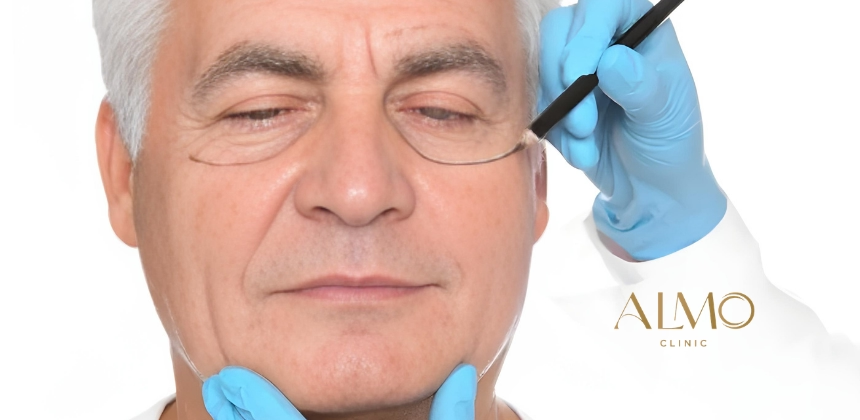
In blepharoplasty, the laser replaces the scalpel as the cutting instrument: it cauterises as it cuts, so there is less bleeding and usually less bruising, with a slightly shorter recovery. The traditional scalpel technique allows finer control of the incision edge and is still preferred for very thin eyelid skin or secondary corrections. The choice is determined by eyelid anatomy and the type of correction needed, not by one tool being superior.
Reviewed by Dr. Oscar Barón · Plastic surgeon · SCCP
Less bleeding and bruising
- Scalpel advantage Finer edge control
- Two eyelids from $1,750 USD
When someone comes in for a blepharoplasty consultation, one of the most common questions is: laser or scalpel? The answer isn’t as simple as picking the newer technology.
Both techniques produce excellent results. The difference lies in the mechanism, which type of case benefits most from each, and subtle recovery nuances that may matter depending on the patient.
How each technique works
Traditional blepharoplasty (scalpel)
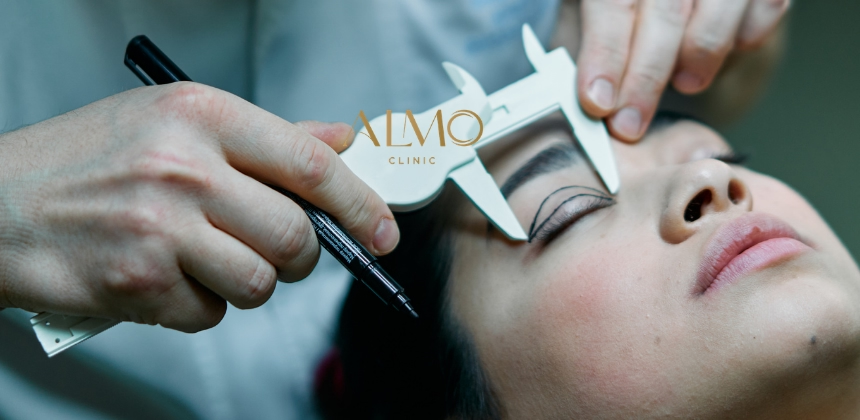
In the conventional technique, the surgeon uses a precision scalpel — often with optical magnification — to make the incision in the natural eyelid fold. Through that incision, they remove excess skin and herniated fat, then close with very fine sutures.
The scalpel gives the surgeon direct tactile control over the tissue, which is especially valuable in complex anatomies, eyelids with altered muscle tone, or revision blepharoplasty cases (when a previous surgery was performed).
CO2 laser blepharoplasty
In the CO2 laser technique, the beam of light replaces the scalpel. The laser cuts and coagulates simultaneously — meaning it seals blood vessels at the same time it incises the tissue.
The practical result of this simultaneous coagulation is reduced intraoperative bleeding, which translates to fewer postoperative bruises and a cleaner surgical field that makes the surgeon’s work easier. Additionally, laser energy has a useful secondary effect: it stimulates collagen contraction in the skin adjacent to the incision, which can improve periocular texture beyond the directly treated area.
Technical comparison
| Factor | Traditional blepharoplasty | CO2 laser blepharoplasty |
|---|---|---|
| Cutting mechanism | Precision scalpel | CO2 light beam |
| Simultaneous coagulation | No (separate electrocoagulation) | Yes |
| Intraoperative bleeding | Normal | Reduced |
| Postoperative bruising | Common in first days | Less frequent |
| Visible recovery time | 7–10 days | 5–8 days |
| Effect on periocular texture | None | Mild adjacent collagen improvement |
| Surgeon tactile control | Full | Slightly less |
| Indication in complex cases | Excellent | Good |
| Scar | Very fine | Very fine (may be slightly flatter) |

When is CO2 laser recommended?
Laser blepharoplasty is particularly indicated when:
- The periocular skin has uneven texture, sun spots, or fine lines that benefit from the additional collagen stimulation effect
- The patient tends to bruise easily (takes mild blood thinners, for instance)
- Minimal visible recovery time is a priority
- It’s combined with a fractional CO2 laser treatment in the periocular area in the same surgical session
When is the traditional technique preferred?
The scalpel technique remains the preferred choice when:
- It’s a revision blepharoplasty (existing scar tissue requires more tactile precision)
- Eyelid anatomy is complex (muscle ptosis, significant symmetry differences)
- The surgeon determines that direct tissue control is the priority for the specific result in that case
In clinical practice, the surgeon makes the technique choice after the physical evaluation. There’s no absolute hierarchy between the two.
Does laser blepharoplasty leave less of a scar?
This is the question that causes the most confusion. The nuanced answer: the scar may be slightly flatter and less prone to thickening in some patients, thanks to the simultaneous coagulation that reduces the local inflammatory response.
However, the final quality of the scar depends far more on the incision design (placed in the natural eyelid fold), the closure technique, and the patient’s postoperative care — not on whether a scalpel or laser was used.
With both techniques, by 6–12 months the scar is virtually invisible, blending into the natural fold of the upper eyelid or the lower lash line.
The factor that matters most: the surgeon
Surgical technique matters, but there’s one factor that outweighs it: the surgeon’s experience and judgment.
A board-certified plastic surgeon with extensive blepharoplasty experience will produce excellent results with a scalpel or a laser. The issue isn’t the tool — it’s the hand using it and the incision design that determines the aesthetic result.
So the first question you should ask a surgeon isn’t “do you use laser or scalpel?” The first question is how many blepharoplasties they’ve performed, what documented results they have, and how they evaluate your specific case.
Recovery: what actually changes?
Recovery for both techniques follows the same general protocol, with one practical difference: laser blepharoplasty patients tend to have fewer visible bruises in the first few days, which can slightly speed up their return to social life.
That said, the difference isn’t dramatic. In both cases, visible recovery is 7 to 10 days, sutures come out between day 5 and 7, and the final result is seen between 3 and 6 months.
The complete recovery guide covers the real day-by-day timeline, regardless of which technique was used.
If you’re considering eyelid surgery, the best next step is an evaluation with a surgeon. They’ll assess your anatomy, skin type, goals, and history, and determine which technique delivers the best result for your specific case.
See all the details about blepharoplasty at ALMO Clinic →
Not sure which technique fits your eyelids? Ask our surgical team directly.