In summary
Biopolymers are unapproved substances — liquid silicone, mineral oils — injected for aesthetic purposes that the body cannot break down. They cause chronic inflammation, tissue hardening and migration to distant areas, and symptoms may appear years after injection. No procedure removes them completely, because they infiltrate between tissue planes: what is done is partial resection of the most affected tissue, assessed case by case.
Reviewed by Dr. Martha Peñarredonda · Plastic surgeon · SCCP
Not possible
- Management Partial resection
- Symptoms May take years
Last updated: July 2026 · Reviewed by Dr. Martha Peñarredonda
Across Latin America — and among patients who traveled abroad for cheap procedures — thousands of people live with biopolymer injections without knowing exactly what was put into their bodies. Many were victims of “affordable” procedures in unlicensed settings; others believed they were receiving an approved product. This guide explains, without alarmism but without softening it, what biopolymers are, what real risks they carry and what can be done.
What biopolymers are
“Biopolymer” is the colloquial name for a group of substances not approved for injection in humans: industrial liquid silicone, mineral oils, paraffins and mixtures of unknown composition. They are injected in volume to augment buttocks, hips, lips or cheekbones, usually outside licensed medical facilities.
The difference from an approved medical filler (such as hyaluronic acid) is absolute: approved fillers are biocompatible, have sanitary registration and are absorbed over time; biopolymers stay in the body indefinitely, and the immune system treats them as a permanent foreign body.
The risks: what can happen and when
The inflammatory reaction can take months or decades to appear, creating a false sense of safety. The best-documented problems:
Local. Chronic pain, hardening and deformity of the area, skin discoloration, ulcers and migration: the substance travels to the legs, back or distant areas, making removal even harder.
Systemic. Persistent fatigue, joint and muscle pain, and autoimmune conditions grouped under the concept of ASIA syndrome (autoimmune syndrome induced by adjuvants).
Warning signs that require prompt evaluation: new or growing pain in the injected area, progressive hardening, color changes, unexplained fever or persistent general symptoms.
Removal options: what is realistic
Biopolymer removal is reconstructive, not cosmetic, surgery — and three uncomfortable truths need to be understood:
- Total removal is almost never possible. The substance infiltrates between muscle, fat and deep planes. The medical goal is to remove as much as possible without damaging healthy tissue.
- Serious techniques are surgical. Open resection or assisted techniques, planned with imaging (MRI) to map the distribution. The “laser removal without surgery” or “one-session” offers advertised on social media have no scientific support and usually make things worse.
- The surgeon’s specific experience matters more than in almost any other surgery. This is high-complexity territory with difficult intraoperative decisions.
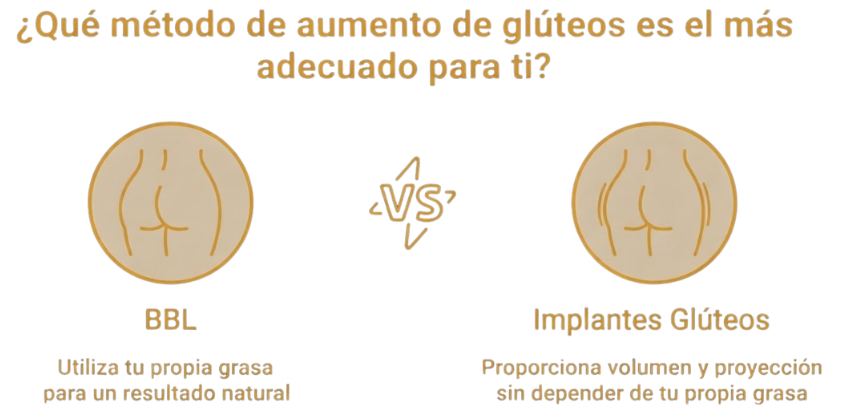
After removal, some patients choose to rebuild the contour with their own fat in a second stage, once the tissue is healthy — the same principle as BBL gluteoplasty with fat transfer, the only buttock augmentation route we consider safe.
How to protect yourself (or someone you love)
Demand for buttock augmentation is not going away; information is the best defense:
- Never accept injections of “substances” in consultation rooms, spas or homes. No large-volume filler applied outside an operating room is safe.
- Ask for the product’s name and sanitary registration, and verify that the injector is a physician with the appropriate specialty.
- Distrust prices that look too good. It is the common pattern in every victim’s story.
- For buttock augmentation, the scientifically supported option is fat transfer with your own tissue, performed by a board-certified plastic surgeon in licensed facilities; our guide on BBL safety in Colombia explains current standards.
Frequently asked questions
I was injected with something years ago and don’t know what it was. What should I do?
If you have no symptoms, an evaluation with imaging shows what is there and where, and establishes surveillance. If you have symptoms, evaluation is a priority. In both cases, avoid massages, device treatments or new procedures on the area until you have a diagnosis.
Is removal done in a single procedure?
It depends on how much substance there is, how far it migrated and which tissue is involved. When the material is infiltrated across several planes, removal is usually staged so the blood supply to the skin isn’t compromised. The realistic goal is to remove as much as possible and control the inflammation: total extraction isn’t always technically achievable, and you should be wary of anyone who promises it.
Do biopolymers cause cancer?
There is no conclusive evidence that they cause cancer. Their documented risks are chronic inflammation, migration, deformity and associated autoimmune conditions — reason enough to take them seriously.
Does ALMO Clinic perform biopolymer removal?
Our team evaluates each case in consultation: imaging diagnosis, mapping of the substance and a realistic plan. If your case requires an approach beyond our scope, we will refer you to the right specialist — our priority is your safety, not selling you a procedure.
Information arrives before the disease does
Biopolymers are the most visible consequence of unregulated aesthetics. If you already live with them, the path is imaging diagnosis, surveillance or removal with an experienced team. If you are considering buttock augmentation, choose the safe route from the start.
Book your specialist assessment