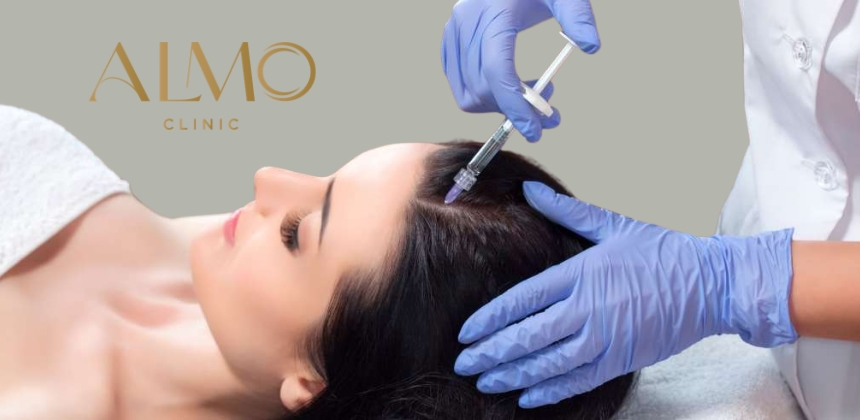
Hair mesotherapy injects a mix of B vitamins, amino acids, zinc, biotin and anti-hair-loss agents directly into the scalp, so the follicle receives them without passing through the bloodstream. It is indicated for active shedding and hair that has lost calibre, and its effect is to slow and reinforce rather than regrow: where the follicle is gone, it does nothing. At ALMO Clinic in Bogotá it starts from $87 USD per session.
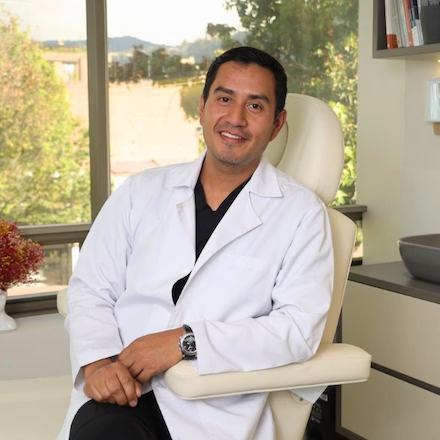
Reviewed by Dr. Oscar Barón · Cirujano plástico · SCCP
$87 USD
- Anti-loss protocol $450 USD
- Indication Active shedding
Hair mesotherapy is one of the most widely used treatments in hair medicine to combat active hair loss. Its popularity comes from combining proven effectiveness with an excellent safety profile.
But what exactly does it consist of? What is the difference from PRP? How many sessions are needed to see results?
In this guide we answer all these questions and explain why hair mesotherapy may be the solution you are looking for.
What is hair mesotherapy and how does it differ from PRP?
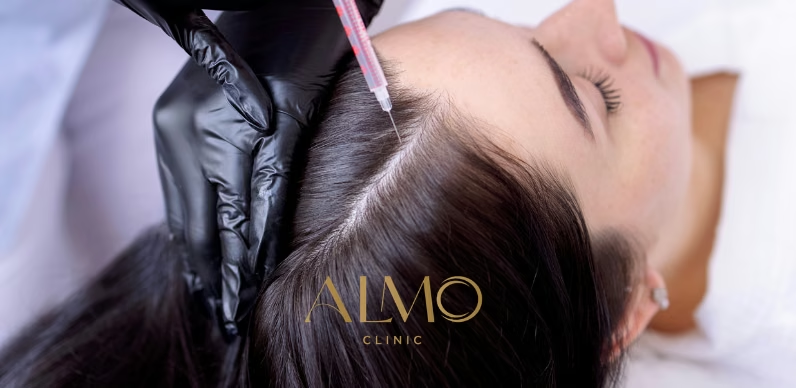
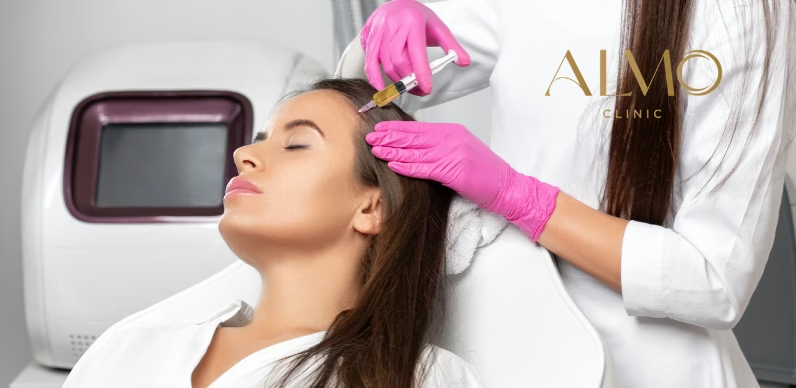
Hair mesotherapy is a minimally invasive treatment that consists of applying active substances through microinjections directly into the scalp.
Unlike topical treatments, mesotherapy delivers the active ingredients exactly where they are needed: at the hair follicle.
Key difference from hair PRP:
| Aspect | Hair mesotherapy | Hair PRP |
|---|---|---|
| Origin | Pharmacological substances | Patient’s own autologous plasma |
| Mechanism | Direct supply of nutrients, vitamins and active agents | Stimulation with growth factors |
| Indication | Active shedding, diffuse alopecia, weakening | Androgenetic alopecia, post-transplant |
| Results | Faster at stopping shedding | More effective for long-term regeneration |
Both treatments are complementary, not mutually exclusive. In many cases they are combined to enhance results.
What does hair mesotherapy contain?
Components vary according to each clinic’s formulation, but the most common include:
- Dutasteride or finasteride: Inhibit the conversion of testosterone to DHT, the hormone responsible for androgenetic alopecia
- Minoxidil: Vasodilator that improves follicle blood supply
- B-complex vitamins (biotin, B12, B6): Essential for hair keratinisation
- Amino acids (cysteine, methionine): Structural components of keratin
- Hyaluronic acid: Hydrates and improves the follicular microenvironment
- Zinc and copper: Trace elements with antioxidant and regenerative function
Indications: active shedding, diffuse alopecia, preventive densification
Hair mesotherapy is indicated in multiple scenarios within trichology.
Active hair shedding:
This is the primary indication. When a patient is losing more than 100 hairs per day, mesotherapy can slow this process within a few sessions. It acts directly on follicles in the miniaturisation phase to prevent them from atrophying completely.
Diffuse alopecia:
This condition, characterised by generalised density loss without specific bald areas, responds very well to mesotherapy. By being distributed across the entire scalp, the treatment nourishes and strengthens follicles in a uniform manner.
Early androgenetic alopecia:
In early stages of common baldness, mesotherapy with dutasteride or finasteride can stop progression and recover some of the lost hair.
Preventive densification:
An increasing number of patients, particularly women, use mesotherapy as a preventive strategy. The goal is to maintain hair density and delay the appearance of thinned areas.
Post-FUE hair transplant adjunct:
After a FUE hair transplant, mesotherapy helps protect the native hair and improves the overall result.
How many sessions are needed?
Hair mesotherapy requires a structured treatment plan to achieve optimal results.
Attack phase (first 3 months):
4 to 6 weekly or fortnightly sessions are applied, depending on the severity of the case. The goal is to stop active shedding as quickly as possible.
Consolidation phase (months 3 to 6):
One session every 3 to 4 weeks to stabilise results and begin recovering density.
Maintenance phase:
One session every 2 to 3 months to maintain long-term results.
When do results show?
- Week 2 to 3: Noticeable decrease in shedding
- Month 2 to 3: Hair feels stronger with greater volume
- Month 4 to 6: Visible recovery of density
Consistency is key. The best results are achieved when the patient completes the full treatment plan and keeps up with the maintenance sessions.
Mesotherapy as a standalone or combined treatment
Hair mesotherapy can work as a standalone treatment in cases of moderate active shedding, but its true potential is realised when combined with other therapies.
As a standalone treatment:
Ideal for patients with:
- Active shedding without bald areas
- Mild to moderate diffuse alopecia
- General hair weakening
- Contraindication for oral medication
In combination with other treatments:
The most effective combinations include:
- Mesotherapy + hair PRP: Mesotherapy stops shedding while PRP regenerates follicles. A powerful pairing.
- Mesotherapy + FUE hair transplant: Mesotherapy protects native hair while the transplant restores the hairless areas.
- Mesotherapy + oral medication: Reinforces the systemic effect with direct local action.
At ALMO Clinic we design personalised plans that may include one or several of these options according to each patient’s specific needs.
If you are experiencing active hair loss and want to know whether mesotherapy is the right solution for you, the first step is a specialist trichology assessment.
Schedule your assessment consultation at ALMO Clinic →
Frequently asked questions
Is hair mesotherapy painful?
Very fine needles (30G or 32G) are used and application is quick. Most patients tolerate the treatment well without anaesthesia. Topical anaesthesia can be applied beforehand for sensitive skin.
How long does each mesotherapy session last?
Each session lasts approximately 20 to 30 minutes, including preparation and application of the microinjections.
Are there side effects?
Side effects are minimal and temporary. Mild redness or small papules may appear in the application area and disappear within 24 to 48 hours. It is a safe treatment performed by qualified medical staff.
Can I exercise after the session?
It is recommended to avoid intense exercise and direct sun exposure during the first 24 hours. All other normal activities are unrestricted.
Does hair mesotherapy work for women?
Yes, especially for women with female androgenetic alopecia and diffuse hair loss. In fact, mesotherapy is one of the most recommended treatments for density loss in women because it does not require oral hormonal medication.
What is the difference between mesotherapy and hair PRP?
Mesotherapy delivers pharmacological and nutritional substances directly to the follicle, while PRP uses the patient’s own growth factors. Both are complementary and can be carried out within the same treatment plan.
Hair mesotherapy is a safe, effective and well-tolerated treatment for active hair loss. At ALMO Clinic we have personalised formulas and trichology specialists who will assess your case to determine the most appropriate plan.
Schedule your assessment consultation at ALMO Clinic →
Curious whether mesotherapy alone or combined with another treatment fits your case? Talk to our team directly.
Talk to our trichology team </a>