Hair PRP concentrates the platelets from your own blood and injects them into the scalp, where growth factors stimulate miniaturised follicles and extend their growth phase. The usual protocol is 3 or 4 sessions a month apart, followed by maintenance every 6 months. It works on living follicles: it does not regrow hair in areas that are already bald. At ALMO Clinic in Bogotá it starts from $112 USD per session.
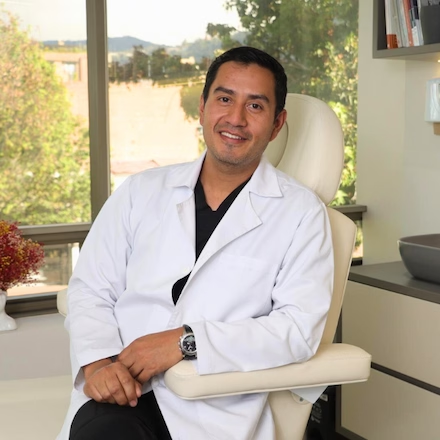
Reviewed by Dr. Oscar Barón · Cirujano plástico · SCCP
$112 USD
- Protocol 3–4 monthly sessions
- Maintenance Every 6 months
Hair PRP, or platelet-rich plasma, has become one of the most popular treatments for hair loss. The reason is compelling: it uses your own blood’s growth factors to reactivate hair follicles.
But does it actually work? Who is it indicated for? How many sessions are needed?
In this guide we answer all your questions about hair PRP, based on the available scientific evidence and our clinical experience at ALMO Clinic Bogotá.
How PRP works and why it stimulates the follicle
Hair PRP starts from a simple but powerful principle: your blood contains natural growth factors that your body already uses to repair tissues. The treatment concentrates those factors and applies them directly to the scalp.
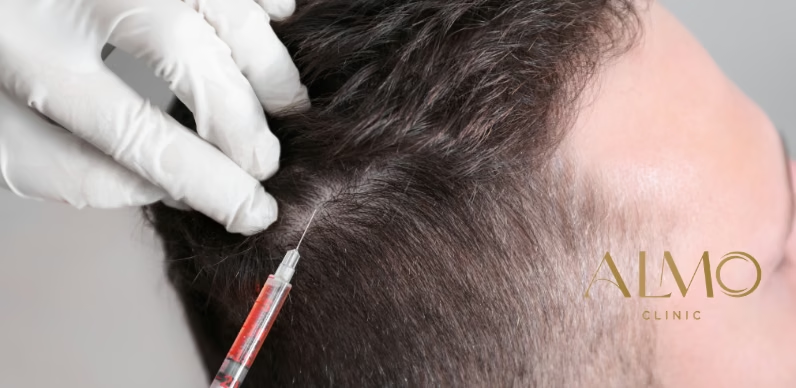
The process step by step:
- A blood sample is drawn from the patient, similar to a routine test
- The blood is processed in a specialised centrifuge that separates its components
- Platelet-rich plasma is obtained, containing concentrated growth factors
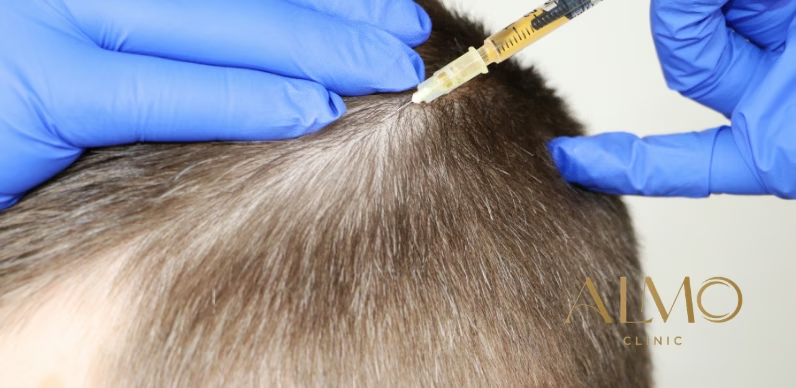
- This plasma is activated and applied through microinjections into the scalp
What do the growth factors do in the follicle?
The growth factors present in platelets — including PDGF, VEGF, EGF and TGF-β — stimulate key biological processes:
- They increase follicle vascularisation, improving its blood supply
- They activate follicular stem cells to exit their resting phase
- They prolong the anagen phase (active growth) of the hair cycle
- They reduce follicular inflammation, a factor involved in hair loss
The result: more active follicles producing better-quality hair for longer.
Who is it indicated for?
Hair PRP is not a universal treatment. It works best in certain patient profiles and types of alopecia.
Main indications:
- Early to moderate androgenetic alopecia: The primary indication. PRP can stop progression and recover density in early and middle stages of common baldness.
- Diffuse hair loss: Patients who notice generalised loss of volume without specific bald areas.
- Hair weakening: People who observe their hair becoming finer and more fragile over time.
- Women with female alopecia: Responds particularly well in women with diffuse vertex loss.
- Post hair transplant patients: PRP improves graft survival and accelerates recovery.
Who are not ideal candidates?
- Completely bald areas with follicular fibrosis (the follicle no longer exists)
- Active scarring or inflammatory alopecia
- Patients with platelet or coagulation disorders
- People with unrealistic expectations about the outcome
How many sessions are needed and how often?
Hair PRP is not a one-off treatment. It requires a session plan to achieve visible results and maintain them over time.
Induction phase (first 3 to 4 months):
3 to 4 sessions are applied with a one-month interval between each. This phase aims to activate dormant follicles and stop active shedding.
Maintenance phase:
After the initial phase, a booster session every 4 to 6 months is recommended to maintain results.
Factors influencing the number of sessions:
- The severity of the hair loss
- Individual response to treatment
- Patient consistency with maintenance sessions
- Combination with other treatments such as minoxidil or finasteride
The first results are usually noticed after the third session, when the hair cycle has synchronised and follicles are producing thicker hair.
How long do results last?
The duration of hair PRP results varies from person to person, but there are general patterns we can share.
Short-term results (first 3 months):
- Reduced shedding (less hair in the shower and on the brush)
- Sensation of greater hair vitality
Medium-term results (6 to 12 months):
- Visible increase in density
- Thicker, stronger hair
- Better coverage in weakened areas
Long-term maintenance:
PRP does not permanently stop androgenetic alopecia because it does not act on the underlying hormonal cause. Results are maintained as long as maintenance sessions are performed. If stopped, the shedding process may gradually resume according to the natural progression of the condition.
For this reason, PRP works best as part of a comprehensive plan that may include:
- Topical minoxidil
- Oral finasteride (in men)
- FUE hair transplant for depopulated areas
- Hair mesotherapy in combination
PRP as a complement to hair transplant
One of the most potent applications of hair PRP is as a complement to FUE hair transplant.
Proven benefits of post-transplant PRP:
- Increases the survival rate of transplanted grafts
- Accelerates healing of the micro-wounds
- Reduces recovery time
- Improves the quality of surrounding native hair
- Enhances the overall transplant result
At ALMO Clinic, many patients combine both techniques for superior results. The transplant restores density in depopulated areas, while PRP strengthens the existing hair and optimises the final outcome.
If you are considering a comprehensive hair treatment, the combination of hair PRP in Bogotá with other therapies can make a real difference. Consult with our trichology specialists for a personalised plan.
Frequently asked questions
Is hair PRP painful?
A micro-cannula or very fine needle is used, so discomfort is minimal. Most patients describe the sensation as small pinches. Topical anaesthesia can be applied for greater comfort.
When do PRP results start to show?
The first effects are noticed between the second and third month, when shedding is notably reduced. Visible density increase usually appears from the sixth month onwards, after completing the induction phase.
Does hair PRP work for women?
Yes. PRP is particularly effective in women with female-pattern androgenetic alopecia, one of the most frequent causes of trichology consultation. The response tends to be even better than in men.
How many PRP sessions are needed to maintain hair?
After the initial phase of 3 to 4 monthly sessions, a maintenance session every 4 to 6 months is recommended to preserve results.
Can PRP be combined with other hair treatments?
Yes. PRP is frequently combined with minoxidil, finasteride, hair mesotherapy and FUE transplant. In fact, the combination of treatments generally offers better results than any single therapy alone.
Hair PRP is a powerful tool within regenerative hair medicine, but its effectiveness depends on a precise indication and a well-structured treatment plan. At ALMO Clinic we assess each case comprehensively to determine whether PRP is the best option for you.
Schedule your assessment consultation at ALMO Clinic →
Have questions about whether PRP is right for your hair loss pattern? Ask our trichology team directly.
Ask about hair PRP </a>